Sri Lanka is an island that constantly surprises. Beyond the famous beaches and tea-draped hills lies a country with a deeply layered history, unique ecological quirks, and cultural practices that often catch first-time visitors off guard. Before you pack your bags for the teardrop island, understanding a few of these fascinating facts will not only enrich your journey but also help you navigate the local nuances with greater appreciation.
1. The World’s Oldest Human-Planted Tree Lives Here
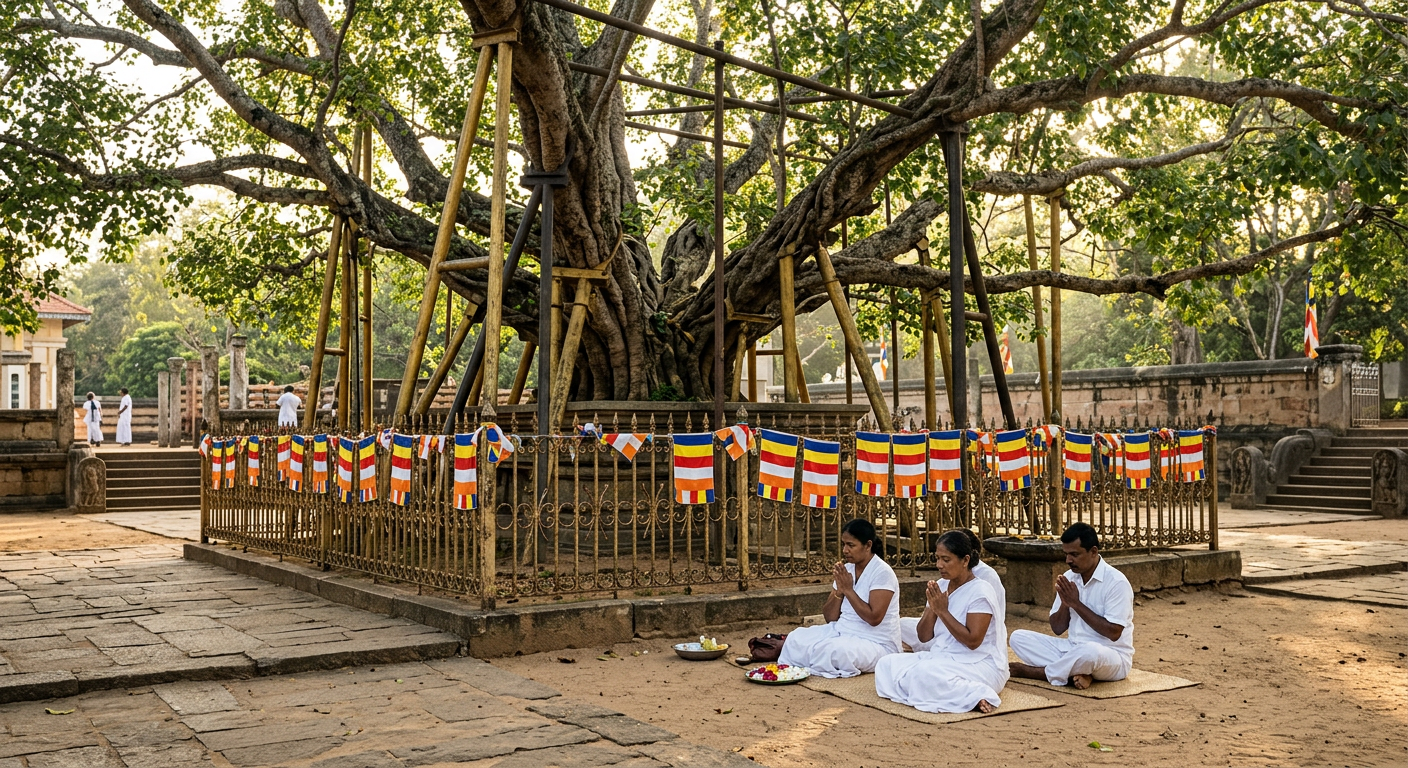
While many ancient trees exist globally, Sri Lanka holds a specific and remarkable record. The Jaya Sri Maha Bodhi, located in the sacred city of Anuradhapura, is the oldest living human-planted tree in the world with a known planting date. Brought to the island in 288 BCE by Sangamitta Theri, the daughter of Emperor Ashoka of India, it is a cutting from the original Bodhi tree under which the Buddha attained enlightenment.
Visiting the Sri Maha Bodhi is a profound experience. It remains a deeply venerated site, drawing thousands of pilgrims daily. When you visit, remember that this isn't just a historical artifact; it's a living, breathing center of faith. Dress modestly (covering shoulders and knees) and observe the quiet reverence of the worshippers.
2. It’s a Global Biodiversity Hotspot
Despite its relatively small size, Sri Lanka is recognized as one of the world's biodiversity hotspots. This means it has a high concentration of endemic species—plants and animals found nowhere else on Earth—that are also under threat. The island's varied topography, from coastal plains to central highlands, creates numerous microclimates that support this incredible variety of life.
You might spot the elusive Sri Lankan leopard in Yala National Park, but the true marvel is often in the smaller details. Keep an eye out for the vibrant endemic birdlife, such as the Sri Lanka Junglefowl (the national bird) or the tiny, brightly colored frogs in the Sinharaja Forest Reserve. Remember that wildlife sightings are never guaranteed, but the sheer diversity of the ecosystems is always on display.
3. The 'Teardrop of India' Has Its Own Distinct Identity
Geographically, Sri Lanka hangs like a teardrop off the southern coast of India, separated only by the narrow Palk Strait. This proximity has inevitably led to centuries of cultural, religious, and linguistic exchange. However, assuming Sri Lanka is just 'India lite' is a common and significant mistake made by first-time visitors.
Sri Lanka has a distinct culture, shaped heavily by Theravada Buddhism, its unique history of colonial rule (Portuguese, Dutch, and British), and its own indigenous traditions. The food is different—often spicier and heavily reliant on coconut and pandan leaves—the languages (Sinhala and Tamil) are distinct, and the overall pace of life often feels noticeably different from its massive northern neighbor.
4. Adam’s Peak: A Mountain Sacred to Four Religions
Sri Pada, or Adam’s Peak, is a striking, conical mountain in the central highlands that holds a unique place in global religious geography. Near the summit is a large footprint-shaped depression in the rock. What makes it extraordinary is that it is revered by four major religions, each attributing the footprint to a different figure.
Buddhists believe it is the footprint of the Buddha; Hindus believe it belongs to Shiva; Muslims and Christians believe it is the footprint of Adam (hence the English name), marking where he first set foot on Earth after being exiled from Eden. The pilgrimage season, running from December to May, sees thousands climbing the thousands of steps through the night to reach the peak for sunrise—a physically demanding but culturally fascinating experience.
5. The Cinnamon You Know Probably Originated Here
If you have cinnamon in your kitchen cupboard, there's a good chance its origins trace back to Sri Lanka. The island is the birthplace of 'true cinnamon' (Cinnamomum verum), which is distinct from the more common and cheaper cassia bark often sold as cinnamon elsewhere. True Sri Lankan cinnamon is sweeter, more delicate, and has a crumbly, paper-like texture.
The spice trade shaped Sri Lanka's history, drawing the attention of Arab traders and later European colonizers. Today, you can still visit cinnamon estates, particularly around the southern coast near Koggala and Weligama, to see how the inner bark is skillfully peeled and rolled by hand into the familiar quills.
6. Ancient Hydraulic Engineering That Still Works Today
Long before modern machinery, ancient Sri Lankan kings were master engineers. The dry zone, encompassing much of the northern and eastern parts of the island, receives very little rainfall for half the year. To support agriculture and growing populations, ancient rulers constructed an incredibly sophisticated network of reservoirs (known locally as 'tanks' or wewas) and canals.
Some of these tanks, like the massive Parakrama Samudra in Polonnaruwa, were built over a thousand years ago and are so large they look like inland seas. Remarkably, many of these ancient irrigation systems are still in use today, continuing to sustain local farming communities. They also serve as vital watering holes for wildlife, particularly elephants.
7. A Flag That Tells a Complex Story
The Sri Lankan flag, often called the Lion Flag, is one of the most detailed and symbolic national flags in the world. Every element has a specific meaning, reflecting the island's history and its diverse population. The golden lion holding a sword represents the Sinhalese ethnicity and bravery, while the four bo leaves in the corners symbolize the four Buddhist virtues of loving-kindness, compassion, sympathetic joy, and equanimity.
The two vertical stripes on the left side—one green and one orange—were added later to represent the country's minority communities: the green for the Moors (Muslims) and the orange for the Tamils. Understanding the flag offers a quick visual primer on the demographic makeup and the historical values of the nation.
8. The Unique Phenomenon of the 'Elephant Gathering'
Every year, during the dry season (typically July to September), an extraordinary natural event occurs in the Minneriya and Kaudulla National Parks. As water sources dry up elsewhere, hundreds of wild Asian elephants migrate to the receding shores of the ancient Minneriya tank to graze on the fresh grass that emerges.
Known simply as 'The Gathering,' this is believed to be the largest recurring concentration of wild Asian elephants in the world. It’s not a migration in the traditional sense, but rather a seasonal congregation. Witnessing herds of up to 300 elephants socializing, bathing, and feeding in one place is a highlight for many visitors.
9. Tea is a Relatively Recent Addition
When you picture Sri Lanka's hill country, you likely imagine endless, rolling carpets of bright green tea bushes. Ceylon tea is world-famous, yet tea is not native to the island. It was introduced by the British in the mid-19th century, and only after a devastating fungus wiped out the island's thriving coffee plantations.
The transition from coffee to tea transformed the landscape and the economy. The British also brought over hundreds of thousands of Tamil laborers from southern India to work the estates, creating a distinct community (Hill Country Tamils) whose descendants still form the backbone of the tea industry today. A visit to a tea factory offers insight into this complex colonial legacy and the labor-intensive process of producing your morning brew.
10. The Curious Case of the Stilt Fishermen
Along the southern coast, particularly near Koggala and Ahangama, you might spot men perched precariously on wooden poles planted in the shallow surf, holding fishing rods. This is stilt fishing, a practice unique to Sri Lanka. It originated shortly after World War II when food shortages prompted locals to find new ways to fish without boats.
While it makes for a highly photogenic scene, it's important to know that today, true stilt fishing is rare. Many of the 'fishermen' you see near the main tourist roads are posing for photographs in exchange for a fee. If you want to take a photo, it's customary and polite to negotiate a small tip beforehand.
11. A Land of Two Monsoons
Sri Lanka's weather is famously complex due to its two separate monsoon seasons, which affect different parts of the island at different times. This means there is almost always a 'good' time to visit, provided you choose the right coast.
- The Yala Monsoon (May to August): Brings rain to the south and west coasts, and the hill country. During this time, the north and east coasts are generally dry and sunny.
- The Maha Monsoon (October to January): Affects the north and east coasts. This is the best time to visit the south and west coasts.
- Inter-monsoon periods: Can bring unpredictable showers anywhere on the island.
Always check the regional weather patterns rather than just looking at a national forecast before planning your itinerary.
12. The Traditional Greeting is More Than Just 'Hello'
The traditional Sri Lankan greeting is Ayubowan, accompanied by pressing the palms together in a prayer-like gesture near the chest. While it functions as 'hello,' the literal translation is much more beautiful: "May you be blessed with a long life."
"Using Ayubowan when you meet locals, especially elders or when entering a guesthouse, shows a deep respect for the culture. It almost always guarantees a warm smile in return."
In Tamil-speaking areas, the equivalent greeting is Vanakkam. Learning these simple words goes a long way in establishing a friendly connection with the people you meet.
13. The 'Head Waggle' Can Be Confusing
One of the most charming but initially confusing aspects of communication in Sri Lanka (and much of South Asia) is the 'head waggle.' It's a side-to-side tilting of the head, sort of a figure-eight motion, that doesn't quite mean 'yes' and doesn't quite mean 'no.'
Depending on the context and the speed of the waggle, it can mean "I understand," "Okay," "Maybe," or simply acknowledge your presence. It rarely means a definitive "no." If you ask a question and receive a head waggle, it usually implies agreement or comprehension. You'll likely find yourself unconsciously adopting it after a few weeks on the island.
14. A Cuisine Built on Rice and Curry
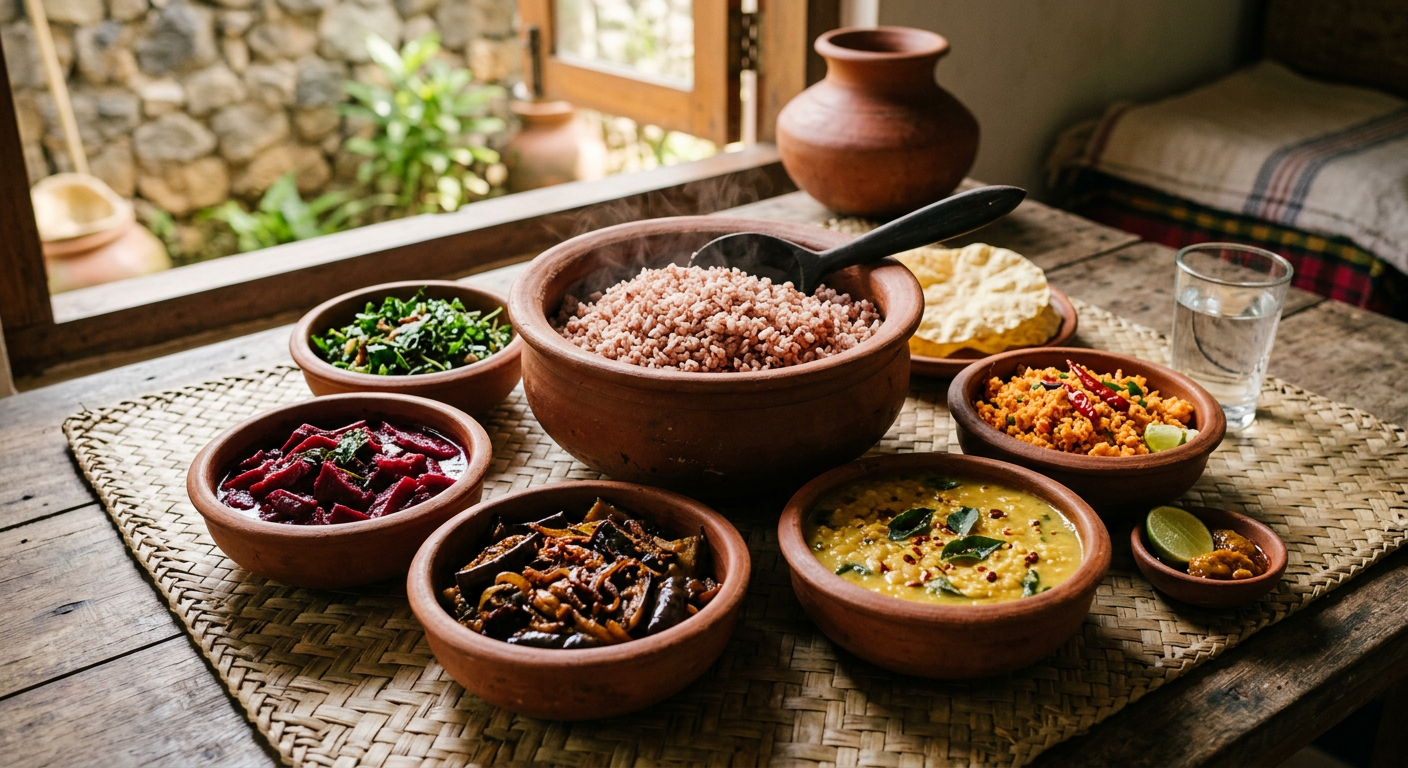
The staple meal in Sri Lanka is simply referred to as 'rice and curry,' but that modest name belies the complexity of the dish. A traditional rice and curry meal is never just one curry. It consists of a large mound of rice (often red rice) surrounded by a dazzling array of smaller dishes.
You can expect a main curry (fish, chicken, or mutton), accompanied by several vegetable curries (like beetroot, eggplant, or jackfruit), a mallum (finely chopped greens with coconut), and various sambols (spicy condiments, the most famous being pol sambol made from grated coconut, chili, and lime). It’s a symphony of flavors—spicy, sour, sweet, and savory—all on one plate.
15. The Concept of 'Poya' Days
Sri Lanka operates on a lunar calendar alongside the Gregorian calendar, and every full moon day is a public holiday known as a Poya day. These days hold significant religious importance for Buddhists, marking key events in the life of the Buddha.
For a traveler, it's crucial to know that on Poya days, the sale of alcohol and meat is strictly prohibited across the country, even in hotels and supermarkets. Many businesses may also be closed. It's a day of quiet reflection and religious observance, and visiting a temple on a Poya day (dressed appropriately in white) offers a beautiful glimpse into the island's spiritual life.