Anuradhapura’s ancient city may be the main reason travellers visit Sri Lanka’s North Central Province, but the surrounding countryside deserves an extra day. Ritigala, Kala Wewa and Aukana reveal three different sides of the region: a secluded forest monastery, an immense irrigation reservoir and one of the island’s finest rock-cut Buddha statues.
Combining all three makes a full but rewarding day trip from Anuradhapura. The route passes through dry-zone forest, farming villages and areas where wildlife may cross the road. It is best suited to travellers comfortable with several hours of driving and some walking on uneven ground. If you prefer a slower pace, visit Ritigala on one day and combine Kala Wewa with Aukana on another.
Planning the Route from Anuradhapura
The three attractions form a broad circuit south and southeast of Anuradhapura. Exact distances and journey times vary with your starting point, road conditions and the entrances used, but expect roughly 140 to 170 kilometres of driving over the day. Allow around eight to ten hours for the complete outing rather than treating it as a quick half-day excursion.
A private car with a driver is the most comfortable option, particularly in hot or wet weather. A tuk-tuk can be more affordable and offers open views, but the long distances, dust and occasional rough sections may become tiring. Public buses serve some nearby towns, yet connections between all three sites are too indirect for most day trippers. Whichever option you choose, confirm that the vehicle, fuel, parking and waiting time are included in the agreed price.
Leave Anuradhapura at about 7:00 AM if possible. Starting at Ritigala gives you cooler conditions for the forest walk, followed by Kala Wewa and Aukana. The order can be adjusted around weather, opening hours or your driver’s preferred roads, but avoid rushing the return journey after dark. Elephants and other animals can cross rural roads unexpectedly, especially around forest and reservoir areas.
Before Setting Out
Tell your driver the complete itinerary in advance and ask how much time the route normally takes under current conditions. Opening hours, entrance procedures and fees can change, so check locally with your accommodation or the relevant ticket office shortly before travelling. Carry sufficient Sri Lankan rupees in smaller notes because card facilities and ATMs are limited away from larger towns.
Bring drinking water, sun protection, insect repellent and a light rain layer. Comfortable shoes with good grip are important at Ritigala, where old stone can be slippery after rain. Pack modest clothing for Aukana: shoulders and knees should be covered, hats removed in the sacred area and footwear left at the designated point.
Ritigala Forest Monastery
Ritigala rises dramatically from the plains southeast of Anuradhapura. The mountain and its surrounding forest have long been associated with monastic retreat. Inscriptions indicate a Buddhist presence by at least the 1st century BCE, while much of the stone architecture visible today reflects later phases of development.
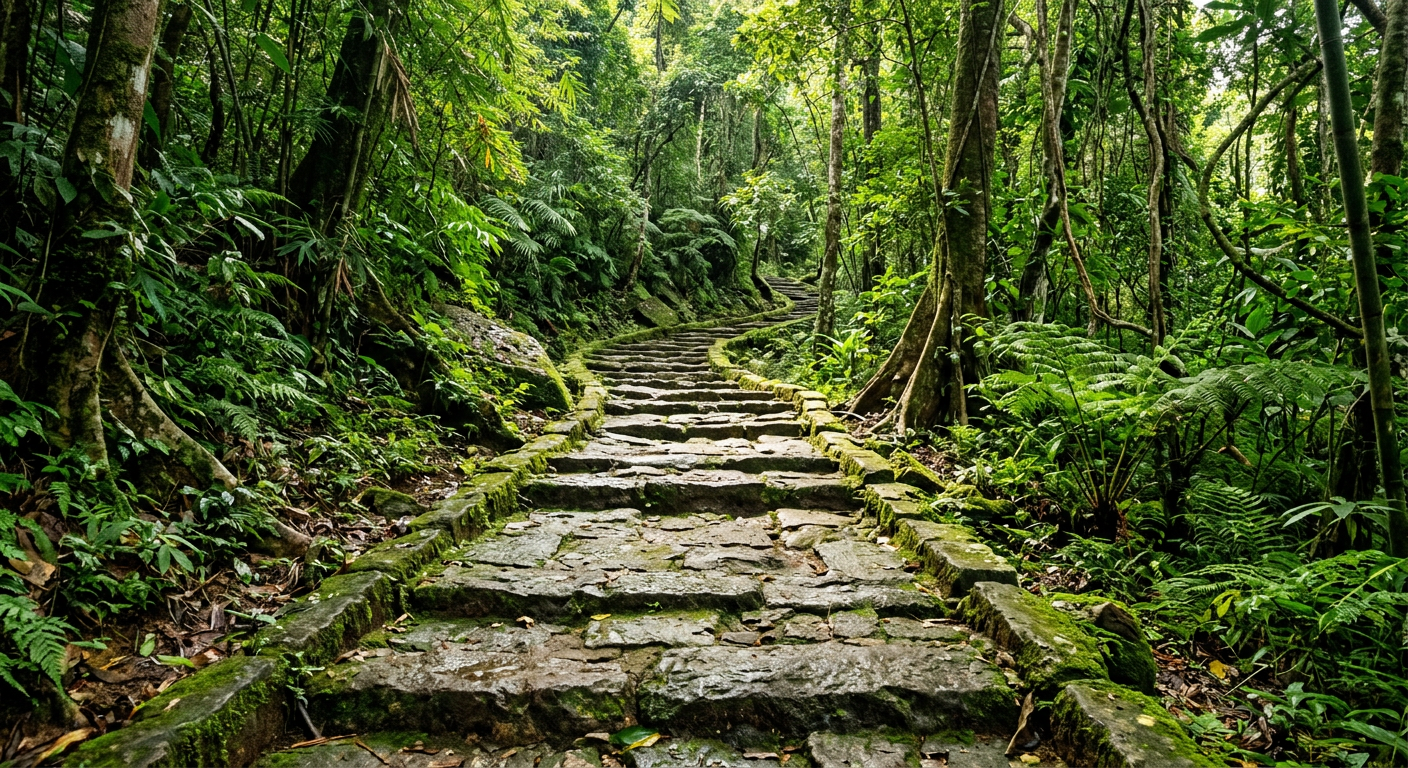
The visitor area is known for its restrained design rather than the monumental stupas and sculpted decoration seen in Anuradhapura. A broad stone path climbs through thick forest, passing steps, bridges, platforms, courtyards and carefully constructed water features. These remains are commonly associated with ascetic monks who valued seclusion and simplicity.
Allow about one and a half to two hours, depending on your pace and how far the authorised visitor route is open. The walk involves a steady ascent over irregular stones, but it is manageable for travellers with moderate mobility who take their time. This is an archaeological and protected forest setting rather than a developed hiking attraction; remain on the permitted route and follow any instructions from site staff.
Do not expect a guaranteed panoramic viewpoint or access to the mountain summit. The experience lies in the cool forest, massive stonework and quiet atmosphere of the monastic complex. Conditions can be humid, and leeches may occur after heavy rain. Avoid touching or feeding macaques and keep food secured inside your bag.
Respecting the Site
Ritigala feels less formal than an active temple, but it remains part of Sri Lanka’s Buddhist heritage. Dress respectfully, speak quietly and do not climb on ruins or move stones. Photography is generally straightforward in outdoor areas, although instructions displayed at the site should take priority.
Kala Wewa Reservoir
From Ritigala, continue towards Kala Wewa, allowing roughly an hour or more depending on the chosen road. Kala Wewa is part of an ancient irrigation landscape traditionally linked to King Dhatusena in the 5th century CE. Together with neighbouring waters and canals, it helped store and distribute seasonal rainfall for agriculture in Sri Lanka’s dry zone.
The most impressive perspective is often from an accessible section of the bund, the long earthen embankment holding back the water. Views differ significantly with the season. After the rains, the reservoir can resemble a broad inland lake; during drier months, receding water may expose grassland, mudflats and areas used by livestock and wildlife.
Ask your driver where visitors can stop safely without blocking traffic or entering a restricted operational area. Spillways, sluices and embankments are working parts of the irrigation system, so warning signs and local directions must be respected. Swimming is not recommended: water depth, currents, submerged objects and wildlife may be difficult to assess.
Use Kala Wewa as a scenic pause rather than a tightly scheduled attraction. Water levels, access and birdlife change with the season, and there may be no formal visitor centre or defined sightseeing circuit.
Bring binoculars if you enjoy birdwatching. Depending on water levels, you may see egrets, herons, cormorants, raptors and other wetland species. Elephants also use the wider landscape, but sightings are never guaranteed. Never approach an elephant, leave the vehicle for a closer photograph or ask a driver to crowd an animal. If one is near the road, keep a generous distance and wait for it to move away.
Visiting the Aukana Buddha
Aukana is a short drive from parts of Kala Wewa, although the time depends on where you stop around the reservoir. The standing Buddha is more than 12 metres high and was carved from living granite, remaining connected to the rock behind it. It is commonly attributed to the reign of King Dhatusena in the 5th century, although some scholarly interpretations propose a later date.
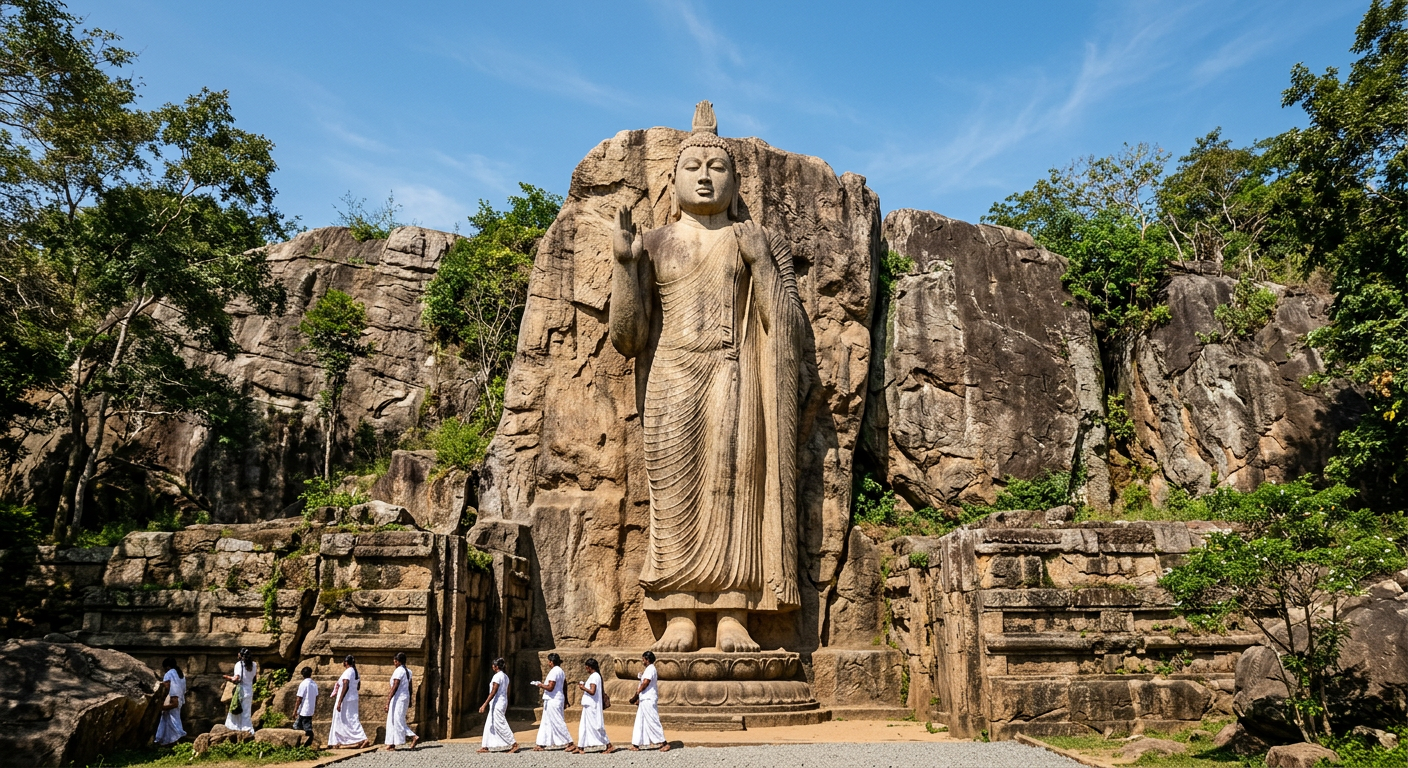
The figure is admired for its balanced proportions, finely cut robe and raised right hand. The gesture is often described locally as the asisa mudra, associated with blessing. A well-known tradition says that rainwater falling from the statue’s nose lands in the depression between its feet. Treat this as part of the site’s cultural story rather than a measurable test visitors should attempt.
Allow approximately 30 to 45 minutes for the statue and its immediate surroundings. Aukana is a sacred Buddhist site, not simply an archaeological monument. Remove shoes and hats where directed, cover shoulders and knees, keep voices low and avoid posing with your back directly towards the Buddha. Any signs concerning photography should be followed.
The exposed ground can become very hot around midday. Socks may make the walk more comfortable where their use is permitted, but follow the instructions of temple staff. A morning or later-afternoon visit is usually more pleasant, while wet weather can make stone surfaces slippery.
Food, Water and Facilities
Facilities are limited along parts of this route. Eat breakfast before departure and carry water and a few sealed snacks. Your driver may know a simple restaurant or village café serving rice and curry, but availability and opening times can be unpredictable. If a particular lunch stop matters to you, arrange it before leaving Anuradhapura.
Dispose of rubbish responsibly and avoid leaving food scraps near wildlife. Public toilets may be basic, so carry tissues and hand sanitiser. Mobile coverage is generally available around settlements but can weaken in forested sections; download an offline map and keep the name and telephone number of your accommodation with you.
Practical Day-Trip Checklist
- Transport: Reserve a car or tuk-tuk in advance and agree on the route, total price, waiting time and expected return time.
- Timing: Start around 7:00 AM and allow eight to ten hours, including stops, meals and possible road delays.
- Clothing: Wear light, modest clothing and carry a sarong or other cover for the religious site.
- Footwear: Choose shoes with grip for Ritigala and make sure they are easy to remove at Aukana.
- Money: Carry cash for admission, parking, food and driver payment. Confirm current fees locally rather than relying on old online prices.
- Weather: Use sunscreen and a hat in exposed areas, but remove the hat when entering the sacred area at Aukana.
- Wildlife: Observe animals only from a safe distance, never feed them and do not pressure your driver to approach elephants.
- Photography: Respect posted restrictions and avoid disrespectful poses with Buddha images or monastic remains.
Returning to Anuradhapura
From Aukana, the return to Anuradhapura commonly takes around one and a half hours, but extra time should be allowed for traffic, roadworks and rural road conditions. Aim to be back before dark, particularly if travelling by tuk-tuk.
This circuit is an excellent complement to Anuradhapura’s celebrated stupas and monasteries. Ritigala introduces the quiet discipline of a forest retreat, Kala Wewa demonstrates the scale of ancient water management, and Aukana showcases the skill of Sri Lanka’s stone carvers. Taken together, they offer a richer view of the island’s ancient heartland and the living landscapes surrounding it.