Arugam Bay may be best known for surfing, but the wetlands around this east coast town reveal a quieter side of the region. Pottuvil Lagoon to the north and the wetlands around Panama to the south support mangroves, waterbirds, reptiles and other wildlife. A guided boat trip offers a gentle way to explore these habitats, often aboard a small paddle-powered craft operated by people from nearby communities.
A lagoon safari is not a conventional jeep safari, and that is part of its appeal. The pace is slow, the water can be wonderfully still, and sightings depend on the season, weather and simple luck. Crocodiles, kingfishers, herons and raptors may be seen, while elephants are an occasional highlight rather than a certainty. Here is what to expect, how to choose a lagoon and what to check before booking.
Choosing Between Pottuvil and Panama
Pottuvil Lagoon is usually the most convenient option for travellers staying in Arugam Bay. It lies north of town and can generally be reached by tuk-tuk within a short drive, although the exact journey depends on your accommodation and launch point. Trips are commonly arranged through local boat operators, guides, guesthouses or tour desks.
The lagoon combines open water, reed beds, mangrove edges and views towards the surrounding countryside. Small boats allow guides to move quietly through the shallows and point out birds, crocodiles and signs of other wildlife. Pottuvil is a practical choice if you have limited time or want to combine the safari with other nearby stops.
Panama, south of Arugam Bay, has a more rural setting and can feel less visited. However, the availability, route and style of boat trips may vary with water levels, local conditions and the season. Do not assume that a departure will be available on arrival. Ask your accommodation or a reputable local operator to confirm whether trips are running, where the boat launches and how transport will be arranged.
Neither lagoon is automatically better for wildlife. Recent local reports, water conditions and the skill of your guide matter more than promotional promises. If elephants are your main interest, ask where they have been observed recently, but treat any answer as an indication rather than a guarantee.
Wildlife You May See
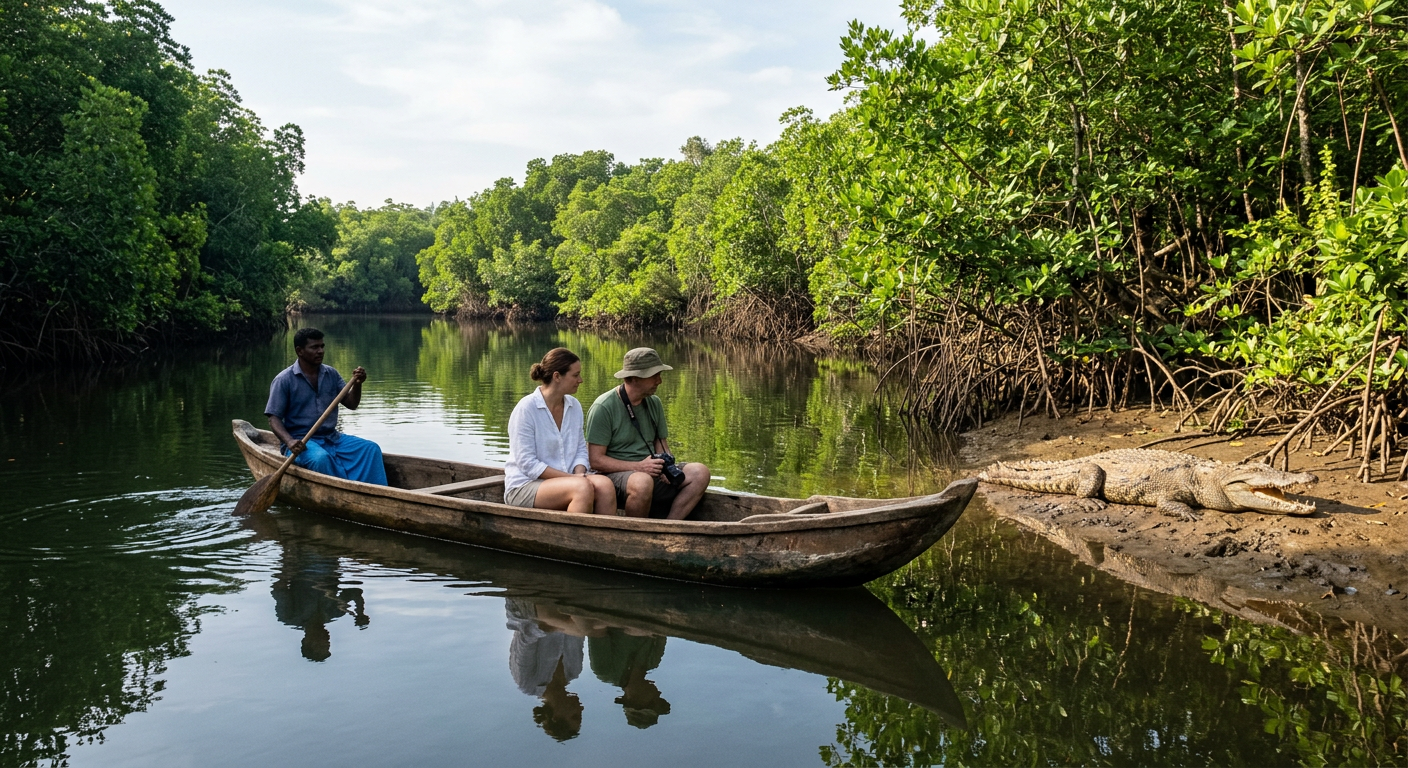
Crocodiles are among the animals most associated with the lagoons. A guide may spot one resting on a bank or moving low through the water, but sightings vary. Keep your hands inside the boat, never enter the water and follow the boat operator’s instructions. Guides should observe crocodiles from a respectful distance rather than steering close for photographs.
The most dependable interest is often the birdlife. Depending on the habitat and season, you may encounter egrets, herons, cormorants, darters, bee-eaters, kingfishers, terns and birds of prey. Migratory species add variety during parts of the northern winter, while resident birds can be seen throughout the year. A guide who knows local calls and feeding areas can make a considerable difference, especially for first-time birdwatchers.
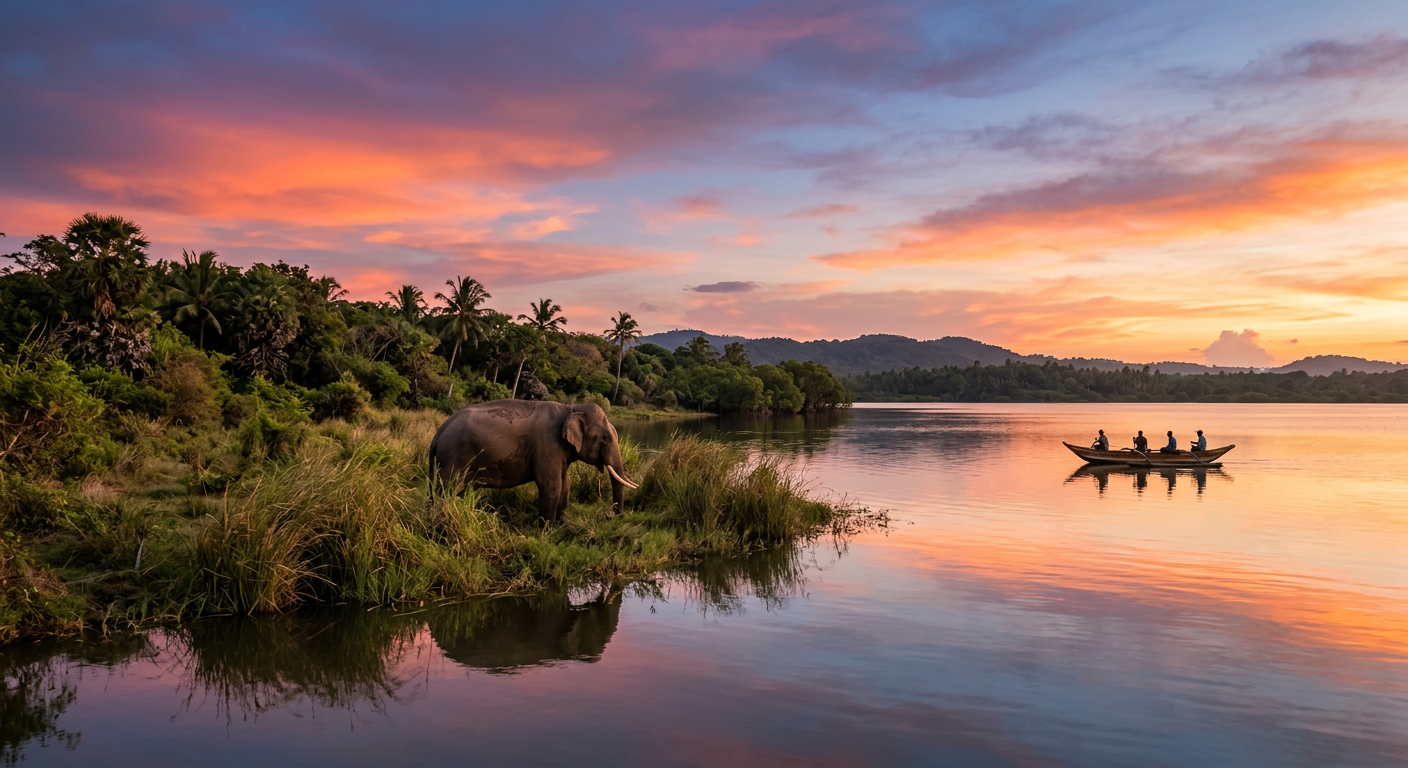
Elephants sometimes move through the wider wetland and scrub landscape, including areas near lagoon margins. Seeing one from a boat can be memorable, but it should never be advertised as certain. Their movements change according to water, food, human activity and other conditions. If an elephant appears, remain quiet and let the guide maintain ample space. Boats should not block its route, follow it along the shore or approach a herd with calves.
You may also notice water monitors, monkeys, buffalo, butterflies and smaller wetland creatures. Try not to judge the trip solely by whether a large animal appears. The changing light, mangrove habitat and sounds of the lagoon are central to the experience.
Best Seasons and Times of Day
Arugam Bay generally experiences its driest, busiest travel period during the middle months of the year, but lagoon conditions are not identical from year to year. Rain, wind, flooding, water levels and access can all influence departures. The northeast monsoon commonly brings wetter weather to the east between roughly October and January, although seasonal patterns can shift. Always check the short-term forecast and ask whether the lagoon is currently suitable for boating.
Early morning and late afternoon are usually the most comfortable times. Morning departures often benefit from cooler air, soft light and active birds. Times vary with sunrise and the operator, so confirm when you need to leave your hotel rather than relying on a standard departure hour.
Late-afternoon trips can offer warm light and a chance to watch birds moving towards roosts. Some animals may become more active as temperatures fall, but this does not make an elephant sighting predictable. Evening trips also bring stronger mosquito activity and fading visibility. Ensure the boat returns before darkness unless the operator is properly equipped and the route is intended for low-light travel.
Wind and rain can affect both comfort and safety on exposed water. A responsible operator may delay or cancel a trip if conditions deteriorate. Build some flexibility into your itinerary rather than treating a particular safari time as guaranteed.
How to Book an Arugam Bay Lagoon Safari
Most visitors book after arriving in Arugam Bay, either through their accommodation or directly with a local operator. Booking locally can make it easier to check current conditions and support community livelihoods, but it is still worth comparing what is included. During busy periods, arranging the trip at least a day ahead may help secure your preferred time.
Before paying, ask for the total price for your group and confirm whether it covers the boat, guide, entrance or community fees, hotel transfer and waiting time for the driver. Prices and fee arrangements can change, so a figure quoted online may no longer be reliable. Establish whether the charge is per person or per boat, and agree on the currency. Carry small Sri Lankan rupee notes for incidental expenses and tips, but remember that tipping is optional.
Also confirm the lagoon, launch point, expected duration and type of craft. Trips often last around one and a half to two hours, although routes depend on conditions. Some boats are paddled or poled, while arrangements elsewhere may differ. A quiet, non-motorised craft can reduce noise where it is practical, but safety, operator experience and local rules should come first.
Questions to Ask Before Confirming
- Is the trip operating today? Water levels, weather and local access can change plans.
- What is included? Check transport, guiding, boat fees and any additional charges.
- Are life jackets provided? Ask for a suitable wearable life jacket for every passenger, including children.
- How many passengers are carried? A lightly loaded boat is usually more comfortable and stable.
- What is the cancellation policy? Clarify what happens if rain, wind or unsafe conditions prevent departure.
- Can the operator accommodate mobility needs? Boarding may involve uneven, muddy or slippery ground.
Choose an operator who prioritises safe boating and respectful viewing rather than promising close encounters or guaranteed elephants.
What the Trip Is Like
The transfer normally ends at a simple landing area rather than a formal marina. Depending on the water level, you may need to step down into a narrow boat, so wear footwear with grip and keep both hands free while boarding. Follow the guide’s seating instructions and avoid changing places once the boat is moving.
The guide will usually paddle or steer along the lagoon edge, pausing when wildlife is visible. Commentary can be informal, and English fluency varies. Travellers with a specialist interest in birds should ask in advance for a guide with identification experience. Bring binoculars if you have them; they improve views without encouraging the boat to approach animals too closely.
What to Bring
- Sun protection: Wear a hat, sunglasses and lightweight clothing that covers your shoulders. Use sunscreen before boarding, as shade may be limited.
- Drinking water: Carry a refillable bottle, particularly on warmer afternoon trips. Take all waste back with you.
- Insect repellent: Mosquitoes and other insects may be active around vegetation, especially near dusk.
- Binoculars: A compact pair is often more useful than relying only on a camera.
- Secure camera gear: Use a strap or dry bag to protect phones, cameras and documents from splashes.
- Simple footwear: Sandals or shoes with good grip are useful around muddy launch points. Avoid bringing more luggage than you can safely manage in a small boat.
- Light rain layer: A compact jacket can be helpful when the forecast is unsettled, but avoid disposable plastic ponchos if possible.
Safety and Responsible Wildlife Viewing
Wear the provided life jacket for the whole journey, even if the lagoon appears calm. Keep children beside a responsible adult and ask about minimum-age guidance before booking. Travellers who are pregnant or who have mobility, balance or relevant health concerns should consider the boarding conditions and seek appropriate personal advice before participating.
Never feed wildlife, play recorded bird calls, request that a guide chase an animal or encourage a closer approach. Keep voices low, switch off flash photography and avoid music. If another boat is already watching an animal, give it space rather than crowding the same section of shoreline.
Elephants and crocodiles are powerful wild animals. Remain in the boat unless your guide identifies a safe place to disembark, and do not walk towards wildlife after the trip. A good sighting is one that does not alter an animal’s direction or behaviour.
Is a Lagoon Safari Worth It?
A lagoon safari is an appealing counterpoint to Arugam Bay’s beaches and surf breaks. It suits birdwatchers, photographers and travellers who enjoy slow, observational experiences. It is less suitable for anyone expecting a guaranteed checklist of large animals or a highly polished attraction.
Choose a safety-conscious local operator, ask clear questions and arrive with realistic expectations. Even without an elephant sighting, an unhurried journey through the wetlands can provide a rewarding look at the landscapes and community life beyond Arugam Bay’s beachfront.