Sri Lanka combines warm tropical water with beach breaks, reefs and long point waves, making it an appealing destination for beginner and intermediate surfers. The island is not a single year-round surf zone, however. Conditions shift between the south and west coasts and the east coast as the monsoons change, while wind, swell direction, tides and local sand movement can alter a break from one day to the next. This guide explains where to start, when to travel and how to choose waves that suit your ability.
When Is the Best Time to Surf in Sri Lanka?
The south and west coast surf season generally runs from November to April. During this period, towns such as Hikkaduwa, Weligama, Ahangama and Midigama often receive cleaner conditions and lighter morning winds. December to March is also a busy tourism period, so popular breaks and beginner beaches can become crowded. October, April and the weeks around the monsoon transitions are less predictable but can still produce good sessions.
On the east coast, the main surf season around Arugam Bay usually develops from about May to September or early October. July and August are among the busiest months. Rain, wind and swell do not follow exact calendar dates, so check recent reports with a reputable local surf school before travelling across the island solely for waves. Even in season, early mornings are often cleaner than afternoons.
Choosing a Break for Your Ability
A spot described as beginner-friendly is not safe for every beginner on every day. Wave size, tide, currents and crowd levels matter as much as the name of the break. First-time surfers should learn on a soft-top board with an instructor in waist- to chest-deep water, away from reefs and established peaks. Intermediates should be able to paddle out independently, catch unbroken waves, turn both ways and follow right-of-way rules before entering a crowded point or reef break.
- Ask about the tide: Some reefs become shallow at low tide, while certain beach breaks develop stronger currents as the tide changes.
- Watch before paddling out: Spend at least ten minutes identifying the take-off zone, current, exit point and other surfers’ routes.
- Choose the board for the conditions: A larger board may help with paddling and wave count, but it also requires more control in a crowd.
Best Beginner Surf Spots on the South Coast
Weligama Bay
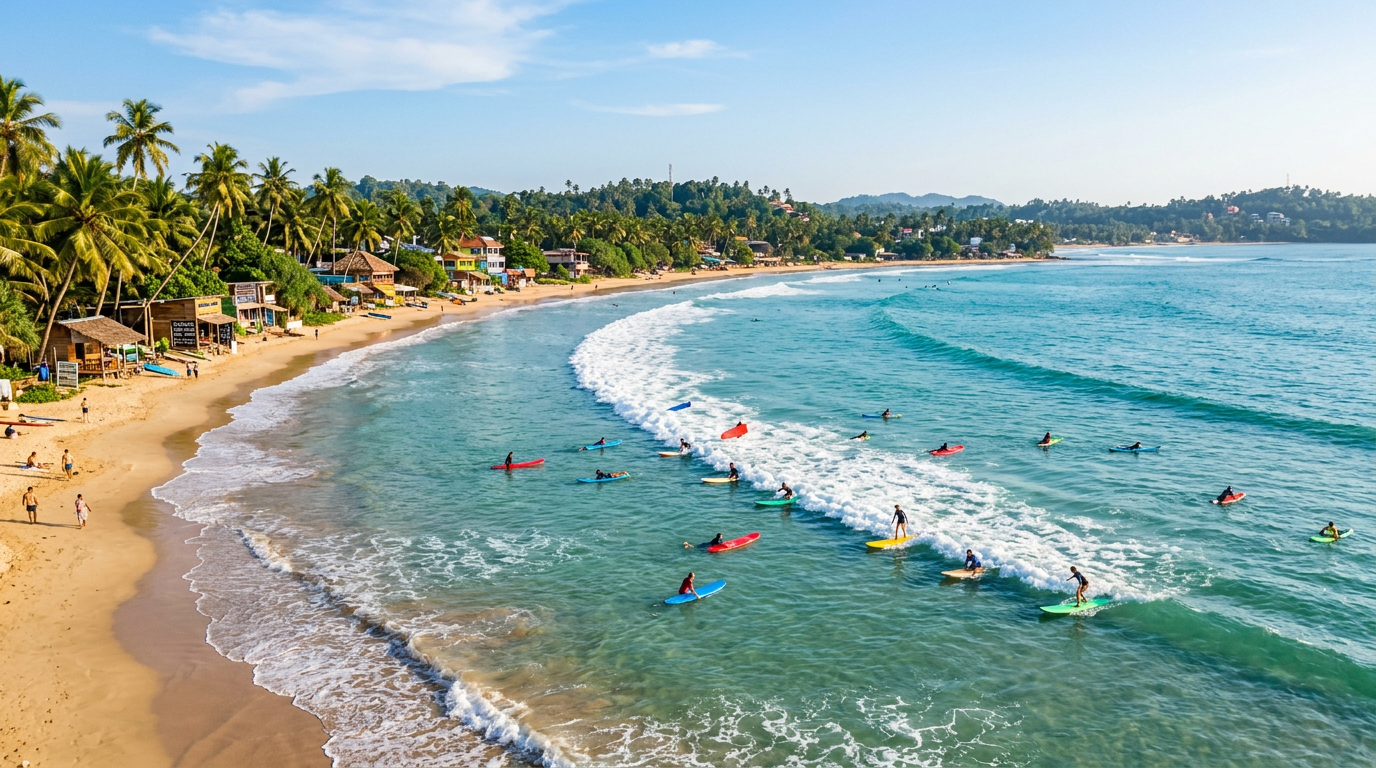
Weligama is Sri Lanka’s best-known learning area. Its broad sandy bay has numerous surf schools, rental stalls and places to eat, with several peaks spread along the beach. On smaller days, the white water and gentler unbroken waves provide room to practise paddling, popping up and trimming. Conditions are not always mild: larger swells can produce stronger currents, close-outs and heavy board traffic. Beginners should stay close to their instructor rather than drifting into busier peaks.
Hiriketiya Bay
Hiriketiya, near Dikwella, is a compact horseshoe-shaped bay with a scenic setting and a lively café scene. The protected inside can offer manageable waves when the swell is modest, but the bay is not automatically suitable for first-timers. It can become extremely crowded, and parts of the break run over reef. Take a lesson, ask where the sandy learning area is that day and avoid paddling into the main peak until you can control your board confidently.
Dewata and Kabalana Beach
Dewata, close to Galle, can be a convenient place for lessons when conditions are small. Its proximity to the city also makes it easy to combine a morning surf with a visit to Galle Fort. Farther east, the beach-break section at Kabalana may suit progressing beginners and intermediates. It is separate from the powerful reef peak known as The Rock, which is intended for experienced surfers. At both beaches, confirm currents and safe boundaries locally before entering.
South Coast Waves for Intermediate Surfers
Midigama
Midigama has several reef breaks within a short stretch of coast, but each has a different character. Lazy Left and Lazy Right can provide longer, more manageable rides when the swell and tide align. They still break over reef and may become crowded, so they are better for surfers who can take off consistently and steer around others. Rams is faster, shallower and more powerful; it should not be treated as an intermediate progression wave simply because it is nearby.
Kabalana
The Rock at Kabalana is a prominent A-frame reef break offering lefts and rights. It can be powerful, competitive and demanding, particularly on a solid swell. Confident intermediates may surf it on suitable days after seeking local advice, but less experienced visitors should use the beach break instead. Watch how surfers enter and leave, and do not rely on following someone else across an unfamiliar reef.
Hikkaduwa
Hikkaduwa offers beach and reef options supported by a long-established surf community. The reefs can produce workable waves for experienced intermediates, although shallow sections, crowds and strong sets require sound board control. Less confident surfers should ask a local instructor which beach peak matches the day’s conditions. Hikkaduwa is a practical base for travellers who also want restaurants, transport connections and nightlife.
East Coast Surfing Around Arugam Bay
Arugam Bay is known for right-hand point breaks rather than a wide choice of mellow beach breaks. Main Point can deliver long rides, but its principal take-off area is crowded and best left to capable surfers. Baby Point, at the inside end of the bay, may offer gentler waves for lessons when sand, swell and tide cooperate. Its name does not guarantee easy conditions, so beginners should still enter with an instructor.
Peanut Farm, south of town, has a right-hand point and sections that may suit different levels. Access and wave shape can change with rain, sand and seasonal tracks. Whiskey Point, north of Arugam Bay, is another commonly used lesson area when conditions are appropriate. Pottuvil Point and other surrounding breaks can offer long rides, but suitability varies by swell and crowd level. Arrange transport with a trusted driver and ask a local school for a current recommendation rather than choosing solely from an online spot description.
Elephant Rock is scenic but requires particular care. Lagoon levels and access routes can change, and crocodiles may inhabit coastal waterways. Never wade or swim across a lagoon or channel. Ask locally whether there is a safe land route, use an experienced guide if needed and turn back if access is uncertain. Wildlife should be observed from a generous distance.

Surf Lessons, Camps and Board Hire
Lessons and board rentals are widely available in Weligama, Hikkaduwa, Ahangama and Arugam Bay. Rates change with season, board type and rental duration, so fixed online prices can become outdated. Ask for the full price in Sri Lankan rupees, what the session includes and whether transport, rash guards or photos cost extra.
- Choose instruction carefully: Look for a school that limits group size, explains water safety and matches students by ability. A lesson should include basic etiquette, currents and board control, not only help catching waves.
- Inspect rental boards: Check the leash, fins, fin box and any repaired areas before leaving the shop. Photograph existing damage and confirm who is responsible if the board breaks in normal use.
- Request the right equipment: Beginners generally benefit from a stable soft-top. Intermediates seeking a particular volume, longboard or performance shape should reserve ahead because selection varies.
- Review camp packages: Compare lesson frequency, coaching qualifications, board access, room standard and cancellation terms. A well-known brand name alone does not guarantee the right coaching level.
Lineup Etiquette and Water Safety
Sri Lankan lineups are often friendly, but popular peaks can be busy. Courtesy does not replace the standard rules of surfing. The surfer closest to the breaking part of the wave normally has priority, and a surfer already riding should not be dropped in on. Do not snake around others, throw your board to avoid a wave or paddle directly through the take-off zone.
- Control your board: Keep hold of it whenever possible and leave enough space between yourself, swimmers and other learners.
- Use the channel: Where a defined channel exists, paddle out there instead of through the path of a rider. If unsure, ask before entering.
- Respect local surfers: Wait your turn, avoid arguments and apologise promptly for mistakes. Local knowledge is especially valuable at reefs and points.
- Protect yourself from the sun: Use suitable water-resistant sun protection and a rash vest, and take breaks during the hottest part of the day.
- Avoid standing on reef: If you fall in sufficient depth, fall flat rather than jumping feet-first. Do not touch coral or marine animals.
- Know your limits: Lifeguard coverage is limited at many surf beaches. Do not paddle out alone in unfamiliar conditions, and leave the water if wind, current or visibility deteriorates.
Planning a Smooth Sri Lanka Surf Trip
Stay close to the area that best suits your ability instead of changing towns every day. Weligama offers the broadest choice for first lessons, while Ahangama and Midigama give progressing surfers access to several breaks. Arugam Bay is a convenient east coast base, but trips to outlying points require additional transport. Tuk-tuks commonly carry boards, although the rack and tie-downs should be checked before departure.
Bring a reusable water bottle, swimwear that stays secure, a rash vest and a small first-aid kit for minor scrapes. Consider travel insurance that covers your planned surfing activities and read the policy terms rather than assuming all water sports are included. Keep beaches clean, refuse unnecessary single-use plastic and support operators that respect wildlife and coastal habitats.
The best Sri Lanka surf trip is not necessarily the one with the biggest waves. Match the coast to the season, choose breaks honestly for your level and ask locally about each day’s tide, access and current. With patient progression and respectful etiquette, beginners and intermediates can enjoy Sri Lanka’s varied surf without taking avoidable risks.