Rising to 2,243 metres in Sri Lanka’s central highlands, Sri Pada is both a striking mountain and one of the island’s most revered pilgrimage sites. It is also widely known as Adam’s Peak. At the summit, a footprint-shaped impression is interpreted according to different faith traditions, and generations of pilgrims have made the demanding ascent as an act of devotion. Visitors are welcome to share the route, but it is important to approach the mountain as a living sacred site rather than simply a sunrise hike.
The popular path from Nallathanniya, also called Dalhousie, involves roughly 5,000 to 6,000 steps, depending on how they are counted. A return climb can take seven hours or considerably longer once rest stops and queues are included. Careful timing, sensible footwear and respect for changing mountain weather matter more than speed.
Understanding the Pilgrimage Season
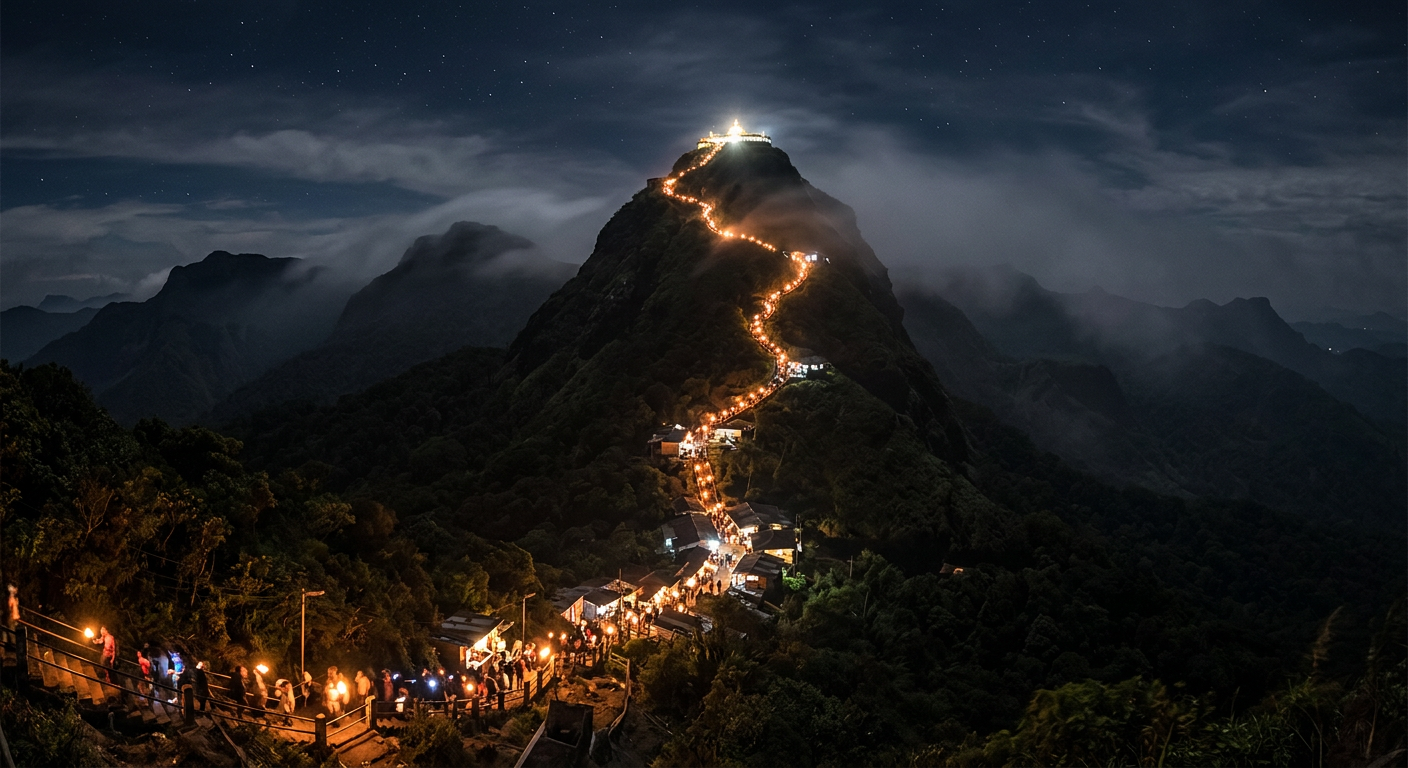
The main Sri Pada pilgrimage season traditionally runs from Unduvap Poya in December to Vesak Poya in May. Exact dates change each year with the full-moon calendar. During this period, the Nallathanniya route is normally illuminated and tea shops and snack stalls operate along much of the path. Services may still vary by hour, weather and crowd levels, so do not rely on every light or stall being open.
The season brings the mountain to life. Families, elderly devotees and groups chanting traditional verses share the steps, while roadside stalls provide places to pause over hot tea. Conditions are often drier than in the southwest monsoon months, but rain, mist, wind and low summit temperatures remain possible. Poya days, weekends and public holidays can be exceptionally busy.
Out-of-season climbing is a very different undertaking. The route may be dark and quiet, most stalls close, surfaces become slippery, and rain or mist can reduce visibility. Maintenance or local access restrictions may also affect plans. First-time visitors are better served by climbing in season. Anyone considering another period should check current local conditions, avoid setting out alone and be equipped for poor weather and limited services.
Getting to Nallathanniya and Staying Nearby
Nallathanniya is the usual base for first-time climbers because it has the shortest and best-supported route. Hatton is the main transport gateway. From Hatton, buses and hired vehicles travel through Maskeliya to Nallathanniya, with journey times commonly around two hours but highly dependent on traffic and road conditions. Confirm current train and bus schedules rather than planning around old online timetables.
Accommodation ranges from simple guesthouses to small hotels. Staying near the trailhead allows you to rest before a night ascent and avoids a long transfer immediately before climbing. Reserve early for weekends and Poya periods, and ask your host how far the property is from the actual entrance. Some places advertised under Adam’s Peak are a vehicle ride away.
Other historic routes approach Sri Pada from areas such as Ratnapura and Kuruwita, but they are substantially longer and are not the simplest choice for an independent first ascent. Make sure a driver understands that you want Nallathanniya in the Hatton and Maskeliya area, as several routes lead towards the mountain.
Night or Day: Choosing Your Ascent
Most visitors climb overnight to reach the summit before dawn. In clear conditions, sunrise can reveal layers of hills and the mountain’s distinctive triangular shadow, although cloud, rain or mist may obscure both. Treat the view as a possibility rather than a guarantee.
A common starting window is between midnight and 2:00 AM. Fit walkers may ascend in about three hours, while many first-timers need four to five hours. Queues near the top can add much more time on busy nights. Sunrise time changes through the season, so check locally on the day and build in a margin without arriving excessively early. Waiting on the exposed summit can be cold and uncomfortable.
For lighter crowds, choose a weekday outside major holidays and Poya days. Even then, the path is shared with pilgrims of all ages and abilities. Do not push past people on narrow stairs or block the route while taking photographs. A steady pace is safer and more respectful than racing for the summit.
A daylight ascent offers better views of the forested surroundings and makes the terrain easier to read. It can also be hotter and more humid on lower sections, and you will not see dawn from the summit. Start early, carry sun protection and allow enough time to descend before dark. Wildlife should be observed quietly without leaving the path or feeding animals.
What the Route Is Like
The Nallathanniya route begins relatively gently, passing shrines, stalls and sections of forest before the staircase becomes more persistent. The final climb is steep, with high or uneven steps and long stretches of handrail. The repeated descent is often harder on knees and calves than expected.
Break the ascent into manageable sections rather than focusing on the total number of steps. Pause away from the main flow of people, drink regularly and avoid exhausting yourself on the easier opening kilometres. If you feel faint, unusually breathless or unwell, stop in a safe place and seek assistance rather than forcing yourself onward. Travellers with health concerns should obtain individual advice from a qualified medical professional before undertaking a strenuous climb.
Start slowly, leave room for pilgrims and save energy for the steep final staircase. Sri Pada rewards patience more than speed.
What to Pack
Pack lightly enough to climb comfortably but prepare for a marked difference between the warm base and the exposed summit. A small backpack is usually sufficient.
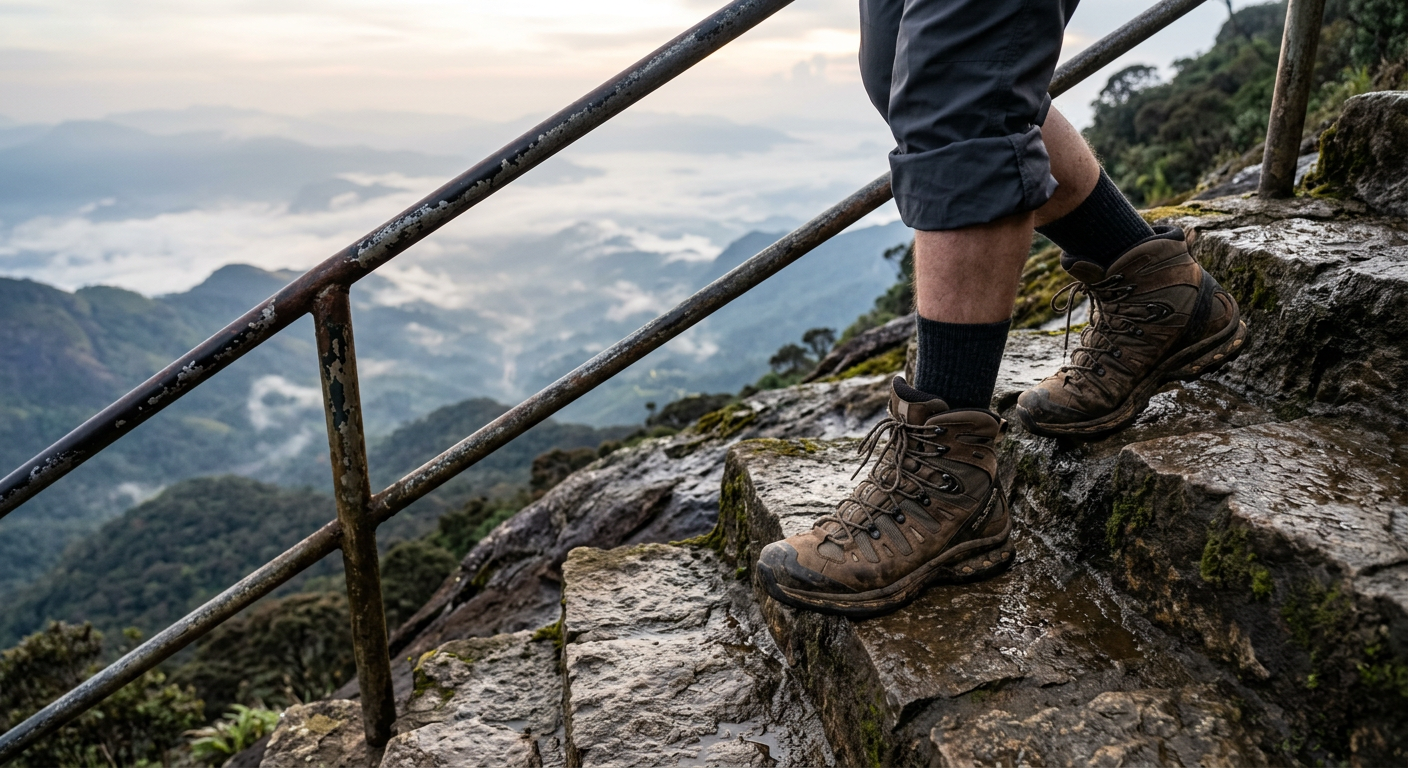
- Supportive footwear: Wear broken-in walking shoes or trail shoes with reliable grip. Smooth-soled sandals are a poor choice for wet steps.
- Warm layers: Carry a light fleece or jumper and a wind-resistant outer layer. Put them on before cooling down during a long summit wait.
- Rain protection: A compact waterproof jacket is more useful than an umbrella on crowded stairs. Protect phones and valuables inside a dry bag or sealed pouch.
- Headtorch: Bring your own even during pilgrimage season. It keeps both hands available for rails and helps if a section is poorly lit. Pack spare batteries or confirm that it is fully charged.
- Water and food: Carry enough drinking water for your needs and a few compact snacks. Seasonal stalls can reduce what you need to carry, but their opening hours and supplies are not guaranteed. Refill or buy sealed water where available rather than drinking from untreated streams.
- Sun protection: For the descent or a day climb, pack sunscreen, a hat and sunglasses.
- Cash: Small Sri Lankan rupee notes are useful for tea, snacks, toilets, transport and offerings. Do not assume card or mobile payments will work.
- Personal essentials: Bring any regular medication, tissues and a small amount of basic first-aid material. Mobile coverage can be inconsistent, so share your plan with your accommodation.
Respecting a Sacred Pilgrimage
The summit compound is a place of worship. Wear practical but reasonably modest clothing, speak quietly around ceremonies and follow instructions about footwear, hats, queues and photography. Ask before photographing individuals at prayer. Never touch or obstruct sacred objects for a picture.
Alcohol, loud music and disruptive behaviour are inappropriate on the pilgrimage route. Carry your rubbish back or place it in a proper bin, and avoid disposable packaging where possible. Toilets along the route can be basic, so carry tissues and hand sanitiser without leaving waste behind.
The summit bell is traditionally associated with completed pilgrimages. If you are unsure about a ritual or where visitors should stand, observe respectfully and follow the guidance of temple attendants rather than copying others or interrupting worship.
The Summit and Descent
The summit has limited space and can feel congested before dawn. Keep pathways clear and secure loose belongings in strong wind. Sunrise is generally around 6:00 AM, but the precise time varies by date, and clouds can change conditions within minutes. Once ceremonies and views are finished, begin descending carefully rather than joining a rush down the stairs.
Allow roughly two to four hours for the descent, depending on fatigue, crowds and stops. Use handrails where helpful, keep your steps controlled and let faster walkers pass only where there is room. Do not walk backwards on the staircase: tired legs, uneven steps and two-way traffic make that unnecessarily risky. Trekking poles may help some walkers on quieter sections, but they must be used carefully in crowds.
Drivers and onward transfers should be arranged with a generous time margin. After a sleepless night and strenuous climb, riding a motorbike or immediately beginning a long journey may be a poor choice. A shower, meal and rest near the trailhead can make the rest of the day safer and more enjoyable.
Recovery After the Climb
Muscle soreness, particularly in the calves and thighs, is common and may become more noticeable over the following day or two. Hydrate, eat a proper meal and keep the remainder of the day easy. Gentle movement may feel better than complete inactivity, but avoid scheduling another demanding hike immediately afterward.
Warm showers and normal light stretching can be comforting, provided they do not cause pain. Persistent severe pain, significant swelling, fainting, breathing difficulty or other worrying symptoms should not be dismissed as the usual post-climb hobble; seek appropriate medical assistance. With realistic pacing and a recovery day in your itinerary, Sri Pada can be remembered for its atmosphere and cultural meaning rather than only for its staircase.