Galle Fort brings together Sri Lanka’s maritime history, colonial-era architecture and contemporary coastal life within one compact neighbourhood. Established by the Portuguese and extensively rebuilt by the Dutch, the fortified old town overlooks the Indian Ocean on Sri Lanka’s southwest coast. Today, residents, places of worship, museums, cafes, hotels and small shops occupy its historic streets, making it much more than an open-air monument.
For travellers exploring the south coast, the fort offers an easy change of pace from nearby beach towns. You can walk the ramparts, study centuries-old buildings, browse independent shops and watch the sunset without needing a packed itinerary. This guide covers the main sights, a practical walking route and the details worth knowing before you arrive.
Understanding the History of Galle Fort
Portuguese ships reached the Galle area in the early 16th century, although historical accounts differ on the precise year. The Portuguese later established fortifications here to protect an important trading harbour. In 1640, forces of the Dutch East India Company, known as the VOC, captured Galle and began reshaping the site into a much larger fortified settlement.
The Dutch added substantial stone ramparts, bastions, warehouses, administrative buildings and a planned street grid. They also developed drainage channels designed around the coastal terrain and heavy tropical rain. Look closely around the fort and you will still see Dutch names, dates and VOC symbols, particularly near the Old Gate.
British rule began in 1796. Rather than dismantling the fort, the British adapted many buildings and introduced new civic and religious landmarks. The Clock Tower dates from the late 19th century, while the present lighthouse was completed in 1939 after an earlier lighthouse was destroyed by fire. Sri Lanka gained independence in 1948, and the Old Town of Galle and its Fortifications became a UNESCO World Heritage Site in 1988.
The architecture reflects these overlapping periods, but it also shows local responses to the climate. Deep verandas, shaded courtyards, high ceilings, tiled roofs and large openings helped buildings manage heat, rain and sea air. Many properties have since been restored, although the quality and character of restoration vary from one building to another.
How Much Time Do You Need?
Allow at least half a day for a first visit. That gives you time to walk a substantial section of the ramparts, explore the inner streets and stop at one or two landmarks. A full day is better if you want to visit museums, have lunch and return to the walls for sunset. Staying overnight reveals a quieter side of the fort before day visitors arrive and after many shops close.
There is no single entrance ticket for the fort neighbourhood, and its public streets and ramparts are generally open to pedestrians. Individual museums, religious buildings and heritage sites may have their own opening hours, admission charges or access restrictions. Check locally on the day rather than planning around old online listings.
A Practical Galle Fort Walking Route
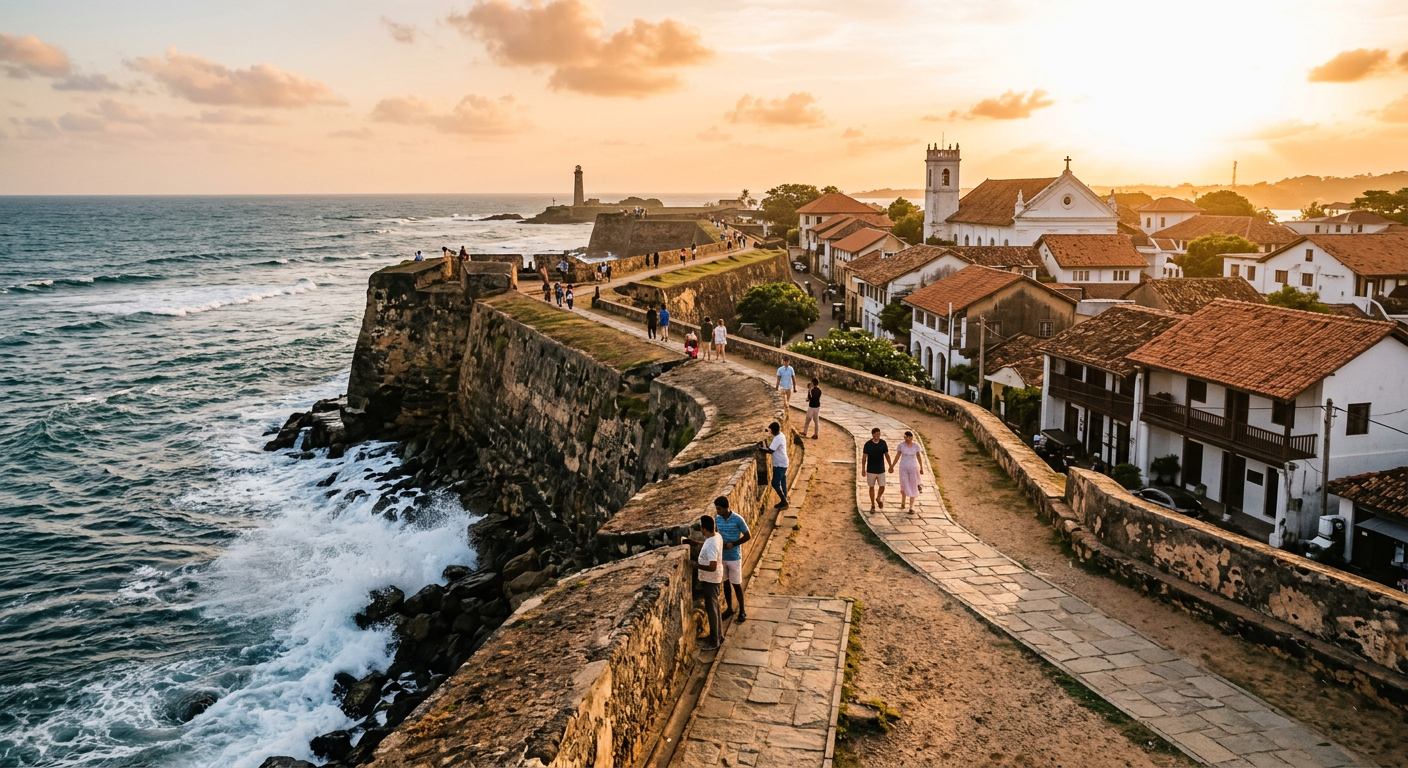
Begin near the Main Gate, which faces the modern city and is close to the railway and bus stations. From here, head towards the Clock Tower and Moon Bastion for an elevated view across Galle International Cricket Stadium and the newer city. This northern section is a useful introduction to the scale of the fortifications.
Continue along the ocean-facing walls towards the western and southern bastions. The ramparts offer broad views of the Indian Ocean, but the route includes uneven surfaces, steps and exposed drops. Some sections have little shade and limited barriers, so wear secure footwear, supervise children closely and avoid standing near the edge during strong wind or rain.
Flag Rock Bastion is one of the best-known viewpoints. It was historically associated with signalling hazards and approaching vessels. You may see local performers diving into the water for paying spectators, but the surrounding rocks and sea conditions can be dangerous. Travellers should not attempt to copy them or enter the water from the ramparts.
From Flag Rock, continue towards the white Galle Lighthouse beside Point Utrecht Bastion. The palm-framed view is among the fort’s most photographed scenes, although the lighthouse itself is not normally a public viewing tower. Nearby streets lead past Meeran Mosque and back into the old town. A relaxed version of this route, including photo stops, usually takes longer than a simple one-hour circuit.
Late afternoon brings softer light and more comfortable temperatures. For sunset, choose a safe, broad section of the western ramparts and arrive before the sun reaches the horizon. Cloud cover is common in the tropics, especially during wetter periods, but the evening atmosphere is still worthwhile.
Exploring the Streets and Architecture
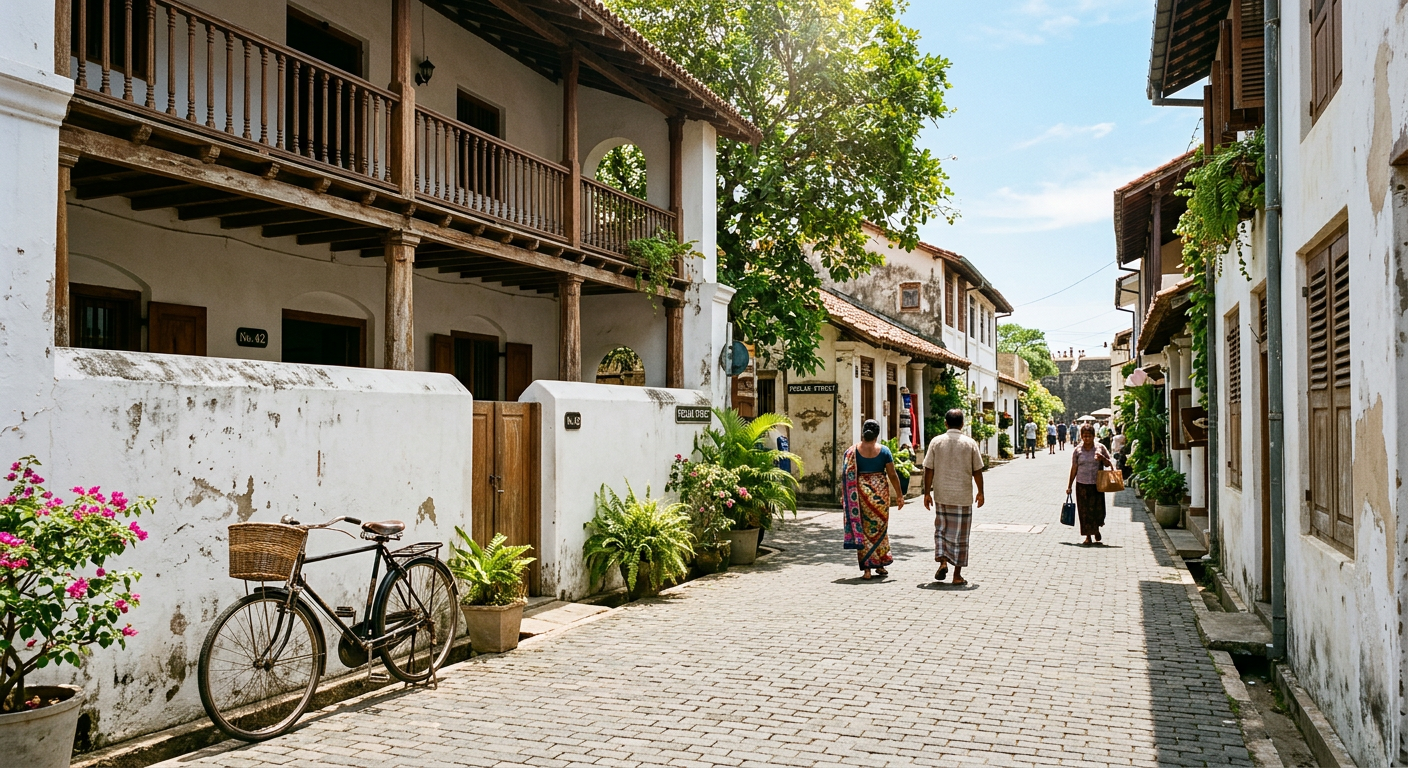
After the walls, wander through Church Street, Pedlar Street and Leyn Baan Street, then branch into the quieter lanes between them. Street names sometimes appear with different spellings on signs and maps. The fort is compact enough to explore without a rigid route, although carrying an offline map can help you identify smaller landmarks.
Look for heavy wooden doors, fanlights, verandas, internal courtyards and tiled roofs. Some facades are carefully conserved, while others show the effects of salt air and age. Remember that many attractive buildings are private homes or operating hotels. Take photographs from public areas, avoid blocking entrances and ask before photographing residents.
Groote Kerk, commonly called the Dutch Reformed Church, was completed in its present form in 1755. Its interior contains historic memorial tablets, and gravestones from earlier Dutch burial grounds were incorporated into the floor. Nearby, All Saints’ Church is a 19th-century Anglican building with Gothic Revival details. Access to active places of worship can change during services, holidays or maintenance.
The Old Dutch Hospital occupies a prominent waterfront complex near the harbour side of the fort. Once associated with Dutch colonial medical services, it has been restored for restaurants and shops. The Old Gate, with its surviving VOC emblem on one side and British royal arms on the other, is another useful stop for understanding the fort’s layered history.
Museums and Cultural Stops
The National Maritime Archaeology Museum is housed in a former Dutch warehouse near the Old Gate. Its displays explore seafaring, trade, underwater archaeology and coastal life. Collections and opening arrangements can change, so confirm hours and ticket information locally before making a special trip.
The privately run Historical Mansion Museum on Leyn Baan Street contains an eclectic collection of household objects, jewellery, ceramics, maps and colonial-era items. Its dense displays feel very different from a formal state museum. If demonstrations, retail areas or gem sales are operating, there is no obligation to purchase anything; take time to compare quality and documentation before buying high-value items.
Eating and Shopping in the Fort
Galle Fort has a wide range of cafes and restaurants, from Sri Lankan rice and curry to seafood, bakery items and international dishes. Prices inside the fort can be higher than in central Galle, particularly at boutique hotels and prominent sunset locations. Check menus before ordering and ask whether taxes or service charges are included.
Shops sell textiles, spices, tea, jewellery, prints and souvenirs, but not every product is made locally. If local craftsmanship matters to you, ask where and how an item was produced. Polite questions and thoughtful purchases are more useful than bargaining aggressively in small independent businesses.
Practical Tips for Visiting Galle Fort
- Best time to walk: Start early in the morning or after about 4 PM to avoid the strongest heat. Midday is better suited to shaded streets, museums or a long lunch.
- Getting there: Galle has regular bus and rail connections with Colombo and many south-coast towns, although schedules and journey times can change. The main stations are outside the walls within walking distance of the Main Gate. A tuk-tuk is useful with luggage; agree on the fare before setting off if no meter is used.
- Heat and rain: Carry drinking water, sunscreen and a hat. A compact umbrella is useful for both sun and sudden showers. The stone surfaces can become slippery in wet weather.
- Religious etiquette: Dress respectfully when entering churches, mosques or other places of worship. Cover shoulders and knees, follow posted instructions and ask before entering if a service is underway. Shoe and photography rules vary by site.
- Accessibility: The inner streets are mostly level, but pavements can be narrow or uneven. Many rampart sections require steps and lack handrails. Travellers with limited mobility can still see key buildings and the lighthouse area from street level, but individual heritage properties may not have step-free access.
- Road awareness: The fort is walkable, but its streets are not fully pedestrianised. Watch for tuk-tuks, cars, scooters and bicycles, especially around bends and narrow junctions.
- Responsible visiting: Galle Fort is a residential community as well as a visitor attraction. Keep noise low in residential lanes, dispose of litter properly and avoid flying drones without checking current local rules and restrictions.
The quieter lanes are worth exploring, but treat them as neighbourhoods rather than photo sets. A slower walk reveals workshops, homes, schools and places of worship that give the fort its living character.
Beyond the Fort Walls
Modern Galle begins immediately outside the gates. The commercial streets and markets around the bus station show a busier side of the city, with produce stalls, bakeries, clothing shops and everyday services. These areas are less polished than the fort and can be crowded, so keep valuables secure and take extra care when crossing roads.
If you have more time, Galle also works as a base for the wider south coast. Beaches and towns such as Unawatuna lie nearby, but traffic can make short distances slower than expected. Plan transfers with some flexibility, particularly on weekends, holidays and during heavy rain.
Galle Fort is most rewarding when approached as both a historic site and a living town. Its ramparts and landmarks tell a complex story of trade, conflict and colonial rule, while its homes and businesses show how the old town continues to evolve. Give yourself time to look beyond the main shopping streets, pause by the sea and explore with respect for the people who live within the walls.