Choosing a base on Sri Lanka’s south coast can be harder than expected, especially when Hiriketiya and Weligama both appear on almost every shortlist. Each has surf schools, appealing places to eat and easy access to other coastal stops, but the experience on the ground is noticeably different.
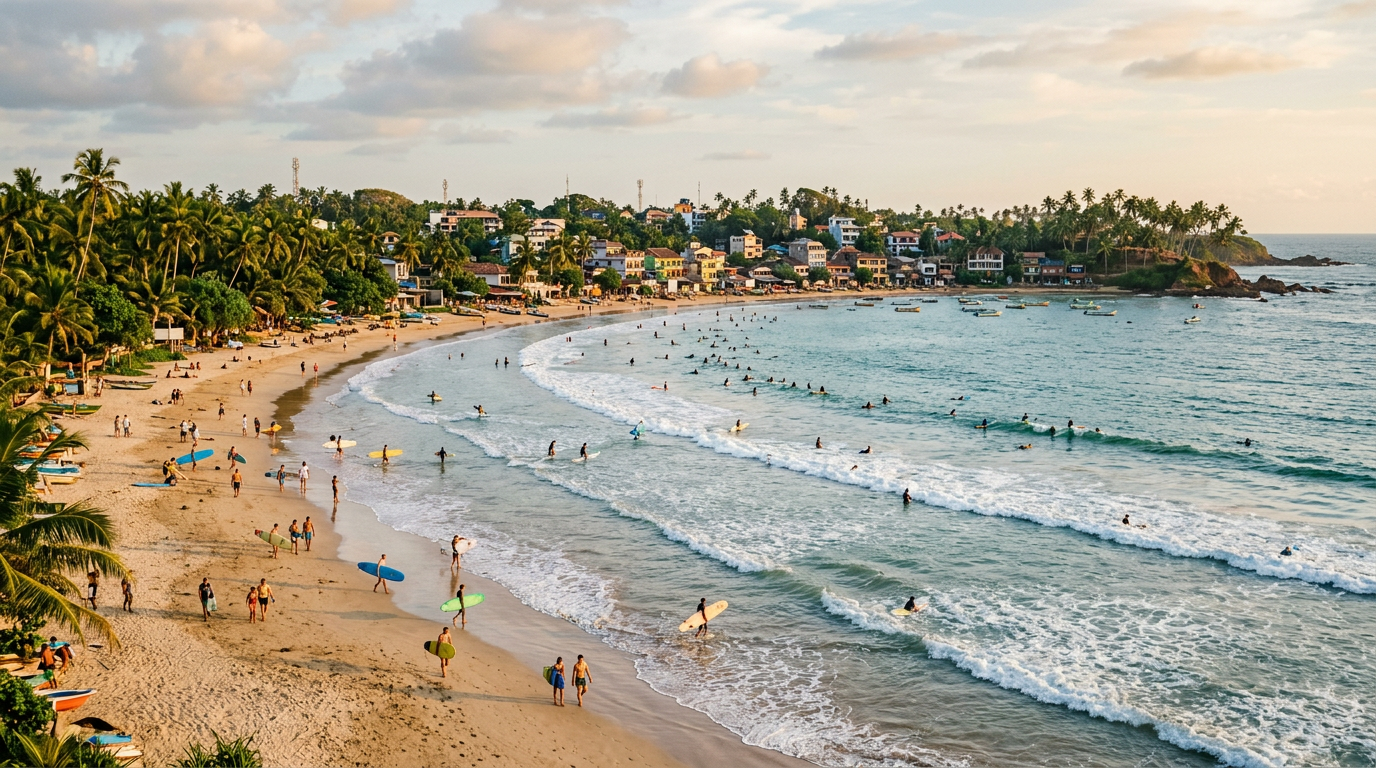
Weligama is a busy coastal town built around a broad bay. It suits travellers who want convenient transport, plenty of accommodation and one of the south coast’s best-known beginner surf areas. Hiriketiya, often shortened to Hiri, is a compact horseshoe-shaped bay near Dikwella, with narrow lanes, tropical greenery and a concentrated collection of cafes, guesthouses and surf businesses.
Neither is universally better. Your choice should depend on your surfing experience, budget, tolerance for crowds and traffic, and whether you prefer a functioning town or a small visitor-focused beach neighbourhood. This practical comparison explains what to expect before you book.
Atmosphere: Busy Coastal Town or Compact Beach Enclave?
Weligama feels unmistakably like a town rather than a resort. The main coastal road runs close to much of the bay, so traffic noise, buses and tuk-tuks are part of the experience. Away from the beachfront businesses, you will find markets, hardware shops, bakeries, pharmacies and neighbourhood restaurants serving local residents. That everyday energy gives Weligama more variety, although it may disappoint travellers imagining a quiet tropical hideaway.
The bay is long, and the character changes from one section to another. Some areas are dominated by surf schools and camps, while others feel more residential. Your accommodation’s exact location matters: a room described as being in Weligama may be a short walk from the sand or several kilometres from your preferred surf area. Check the map and recent guest comments rather than relying on the town name alone.
Hiriketiya is smaller and more intimate. The curved bay is framed by rocky headlands and greenery, while the surrounding lanes contain boutique stays, yoga spaces, cafes and small restaurants. It is easy to settle into a routine of walking to the beach, returning to the same breakfast spot and seeing familiar faces each day.
That intimacy has a downside. Hiriketiya can feel crowded during popular travel periods, and the narrow roads are shared by pedestrians, scooters and tuk-tuks. Development has also made the area less secluded than older photographs may suggest. For a broader view of local life, walk or take a short tuk-tuk ride into nearby Dikwella, where there are more practical shops, local eateries and transport connections.
Surfing: Which Bay Works for Your Ability?
Weligama is widely recommended to beginners because much of the bay has a sandy-bottom beach break and numerous surf schools. On suitable days, learners can practise in white water before progressing to unbroken waves. The broad beach provides more room than Hiriketiya, but it should not be described as empty. Groups often cluster in front of surf schools, particularly in the morning, and collisions can be a concern when many beginners enter the same area.
Conditions vary with swell, tide, wind and the section of beach. A sandy bottom does not make the ocean risk-free: currents, changing depths, boards and other surfers still require attention. First-time surfers should book a reputable instructor, use equipment appropriate to their size and ability, and ask about the safest section and time for that day. Swimmers should also seek current local advice and avoid assuming that a popular surf beach is suitable for casual swimming everywhere.
Hiriketiya packs different types of surfing into a much smaller bay. Its sandy beach-break area may suit beginners when conditions are gentle, while the point and reef sections can produce faster, more technical waves. The lineup can become congested, and rocks, reef, limited take-off space and experienced surfers moving at speed make some areas unsuitable for novices.
Intermediate and advanced surfers may enjoy Hiriketiya when the swell and tide align, but ability labels are subjective. Anyone unfamiliar with the break should watch from shore, speak to a knowledgeable local surf operator and choose a wave that matches the day’s conditions. Do not paddle into the point simply because it is visible from the beginner area.
For most first-time surfers, Weligama offers more space and a larger choice of instructors. Hiriketiya can be rewarding, but its compact lineup demands greater awareness.
Surf quality is never guaranteed in either town. Forecasts are useful, but local wind, swell direction and tide can change the experience quickly. If surfing is the main purpose of your trip, leave some flexibility in your schedule rather than booking every lesson far in advance.
Food and Nightlife
Weligama has the wider dining range. Travellers can choose among simple rice-and-curry shops, kottu stalls, seafood restaurants, hotel dining rooms, coffee shops and international brunch menus. Prices vary substantially between local establishments and beachfront venues, so travellers on a budget have room to compare. Checking whether taxes or service charges are included can prevent surprises at more polished restaurants.
Evening entertainment is more visible in Weligama, especially during the busier south coast season. Surf camps, beach venues and bars may host DJs, live music or social events, but schedules change and the liveliest night may move between venues. Weligama is not a nonstop party town in every neighbourhood, so ask locally if nightlife is important to you. Conversely, light sleepers should check reviews for nearby music and road noise before choosing beachfront accommodation.
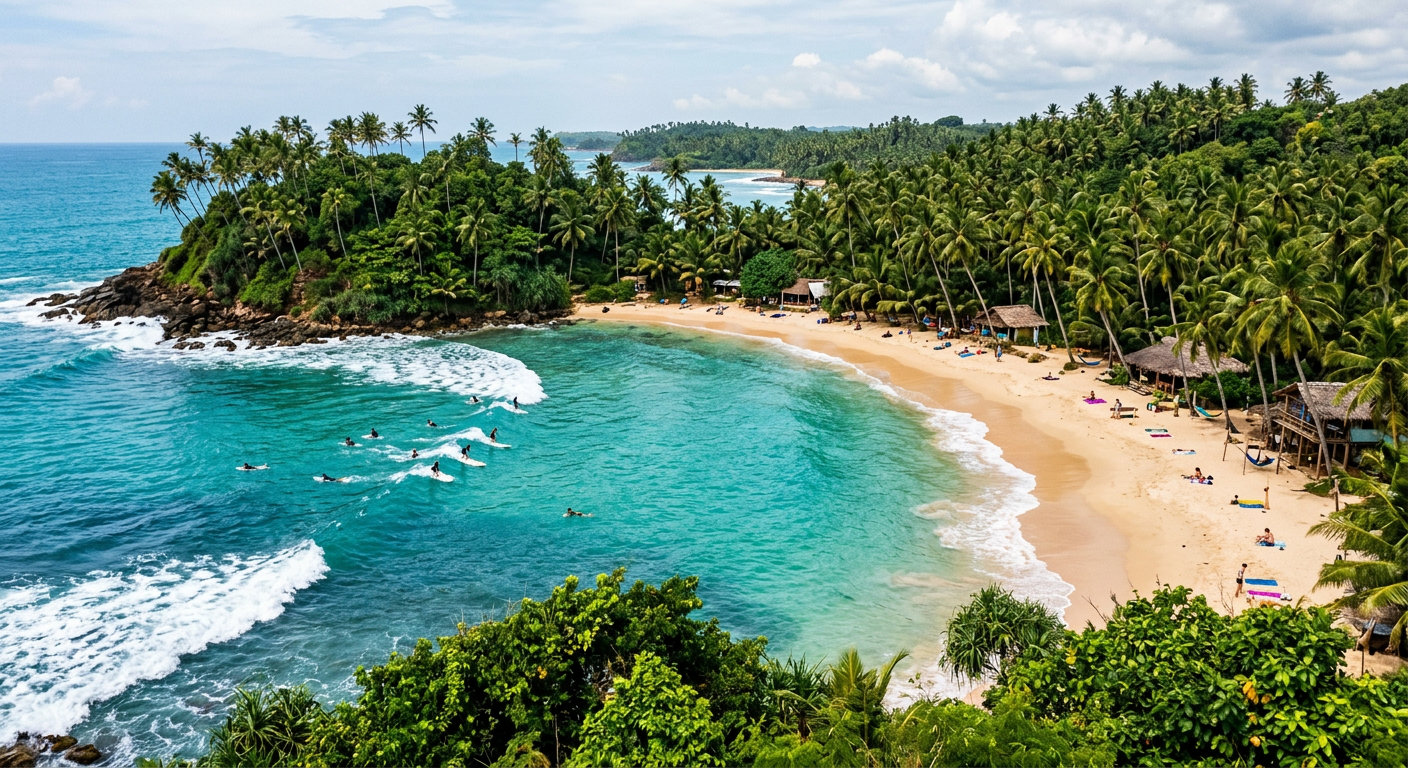
Hiriketiya has an impressive number of cafes and small restaurants for its size. Smoothie bowls, speciality coffee, vegetarian dishes, baked goods and international menus are easy to find, alongside Sri Lankan food in Hiriketiya and Dikwella. Many visitor-oriented venues charge more than basic local restaurants, and popular tables can fill quickly in high season.
Nightlife is generally smaller-scale, with sunset drinks, occasional DJ events and live music rather than a large club scene. Event nights can still be busy and noisy because the area is compact. Travellers seeking quiet evenings should stay back from the bay and check recent accommodation reviews; those wanting several late-night options will usually find more choice around Weligama and nearby Mirissa.
Accommodation: Range, Style and Value
Weligama offers the greater range of beds. Options include social hostels, surf camps, family-run guesthouses, apartments, villas and larger hotels. Many camps bundle lessons, meals, yoga or group activities, which can be convenient for solo travellers. Compare the package carefully, however, because an independent room and separately booked lessons may offer better value for some visitors.
The town’s spread creates meaningful differences in convenience. A cheaper inland room may require a tuk-tuk to reach the part of the bay where you want to surf, while beachfront rooms can experience road, train or event noise. Check walking distance, air-conditioning, hot water, mosquito protection and backup power if these are important to you. Standards can vary even within the same price category.
Hiriketiya is known for boutique guesthouses, compact villas and design-led stays surrounded by vegetation. There are also hostels and modest rooms, particularly when the search is extended towards Dikwella. Accommodation close to the bay often commands a premium, and the limited area means popular properties can book out early.
Staying in Dikwella can be a practical alternative. It may provide better value, easier access to shops and a short tuk-tuk ride to Hiriketiya. Wherever you stay, confirm the exact pin location: descriptions such as “near Hiriketiya” can cover properties that are inconvenient to reach on foot, especially after dark or in heavy rain.
Transport and Getting Around
Weligama is the easier base for travellers relying on public transport. It has a railway station on the coastal line and frequent bus connections towards Matara, Mirissa and Galle. Train timetables and journey durations can change, so verify them close to travel rather than building a tight itinerary around an old online schedule.
Hiriketiya does not have its own railway station. Most visitors arrive by road from Dikwella, Matara or another south coast stop. Wewurukannala is a nearby station, but train services may not suit every itinerary; Matara offers broader onward connections. Buses serve Dikwella, followed by a short tuk-tuk ride to the bay. Agree on the fare before setting off when a meter is not used.
Travel between Weligama and Hiriketiya commonly takes around one to one and a half hours by car or tuk-tuk, depending on traffic, weather and the exact start point. Public buses can take longer and may require a change. Avoid treating either town as a quick daily commute from the other if you plan to carry a surfboard.
Costs and Everyday Practicalities
- Budget: Weligama generally offers more low-cost competition in accommodation, meals and surf lessons. Hiriketiya can be more expensive near the bay, although Dikwella provides cheaper alternatives.
- Cash: Cards are accepted at some hotels and cafes, but small restaurants, buses, tuk-tuks and surf rentals may prefer cash. ATMs are easier to find in the larger town centres.
- Work and connectivity: Both areas have cafes and accommodation advertising Wi-Fi, but speed and reliability vary. Remote workers should confirm recent speed tests, mobile coverage and power arrangements directly with the property.
- Road awareness: Weligama’s main road is busy, while Hiriketiya’s lanes can be narrow and poorly lit. Use extra care when walking after dark and carry a light where necessary.
- Beach conditions: Ask locally about currents, rocks and safe swimming areas. Conditions can change from one day or section of beach to another.
Weather and the Best Time to Visit
The south coast’s most popular period is generally from November to April, when conditions are often drier and offshore winds are more common. December through March is especially busy, bringing higher accommodation demand and crowded lineups. This is a broad seasonal pattern rather than a promise of sunshine or perfect surf.
From roughly May to October, the southwest monsoon can bring more rain, wind and unsettled seas to this side of the island. There may still be dry spells and surfable windows, and Hiriketiya can receive waves at different times of year, but conditions are less predictable. Businesses may reduce hours in quieter months. Check short-range forecasts and contact surf operators or accommodation hosts for current local information.
Day Trips and Longer Itineraries
Weligama is convenient for Mirissa, Galle Fort and other beaches along the western part of the south coast. Whale-watching trips commonly depart from Mirissa, but sightings are never guaranteed; choose an operator that follows responsible viewing practices and current wildlife regulations.
Hiriketiya is better positioned for stops farther east, including Tangalle and the beaches around Dikwella. Although it is geographically closer than Weligama to some wildlife areas, a safari is still a substantial outing and travel time depends on the selected park entrance. Avoid planning a rushed return journey after a long early-morning excursion.
Verdict: Hiriketiya or Weligama?
Choose Weligama if you are learning to surf, want the broadest accommodation and dining choice, rely on trains or buses, or prefer a lively town with practical services. It is also usually easier for budget travellers and groups with different priorities.
Choose Hiriketiya if you want a compact beach neighbourhood, boutique accommodation and cafes within a small area, and you are comfortable with higher prices and busier shared spaces. It may particularly appeal to confident surfers interested in more technical waves, provided conditions suit their ability.
If time allows, splitting your stay is a sensible option. Begin in Weligama for lessons and transport convenience, then move east for a few slower days around Hiriketiya and Dikwella. The two places are close enough to combine, but different enough that staying in both reveals more of Sri Lanka’s south coast than a day trip alone.