Beyond Jaffna’s busy markets and temple-lined streets, a chain of low-lying islands stretches west into the Palk Strait. Reached by causeways and public passenger boats, these islands reveal a drier, more exposed side of northern Sri Lanka. Palmyra palms, shallow lagoons, coral-stone walls and fishing settlements shape the landscape, while Hindu and Buddhist pilgrimage sites reflect the region’s layered religious history.
Nainativu and Delft are the two islands most commonly visited from Jaffna. They offer very different experiences: Nainativu is a compact pilgrimage destination, while Delft, known in Tamil as Neduntheevu, is larger, quieter and more time-consuming to explore. Neither should be treated as a polished resort excursion. Transport is simple, shade can be scarce and ferry arrangements may change with weather, maintenance and local operating decisions. With realistic expectations and an early start, however, the journey can be one of the most memorable parts of a northern Sri Lanka itinerary.
Planning Your Journey from Jaffna
Passenger boats for both islands generally depart from Kurikadduwan, often shortened to KKD, at the western end of Punkudutivu. From central Jaffna, the road crosses a series of islands and causeways through Velanai and Punkudutivu. The journey offers broad views over shallow water, salt flats and fishing grounds, particularly in the softer morning light.
Local buses connect Jaffna with Kurikadduwan, but route numbers, frequencies and departure points can change. Ask at Jaffna’s bus station for the next KKD or Kurikadduwan service rather than relying only on an old online timetable. A bus journey may take around one to one and a half hours, depending on stops and traffic. A hired car or tuk-tuk gives more flexibility, although the return fare and waiting time should be agreed before departure.
Confirm the latest ferry situation locally on the day before travelling, then check again at the jetty. Services can be delayed or cancelled because of rough water, mechanical issues, religious festivals or operational changes. Arrive well before the expected departure, especially for Delft, and avoid planning a flight, long-distance train or other fixed connection immediately after the return journey.
Kurikadduwan Jetty and Ferry Basics
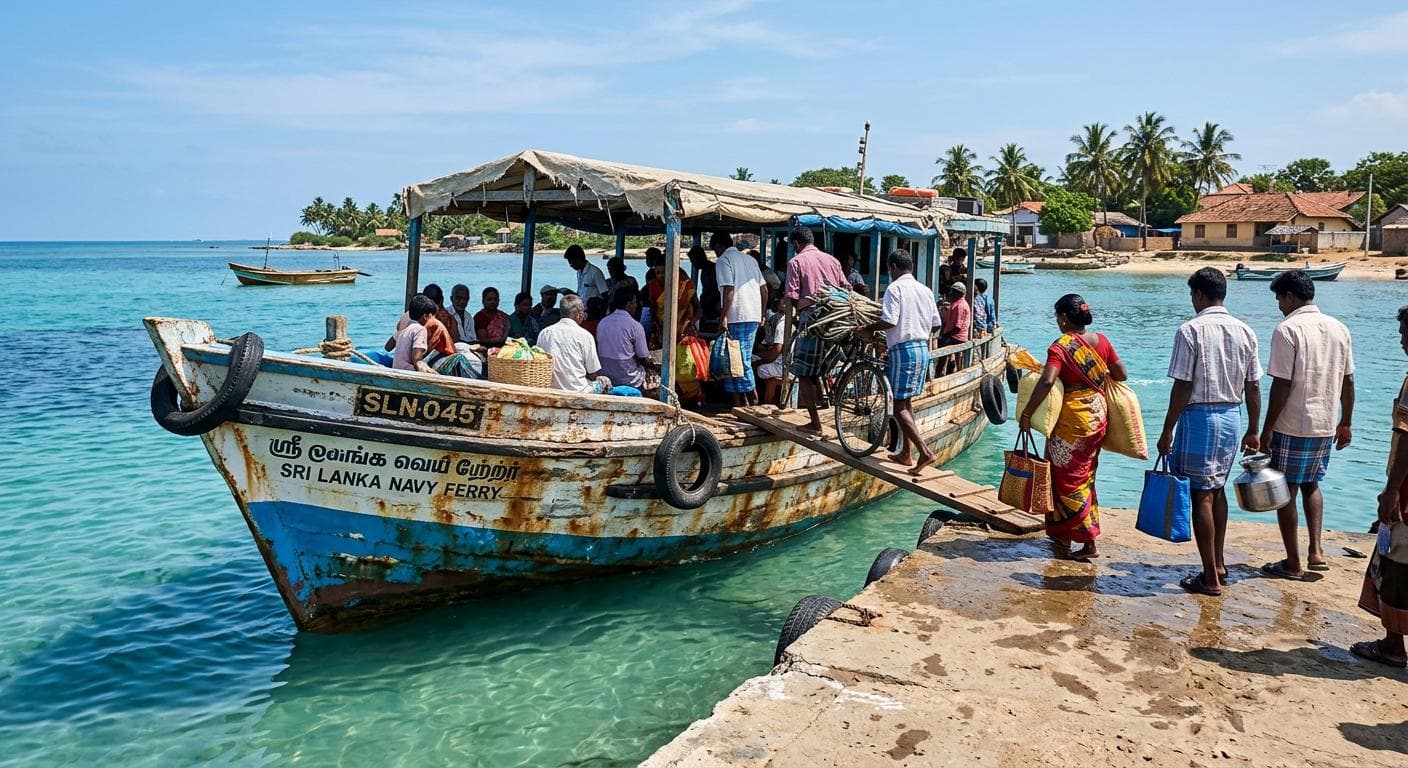
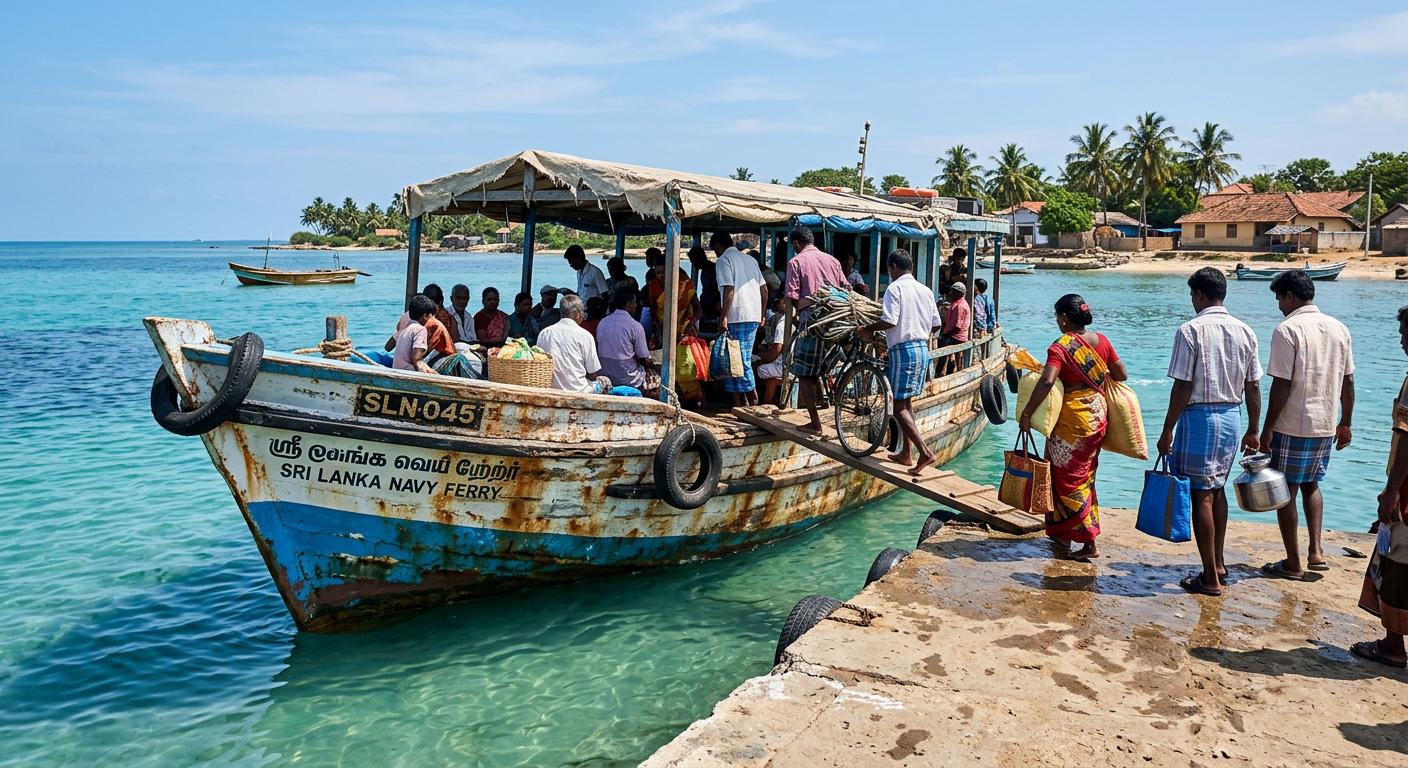
Kurikadduwan is a functional local jetty rather than a tourist terminal. Boats carry island residents, pilgrims, workers and supplies, and boarding may be busy. Follow instructions from the crew, keep walkways clear and use any life jacket provided. Luggage is easiest to manage when packed in a small bag that can be protected from spray.
Nainativu and Delft normally use separate services. Do not assume that a boat visiting Nainativu will continue to Delft, or that the two islands can be combined smoothly in one day. Tickets and boarding arrangements may also vary, so carry small-denomination Sri Lankan rupees and ask jetty staff where to queue. Foreign visitors should keep a passport or a clear copy available in case identification is requested.
Nainativu: A Living Pilgrimage Island
Nainativu, also widely known as Nagadeepa, lies a relatively short boat ride from Kurikadduwan. Crossing times vary with the vessel and sea conditions, but the trip is usually much shorter than the journey to Delft. The island draws Hindu and Buddhist pilgrims throughout the year and can become particularly crowded on festival and full-moon days.
Nagapooshani Amman Temple
The colourful gopuram of the Nagapooshani Amman Temple is one of the island’s most recognisable sights. Dedicated to the goddess Nagapooshani Amman, the temple is an active place of worship rather than simply a visitor attraction. Dress conservatively, remove footwear where directed and follow current instructions at the entrance. Requirements for entering particular areas may differ by gender or occasion, so rely on temple signage and staff rather than assuming one rule applies throughout the complex.
Photography may be restricted inside sacred areas. Ask before photographing ceremonies, worshippers or priests, and avoid blocking queues during busy puja times. The stone ground can become extremely hot around midday, making socks useful if permitted.
Nagadeepa Purana Viharaya
A walk or short local ride away, Nagadeepa Purana Viharaya is an important Buddhist pilgrimage site. Buddhist tradition associates the island with a visit by the Buddha to resolve a conflict between two Naga rulers. Visitors should cover shoulders and knees, remove hats and footwear where requested, and move quietly around worshippers.
Allow at least two or three hours on Nainativu if you want to visit both religious sites without rushing. Small food and drink stalls may operate near the main visitor areas, but opening times and choices are not guaranteed. Return to the correct landing point with enough time to identify your boat and queue.
Delft Island: Landscape, Heritage and Island Life
Delft, or Neduntheevu, lies farther from Kurikadduwan and requires more careful planning. Depending on the boat and conditions, the crossing can take roughly an hour or longer. Services are limited and subject to change, so Delft is best treated as a full-day trip. If the morning boat is missed or cancelled, there may not be a practical alternative that day.
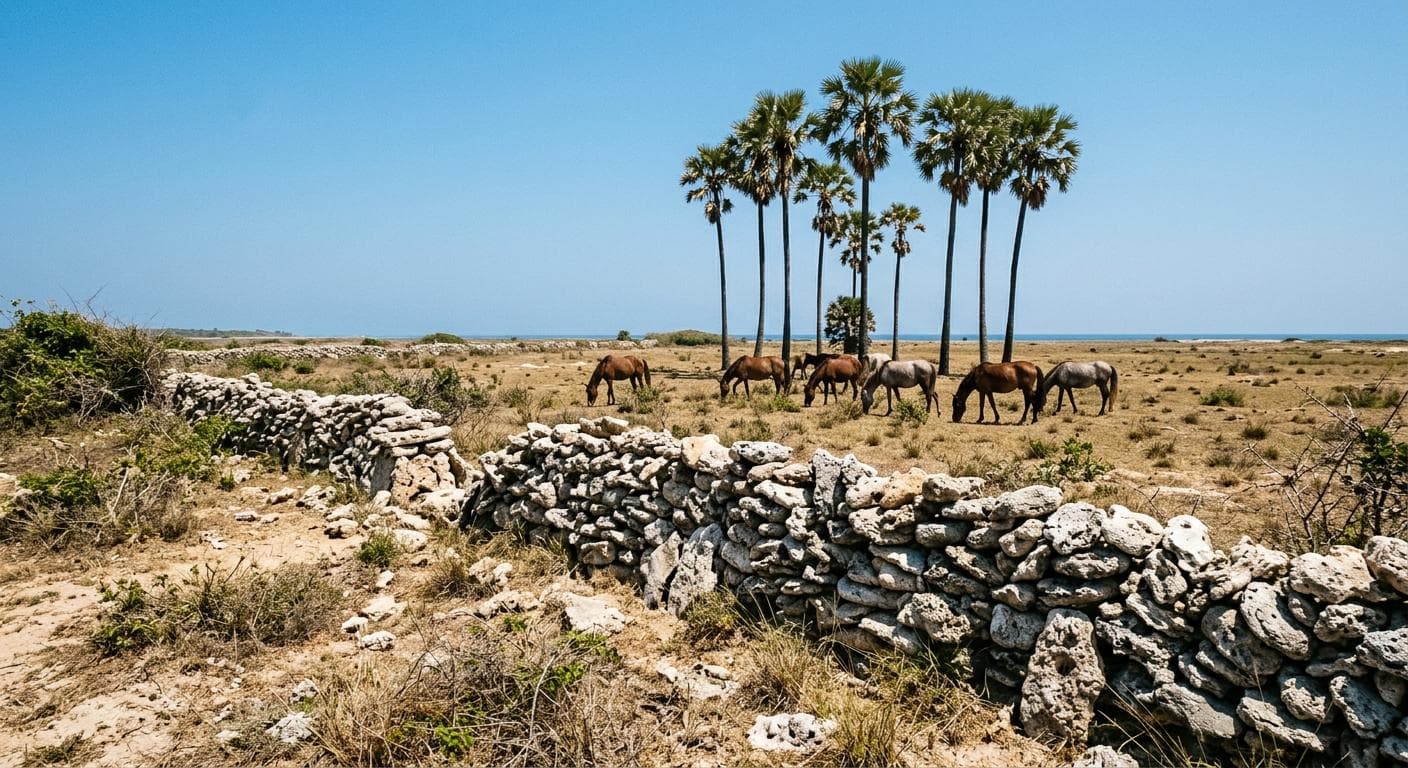
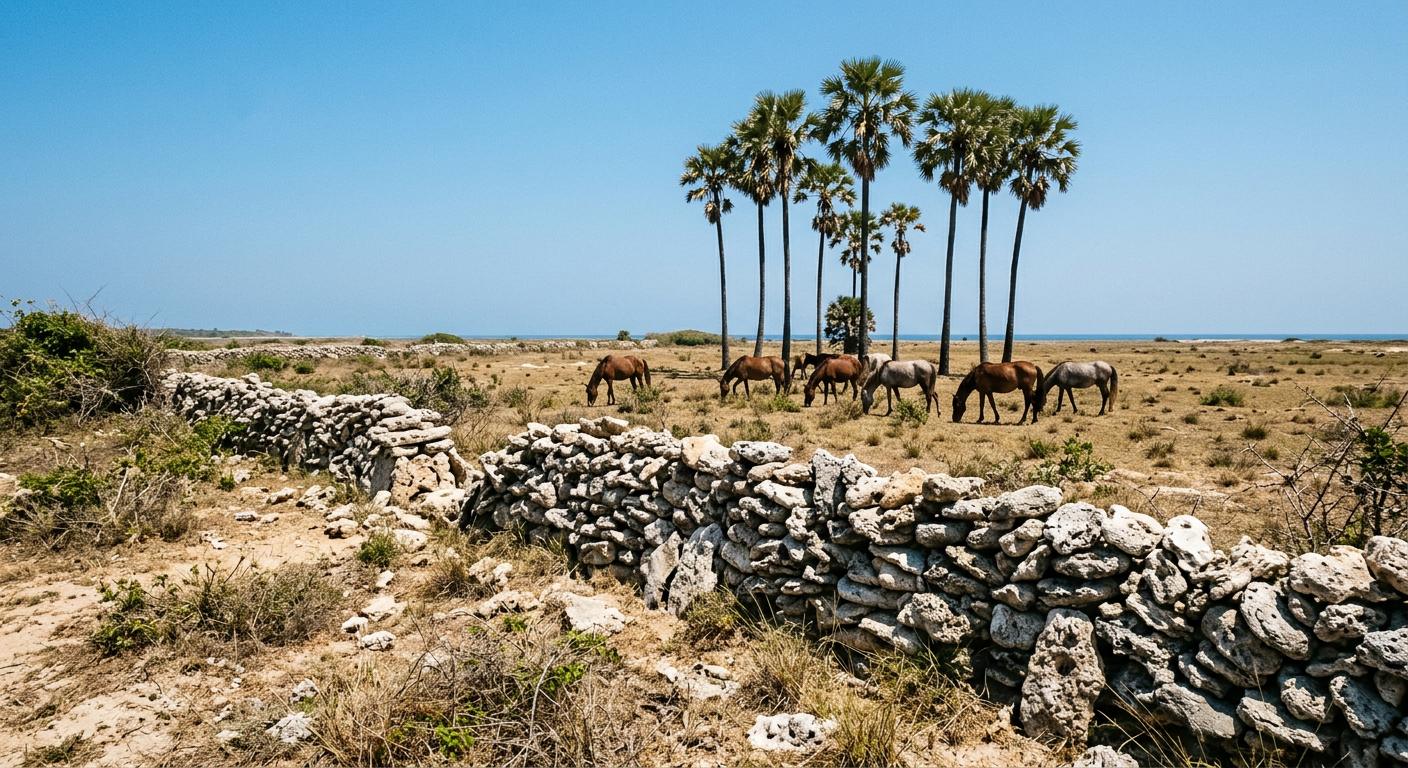
The island’s flat, dry terrain differs markedly from Sri Lanka’s greener regions. Coral limestone has long been used for boundary walls and buildings, while palmyra palms rise above open grazing land. Delft is also home to free-roaming ponies commonly linked to animals introduced during centuries of European colonial activity. Their precise ancestry is often simplified in travel accounts, but they remain a distinctive part of the island landscape.
These animals should be observed from a respectful distance. Do not feed, chase or attempt to touch them, and ask drivers to slow down when animals are near the road. Delft is inhabited and farmed, so travellers should avoid entering fenced land or treating homes, wells and working areas as exhibits.
Getting Around Delft
Delft’s main sights are spread across the island and are not comfortably covered on foot during a short ferry visit. Local drivers commonly meet arriving passengers with tuk-tuks, vans or other basic vehicles. Before setting off, agree on the total price, the places included, the approximate duration and whether the driver will return you to the jetty in time for the boat.
Vehicles and roads may be rough, and not every option will suit travellers with limited mobility. Ask about access before boarding the ferry if stairs, uneven ground or high vehicle steps are a concern. Keep the return departure as the day’s fixed priority; a missed boat may require an unplanned overnight stay with very limited accommodation.
Delft rewards an unhurried approach, but the return boat determines the shape of the day. Confirm the departure time at the jetty and ask your driver to finish the circuit with a generous buffer.
What to See on Delft
Delft Fort
Near the island’s main settlement stand the remains of a coral-stone fort associated with the Portuguese and Dutch colonial periods. Accounts of its construction and later alterations vary, so it is safer to understand the site as a layered colonial ruin rather than assign every surviving section to one power. The structure is weathered and may have uneven surfaces; avoid climbing unstable walls.
Coral Walls and Colonial-Era Remains
Delft’s dry-stacked coral walls are visible across the island and are among its defining landscape features. Other commonly shown sites include the remains of colonial-era buildings and structures traditionally identified with horse keeping or communication. Interpretation at some locations is limited, and local names or explanations may differ. A knowledgeable island guide can provide context, but oral traditions should be presented as traditions rather than verified fact.
The Baobab Tree
A large baobab tree is one of Delft’s most unusual landmarks. Baobabs originate in Africa, and this specimen is generally associated with historic Indian Ocean trade, although the exact date and circumstances of its arrival are uncertain. Its broad trunk makes it a popular photo stop. Avoid carving the bark, climbing exposed roots or leaving litter around the site.
The Growing Stone
The formation known locally as the Growing Stone has religious and cultural significance and is traditionally believed to increase in size. Visitors should approach it as a revered local site rather than a scientific spectacle. Follow any instructions about footwear, offerings and photography.
What to Bring
- Water: Carry more than you expect to need, particularly for Delft. Refill options can be limited, and disposable bottles should be taken back with you.
- Sun protection: Use a hat, sunglasses, lightweight covering clothing and sunscreen. Shade is limited and reflected heat can be intense.
- Cash: Bring small notes for buses, boats, food, donations and island transport. Do not depend on ATMs or card payments.
- Simple food: Pack snacks or a light meal while still supporting locally run stalls when they are open.
- Temple clothing: Wear garments covering shoulders and knees. Slip-on footwear is convenient, and socks can protect feet from hot paving where allowed.
- Weather protection: A dry bag or sealed pouch helps protect phones, documents and cameras from spray or sudden rain.
- Essential medication: Bring any personal supplies you may need for the full day, as pharmacies and other services are limited.
When to Visit
Conditions are often more comfortable when skies are clear and seas are relatively calm, but weather patterns are not perfectly predictable. The northern monsoon can bring heavier rain and rougher crossings, particularly toward the end of the year. Even in drier months, wind can affect small-boat services. Check the local forecast and ask transport staff for current advice rather than relying on a seasonal guarantee.
Weekdays outside major religious festivals may be quieter. Festival periods can be culturally rewarding but also bring crowded buses, longer queues and pressure on limited facilities. If visiting during an important observance, reserve extra time and give pilgrims priority around shrines and boarding areas.
Choosing Between Nainativu and Delft
Choose Nainativu if you have limited time, are primarily interested in religious heritage or prefer a shorter crossing. Choose Delft if you can devote a full day to open landscapes, local history and a more demanding journey. Attempting both on the same day is usually unwise unless jetty staff confirm workable connections and return options that morning.
Whichever island you visit, travel with patience. Buy refreshments locally where practical, ask before photographing people and avoid language that portrays island communities as frozen in time or untouched by modern life. These are living places with transport, livelihood and environmental challenges, not remote backdrops created for visitors.
Is the Journey Worth It?
For travellers interested in northern Sri Lanka’s communities, pilgrimage traditions and maritime landscape, the islands add valuable depth to a stay in Jaffna. The appeal lies not in luxury or a checklist of attractions, but in the changing views across the causeways, the shared ferry journey and the distinct character of each island. Plan conservatively, remain flexible and allow local conditions to set the pace.