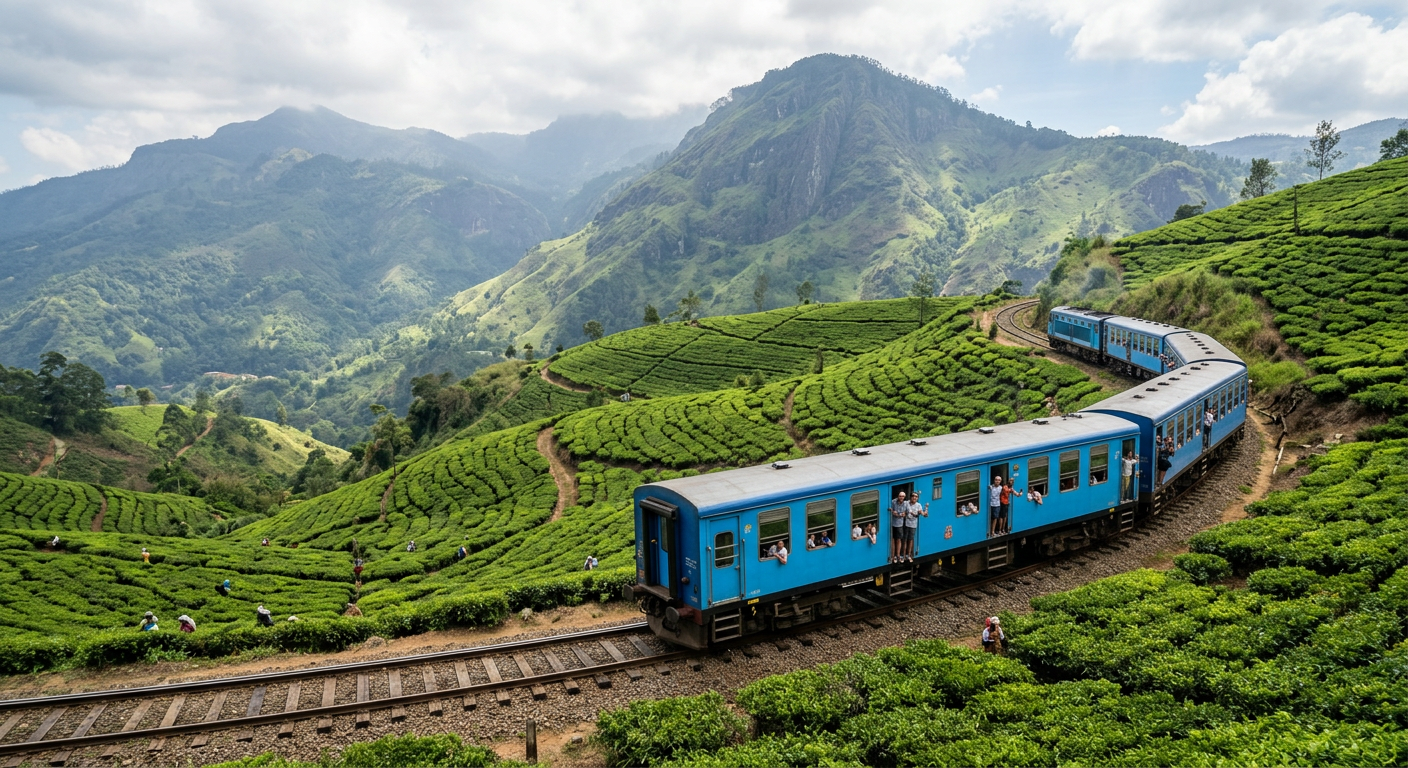
The train from Kandy to Ella is one of Sri Lanka’s most memorable journeys, climbing from the central hills into a landscape of tea estates, cloud forest, waterfalls and small railway stations. It is also one of the country’s most sought-after train trips, so choosing a class and finding a reserved seat can feel more complicated than expected.
Is first class worth paying for? It can be, especially if you value air conditioning, a quieter carriage and a confirmed seat. For many travellers, however, second class reserved offers the best balance of comfort, atmosphere and open-window views. The right choice depends on the train service, your tolerance for crowds and how much certainty you want.
First, Check Which Train You Are Taking
Not every train on the Main Line has the same combination of carriages. First class may be available only on selected services, while reserved and unreserved sections can differ between trains. Carriage condition, seat layout and onboard facilities also vary, so class descriptions should be treated as a general guide rather than a guarantee.
Some services begin in Colombo and call at Kandy or nearby Peradeniya before continuing through the Hill Country. They may already be busy when they arrive. Check the current Sri Lanka Railways timetable, your departure station and the destination printed on your ticket. Ella is before Demodara, so the famous Nine Arch Bridge lies beyond Ella station and is not crossed if you leave the train at Ella.
What Each Train Class Is Like
First Class Reserved
First class on services that offer it normally provides an assigned seat and air conditioning. Windows are generally closed, which reduces noise, dust and wind but can create reflections in photographs. The carriage may feel calmer than unreserved sections, although it is still public transport and standards can vary.
First class is a practical choice for travellers who prefer a more controlled environment, need a guaranteed seat or are carrying manageable luggage they want to keep nearby. It is not necessarily the best option for photography, and air conditioning can make the carriage cool as the train reaches higher elevations. Carrying a light layer is useful.
Second Class Reserved
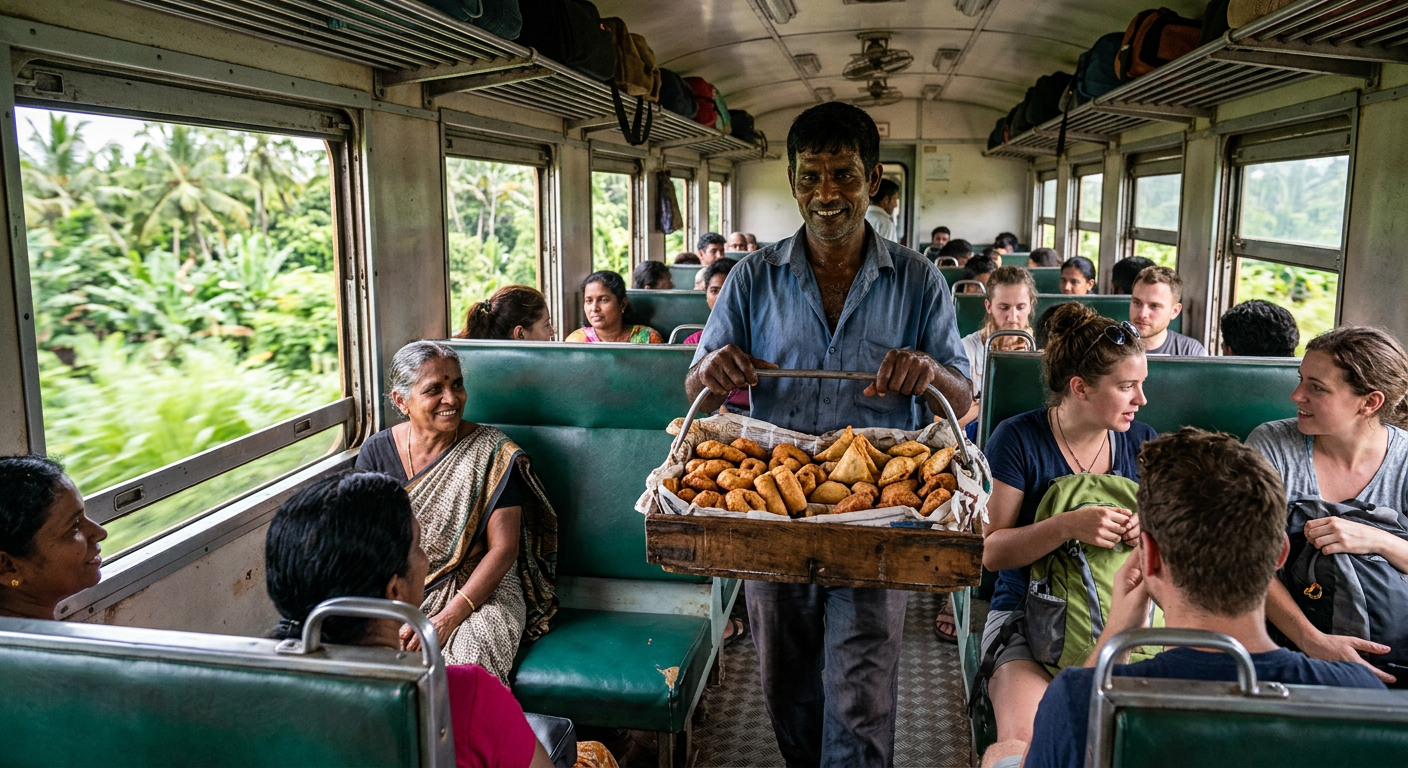
Second class reserved is the popular middle ground. You receive an assigned seat, while carriages commonly have opening windows and natural ventilation. This creates a livelier experience and makes it easier to enjoy the sounds and cool air of the Hill Country. Seats are simpler than in first class but usually adequate for a long daytime journey.
Demand is high because reserved second class combines certainty with atmosphere. Opening windows also mean more noise, dust and occasional rain, so keep electronics secure and avoid placing loose belongings on the sill.
Second and Third Class Unreserved
Unreserved carriages are the least predictable. A ticket permits travel in the relevant class but does not provide an assigned seat. On busy days you may stand for a significant part of the journey, particularly around weekends, public holidays and popular travel periods.
Third class has basic seating and is usually the cheapest option. It is used by commuters, families, students and other local passengers, not staged as a tourist experience. Travelling this way can be sociable and rewarding, but describing a crowded carriage as more “authentic” overlooks the fact that it is an essential transport service. Choose it because the conditions suit you, not because discomfort is required for a meaningful trip.
Comfort Versus the Open-Window Experience
First class is worth considering if personal space, air conditioning and a reserved seat matter more than an open window. It can also be helpful for families, older travellers or anyone who finds long periods of standing difficult. Before booking, confirm that the selected service actually includes first class.
For travellers who want fresh air and clearer photographs, second class reserved is often the stronger choice. The temperature normally becomes cooler as the train climbs past tea country, although conditions change with weather and time of day. A light jacket and a compact rain layer are useful in any class.
Do not lean out of windows or exterior doors for photographs. Trains can pass close to vegetation, poles, tunnels, bridges and other trains, and sudden movement can cause a fall. Remain fully inside the carriage, keep doorways and aisles clear, and follow instructions from railway staff. A social-media photograph is never worth the risk.
How to Book Kandy to Ella Train Tickets
Reserved seats are limited and can sell quickly. Sri Lanka Railways has offered advance reservations through its official online system and station counters, but release windows, eligible services, payment methods and collection procedures can change. Check the official reservation platform close to your planning date rather than relying on an old claim that tickets always open a fixed number of days ahead.
When searching, enter the correct boarding station and date, then review the train number, departure time, class and destination before paying. Keep the confirmation and follow any instructions about identification or collecting a physical ticket. Names and document requirements should be entered exactly as requested by the booking system.
Third-party agents may display availability or offer assistance for an added fee. Before paying, confirm whether the purchase is an issued railway reservation, a request that remains subject to availability or part of a larger transfer package. Review cancellation terms and avoid sellers who promise guaranteed seats without providing clear booking details.
If reserved seats are unavailable, unreserved tickets may be sold at the station for trains carrying unreserved carriages. Sales and boarding remain subject to the service operating, railway procedures and safe capacity, so availability should not be treated as unconditional. Arrive with time to find the correct platform and ask station staff which carriage sections are unreserved. Have a backup plan if travelling on a fixed itinerary.
Planning the Journey
Kandy to Ella commonly takes around six to eight hours, but the published timetable is only a guide. Delays can occur because trains share a largely single-track mountain railway and may wait at stations for opposing services to pass. Engineering work, weather and operational changes can also affect the journey. Avoid arranging a tight onward connection or a non-refundable activity soon after your expected arrival.
- Views: Scenery appears on both sides and the most rewarding side changes as the line curves. Seat direction can also differ from expectations when carriages are arranged. If you have an assigned seat, enjoy the changing landscape rather than blocking doors or standing in another passenger’s space.
- Food and water: Vendors may board or sell snacks at stations, particularly outside first class, but this is not guaranteed. Bring drinking water and enough food for a delayed journey. Keep reusable bottles and packaging with you until you find a bin.
- Luggage: Storage is limited. Travel with compact bags, keep aisles and doorways clear, and retain passports, money and electronics in a closed day bag. Do not leave valuables unattended on overhead racks.
- Toilets: Facilities are basic and cleanliness varies. Carry tissues and hand sanitiser, but do not flush wipes or other unsuitable items.
- Clothing: Kandy may feel warm while Nanu Oya, Haputale and Ella can be cool, wet or misty. Dress in light layers and keep rain protection accessible.
- Photography: Ask before taking close photographs of passengers or railway staff. Keep your body, phone and camera inside the train, especially near tunnels and trackside structures.
Train times sometimes place part of the journey after dark, when views are limited. Check the current schedule and seasonal sunset time if scenery is your priority. Starting earlier can help, but no service is immune to delays.
Breaking Up the Route
Nanu Oya is the rail station used for Nuwara Eliya, which is reached by onward road transport. The town makes a useful stop for its cool climate, historic buildings and nearby tea country. Horton Plains National Park requires additional transport and an early start, so it is better planned as a separate outing rather than squeezed between trains.
Haputale is another appealing stop, with ridge-top views and access to tea estates and Lipton’s Seat. Weather can obscure the panorama, especially later in the day, and local transport should be arranged with enough time. If leaving the train and continuing on another day, book each required reserved journey separately; a reserved Kandy to Ella seat should not be assumed to permit a stopover.
Ella is the usual endpoint for travellers interested in walks, viewpoints and the Nine Arch Bridge. The bridge is east of Ella on the line towards Demodara. Visit it on foot or with local transport, remain off the tracks and obey railway warnings because it is an active railway.
So, Is First Class Worth It?
Choose first class if you want air conditioning, a reserved seat and a generally quieter journey. Choose second class reserved if open-window scenery and a more atmospheric ride matter most without giving up your assigned seat. Consider unreserved travel only if you are comfortable with crowds, uncertain seating and flexible plans.
No class guarantees perfect views, punctuality or a particular carriage standard. Book through a reliable channel, verify the latest railway information and treat the journey as a scenic day in its own right. With realistic expectations and sensible safety habits, the Kandy to Ella train remains one of the most rewarding ways to experience Sri Lanka’s Hill Country.