Ratnapura, whose name means “City of Gems” in Sinhala, is the commercial heart of Sri Lanka’s historic gemstone industry. This busy provincial capital sits amid the wet, green foothills of Sabaragamuwa Province, where gem-bearing gravel has been worked for generations. Travellers come to learn about sapphires and traditional mining, but the surrounding waterfalls, forests, shrines and routes towards Sri Pada make the area rewarding even if you have no intention of buying jewellery.
Ratnapura is a working city rather than a polished resort. Traffic can be heavy, rain is frequent and many attractions are spread across the surrounding district. In return, visitors get a locally grounded view of an industry and landscape that have shaped Sri Lankan history. One or two nights are enough for the main sights, while extra time allows for a guided forest walk or a longer journey towards Sri Pada.
Why Ratnapura Is Known as the City of Gems
Sri Lanka is famous for coloured gemstones, particularly blue sapphires, and the Ratnapura district has long been one of the country’s best-known mining regions. Other stones associated with the wider trade include spinel, cat’s-eye chrysoberyl, garnet, zircon and tourmaline. Not every stone sold in Ratnapura was necessarily mined nearby, however, and a seller’s description should not be treated as proof of origin, quality or value.
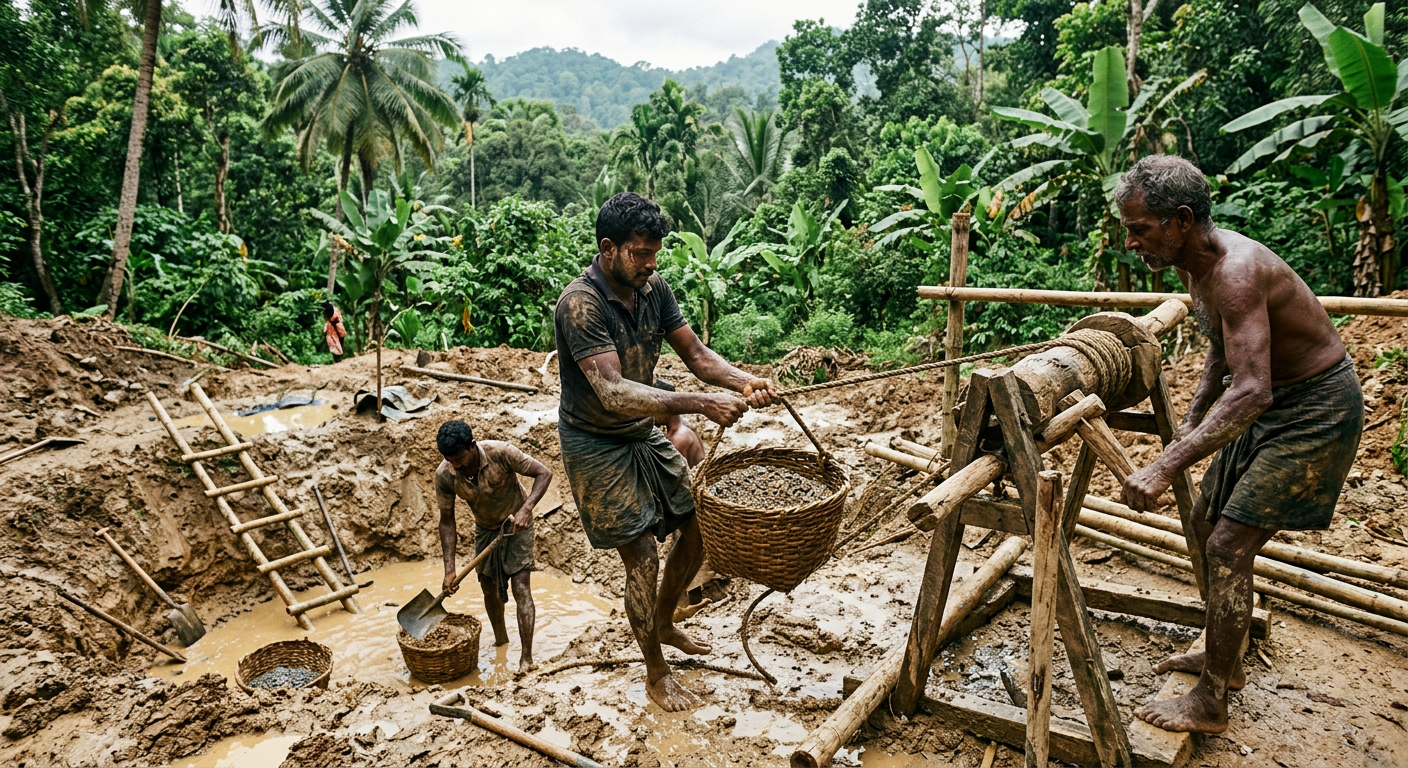
Traditional mining commonly targets deposits of gem-bearing gravel known locally as illam. Depending on the location and permit, workers may use shallow pits, shafts or river-based methods. Gravel is brought to the surface and washed in baskets so that denser material can be inspected. Although hand tools and longstanding techniques remain visible, the industry is regulated, commercially complex and more varied than the romantic image of a lone miner finding a flawless sapphire.
Visiting a Gem Mine Responsibly
A mine visit can help explain how much labour lies behind a finished gemstone, but an active mine is an industrial workplace, not an informal sightseeing stop. Arrange a visit through a reputable local guide, accommodation provider or licensed operator that has the owner’s permission. Confirm what the visit includes, whether the site is operating and whether it is suitable after rain.
- Do not enter a shaft: Underground workings can be unstable, poorly ventilated, wet and difficult to evacuate. Observe only from an area approved by the operator.
- Follow site instructions: Keep clear of winches, pumps, open pits, washing areas and moving equipment.
- Wear practical footwear: Closed shoes with good grip are preferable because paths may be muddy and uneven.
- Ask before photographing: Miners and traders may not want people, equipment or stones recorded.
- Avoid disrupting work: If conditions appear unsafe or permission is unclear, leave rather than press for access.
Understanding Ratnapura’s Gem Markets
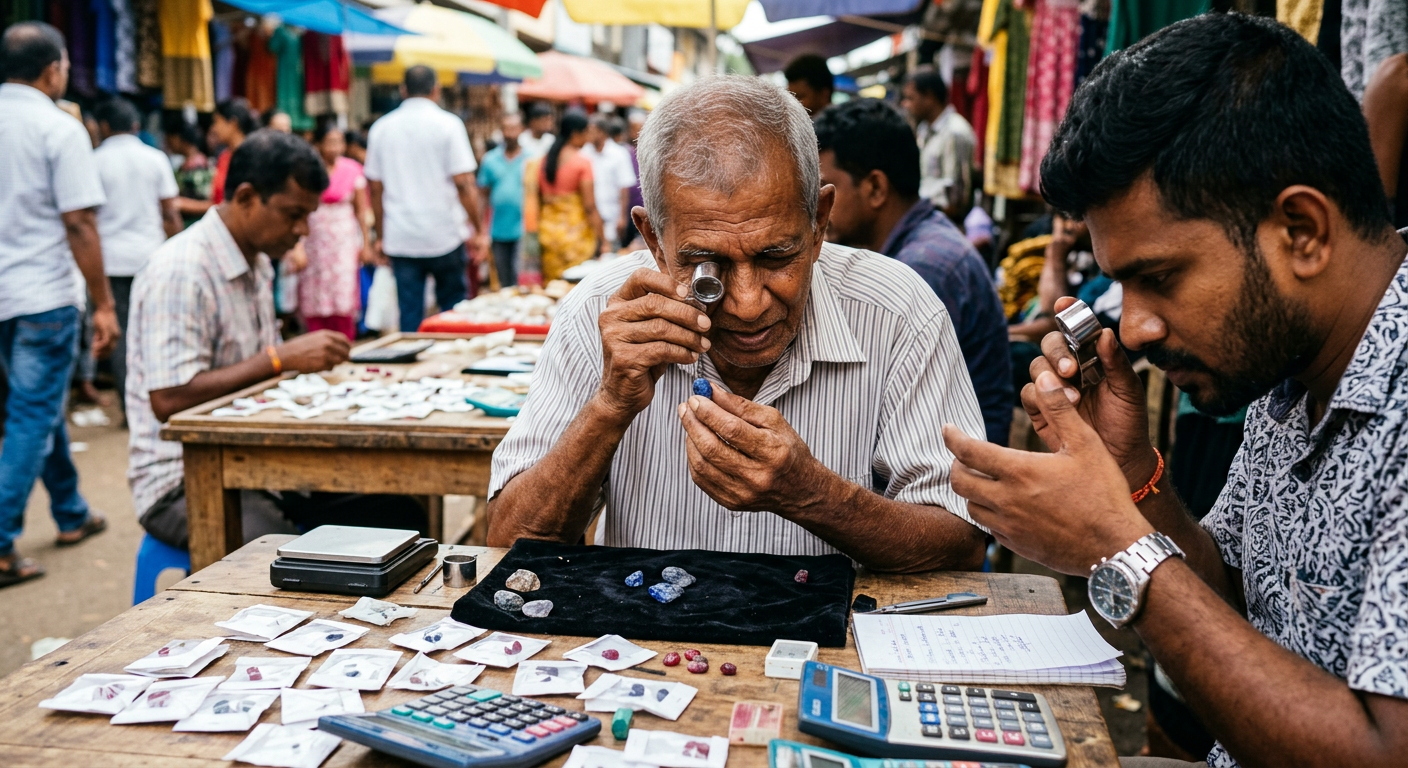
Gem dealing takes place through shops, offices and trading networks around the city. Some transactions are informal and move quickly, with stones examined through loupes and discussed in specialist language. This can be fascinating to observe with an appropriate guide, but it is not an ideal environment for an inexperienced buyer to make an expensive purchase.
For most travellers, an established jewellery or gemstone business is more practical than buying from a street intermediary. A professional-looking showroom alone is not proof of reliability, so compare sellers and ask direct questions. Never let a guide, driver or new acquaintance rush you into a purchase, and do not assume that a “local price” guarantees value.
Practical Gem-Buying Checklist
- Use a licensed seller: Ask whether the business is licensed by Sri Lanka’s National Gem and Jewellery Authority and verify current details if the purchase is significant.
- Request an itemised invoice: It should identify the stone or jewellery, weight, price, metal where relevant and any stated treatments.
- Seek an independent report: For a valuable stone, request a report from a recognised gem-testing laboratory. A laboratory report describes tested characteristics; it is not necessarily a valuation or guarantee of investment potential.
- Ask about treatment: Heating is common for some sapphires, while other treatments may affect durability and value. Ask for written disclosure rather than relying on verbal assurances.
- Check reports carefully: Match the report number, measurements and weight to the item. Terms such as natural, synthetic, treated and origin have distinct meanings.
- Compare before negotiating: Examine several stones and prices. Coloured gemstones cannot be judged by the diamond “Four Cs” alone; colour distribution, treatment, cut, transparency and market demand also matter.
- View the stone in different light: Ask to see it in neutral daylight as well as indoor lighting, without placing yourself or the item at risk.
- Confirm current export rules: Requirements can vary by item and may change. Before paying, check documentation and export procedures with the National Gem and Jewellery Authority and Sri Lanka Customs. Keep all receipts and reports.
If you only want an affordable souvenir, consider a modest piece from a reputable shop and set a budget in advance. Gemstones should not be presented as guaranteed investments, and travellers should be cautious of claims involving rare finds, immediate resale profits or certificates that cannot be independently checked.
Waterfalls and Green Landscapes
Ratnapura receives substantial rainfall, which supports its dense vegetation and many waterways. Bopath Ella is among the district’s best-known waterfalls, named for the way its upper cascade resembles a leaf of the sacred fig tree. It is popular with local visitors, particularly on weekends and public holidays. Paths and rocks can be slippery, while currents and water levels may change rapidly after rain. Follow local signs and official advice, and do not enter the water merely because other visitors are doing so.
Sinharaja Forest Reserve, a UNESCO World Heritage Site, can also be approached from parts of the wider region, although journey times depend on the chosen entrance and road conditions. This lowland rainforest is particularly valued for endemic birds, mixed-species bird flocks, reptiles, amphibians and plant life. Wildlife is never guaranteed, and leeches are common in wet conditions. Enter through an authorised access point, follow current permit requirements and use a knowledgeable guide where required or recommended.
For outdoor trips, carry drinking water, rain protection and sun protection in every season. Lightweight clothing is comfortable in the heat, but long trousers and covered shoes are useful for forest paths. Avoid isolated trails during severe weather, and allow extra road time during heavy rain.
Sri Pada from the Ratnapura Side
Ratnapura is associated with routes towards Sri Pada, also known as Adam’s Peak, one of Sri Lanka’s most important pilgrimage mountains. The summit is especially sacred in the Buddhist tradition and is also connected with beliefs held by other communities. The approach via Palabaddala, often called the Ratnapura route, is longer and more demanding than the commonly used ascent from Nallathanniya.
The main pilgrimage period generally runs from around the December full moon season towards Vesak in May, but exact observances, transport arrangements and trail conditions vary. Outside the busiest period, services and lighting may be limited and heavy rain can make the route hazardous. Check current local conditions before setting out, carry sufficient supplies and do not underestimate the ascent or descent. A Sri Pada climb should be planned as a separate excursion rather than a quick activity from central Ratnapura.
Cultural and Historical Sights
Maha Saman Devalaya, a short journey from the city centre, is dedicated to the deity Saman, traditionally regarded as the guardian of Sri Pada. The complex is an active place of worship, so dress modestly, remove footwear where directed and avoid obstructing rituals. Its annual procession is a major local event, but dates follow the religious calendar and should be confirmed before travel.
The National Museum of Ratnapura occupies Ehelepola Walawwa, a historic residence associated with the Kandyan period. Displays have included regional archaeology, natural history, traditional life and material connected with the gem industry. Opening days, hours and gallery access can change, so verify them locally rather than building a tight itinerary around an unconfirmed visit.
The city’s produce markets and everyday shopping streets are also worth exploring. They reveal Ratnapura as a transport and trading centre rather than a town created for tourism. Be considerate when taking photographs, keep valuables secure in crowded areas and cross busy roads cautiously.
Getting There and Getting Around
Ratnapura is reached mainly by road. Buses connect it with Colombo and other regional centres, while a car with a driver provides more flexibility for mines, waterfalls and rural attractions. Travel times vary significantly with traffic, rain and roadworks, so avoid planning a connection around the fastest estimate.
The central area can be explored in sections on foot, but heat, rain and traffic make short tuk-tuk journeys useful. Agree on the fare or request the meter before departure where available. For longer outings, confirm the total price, waiting time and return arrangements in advance. Mobile coverage and card acceptance should not be assumed at remote sites, so carry some Sri Lankan rupees without displaying large amounts of cash.
When to Visit and What to Pack
Ratnapura is warm, humid and rainy for much of the year. There is no reliably dry period, and afternoon showers can occur even on an otherwise clear day. Flexible plans are more useful than choosing a month on weather averages alone. Check forecasts and local warnings before forest walks, waterfall visits or long drives.
- Pack: Breathable clothing, a compact rain jacket, insect repellent, water, a dry bag for electronics and shoes with dependable grip.
- For temples: Carry clothing that covers shoulders and knees, and socks if hot paving is a concern.
- For forests: Choose long trousers and closed footwear, and check yourself for leeches after the walk.
- For gem shopping: Bring a written budget and allow time for independent checks rather than making a same-day decision.
Where to Stay and Eat
Accommodation ranges from simple guesthouses to practical mid-range hotels and rural properties outside the centre. Staying centrally is convenient for markets and transport, while an out-of-town property may be quieter but require a driver. Recent reviews are useful for checking access, air-conditioning, hot water and how a property handles heavy rain.
Local restaurants serve rice and curry, hoppers, string hoppers, short eats and kottu. Ask about spice levels if needed, choose busy establishments where food turnover is high and drink treated or sealed water. Ratnapura has fewer visitor-focused dining options than major resort towns, but that is part of its appeal as an everyday Sri Lankan city.
A Sensible One-Day Plan
Begin with the museum or Maha Saman Devalaya, depending on opening times and religious activity. Continue to a pre-arranged mine or gem-industry visit, allowing the operator to cancel if rain makes the site unsafe. After lunch, visit a reputable showroom to learn how stones are graded without committing to a purchase. Finish at Bopath Ella only if daylight, weather and road conditions are suitable.
Ratnapura rewards travellers who arrive with curiosity rather than expectations of instant bargains. Treat mines as workplaces, gemstone purchases as serious transactions and the surrounding forests and waterfalls as environments that demand care. With realistic planning, Sri Lanka’s City of Gems offers far more than sparkle: it provides insight into the people, landscapes and traditions behind one of the island’s best-known natural resources.