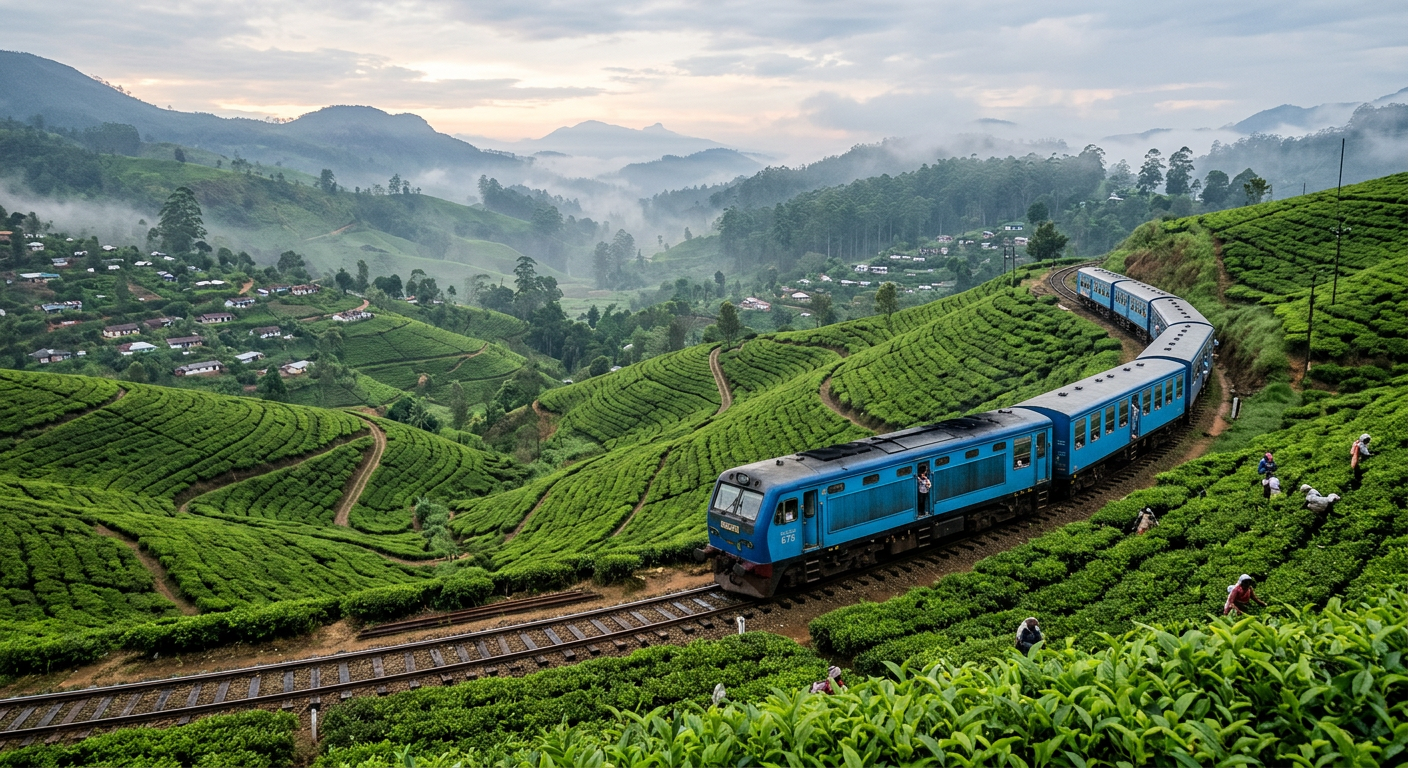
Sri Lanka’s hill country is often represented by one irresistible image: a blue train curving through emerald tea estates. The railway deserves its reputation, but treating the central highlands as a single train ride misses much of what makes the region memorable. Mist moves across steep valleys, tea towns wake slowly, and short distances can take longer than expected on winding roads. This is a landscape that rewards patience.
Ella, Haputale and Nuwara Eliya each offer a different perspective. Ella combines accessible walks with a lively traveller scene. Haputale feels smaller and more locally paced, with dramatic ridge-top views. Nuwara Eliya brings cool weather, high-grown tea and layers of colonial-era architecture alongside a busy modern town. Allowing four to six nights across the three destinations creates space for changing weather, slower mornings and meaningful stops rather than a race between attractions.
Train or Driver: Choosing the Right Highland Transport
The railway between Kandy, Nanu Oya, Haputale and Ella is one of Sri Lanka’s most scenic journeys. Depending on the service and delays, travelling the full Kandy–Ella route can occupy much of the day. Reserved seats are popular, while unreserved carriages can become crowded during weekends, holidays and peak travel periods.
Advance booking rules and release dates can change, so check current information through Sri Lanka Railways or a reputable local travel provider rather than relying on an old timetable. If reserved seats are unavailable, consider taking a shorter rail section instead of building the entire itinerary around one train. Never lean out of an open doorway for photographs, and keep luggage clear of entrances and aisles.
A car with a driver is useful for reaching hotels away from town centres, visiting gardens or tea estates, and stopping safely along the road. It also provides flexibility when rain or mist disrupts outdoor plans. However, mountain roads are slow, and a route that looks short on a map may involve sharp bends, town traffic and roadworks.
For many travellers, the best solution is a combination. Travel by road between Kandy and Nuwara Eliya if you want to make stops, then take the train from Nanu Oya to Haputale or Ella. Nanu Oya is the rail station serving Nuwara Eliya and is roughly 20 to 30 minutes from town in normal traffic. Confirm train times on the day, as schedules and platform information may change.
A Comfortable Four- to Six-Night Route
A relaxed journey might include two nights in Nuwara Eliya, one or two in Haputale and two in Ella. This leaves one full morning in each place and provides a backup opportunity if cloud hides a major viewpoint. The route also works in reverse, particularly if you are arriving from Sri Lanka’s south coast.
Avoid scheduling a long hike, a tea-factory visit and an onward train on the same day. Trains may run late, estate tours may have limited operating hours, and highland rain can arrive quickly. One main activity per half-day is a more realistic rhythm.
Nuwara Eliya: High-Grown Tea and Cool-Climate Heritage
Nuwara Eliya stands at about 1,868 metres above sea level and is among Sri Lanka’s coolest towns. Days can be pleasantly mild, but evenings and wet mornings may feel cold, particularly in accommodation without central heating. Pack a warm layer and a light rain jacket rather than assuming tropical temperatures.
The town is known for colonial-era buildings, gardens and the landscaped surroundings of Gregory Lake, but it is not a preserved English village. Markets, schools, places of worship and dense local traffic are equally important parts of contemporary Nuwara Eliya. A slow visit can combine a walk around town or the lake with time in the surrounding tea country.
Hakgala Botanical Garden, southeast of town, is a worthwhile half-day outing for travellers interested in plants and cool-climate landscapes. Paths can be slippery after rain, and weekends and public holidays are often busy. Entrance arrangements and opening times should be checked before travelling.
Tea-estate and factory visits can explain how freshly picked leaves are withered, rolled, oxidised, dried and graded. Pedro Tea Estate is close to Nuwara Eliya, but visitor access, production schedules and tour availability can change. Ask your accommodation to confirm arrangements before setting out. Factories may be quieter when leaves are not being processed, and photography is sometimes restricted inside production areas.
For accommodation, consider a small heritage hotel, a converted planter’s bungalow or a locally run guesthouse outside the busiest centre. Ask whether rooms have effective hot water and whether heating is provided or charged separately. A beautiful fireplace in a photograph does not always mean it is used every evening.
Haputale: Ridge Views and a Quieter Rhythm
Haputale sits along a narrow ridge with views towards Sri Lanka’s southern plains when conditions are clear. The compact town has fewer visitor-oriented restaurants and hotels than Ella, which is part of its appeal. It is a good base for travellers who value early walks, simple guesthouses and a stronger sense of everyday hill-country life.
Lipton’s Seat is the best-known excursion. The road climbs through the Dambatenne tea landscape to a viewpoint associated with Sir Thomas Lipton. Cloud can gather at any hour, so an early departure may improve your chances of a view but never guarantees one. Ask locally about current access, fees and road conditions. Depending on fitness and weather, you can travel by tuk-tuk, walk part of the route or combine both.
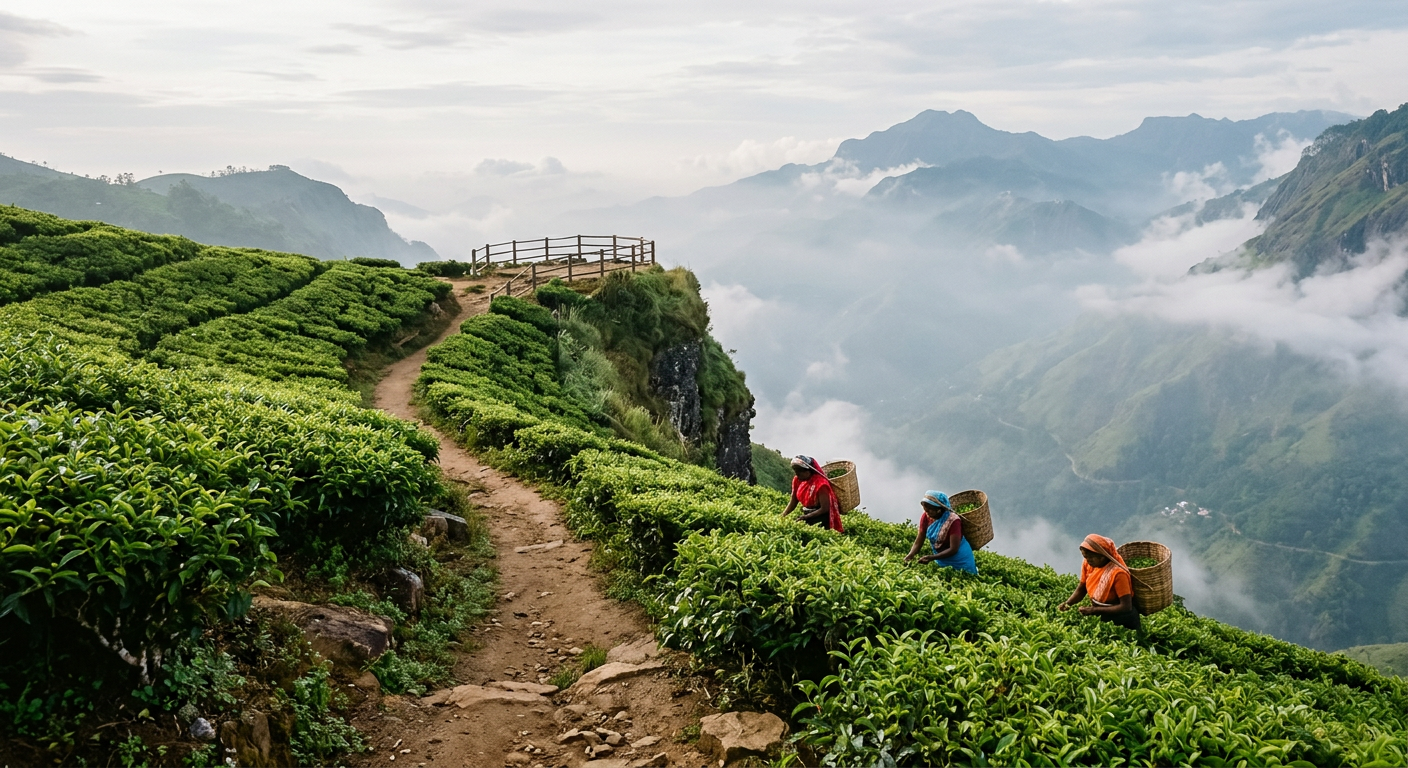
If walking through an estate, remember that it is a working landscape rather than an open-air attraction. Keep to accepted paths, follow signs and do not enter fields, homes or factory buildings without permission. Ask before photographing workers or residents, especially children. A guide from the area can add context about tea cultivation and community history without turning daily life into a spectacle.
Accommodation around Haputale ranges from straightforward family guesthouses to secluded bungalows on surrounding estates. A room facing the valley can be rewarding, but also ask about road access, meal availability and transport into town. Properties outside the centre may require a tuk-tuk or arranged transfer after dark.
Ella: Finding Calm Beyond the Main Street
Ella has grown from a small hill-country stop into one of Sri Lanka’s busiest independent-travel destinations. Its main road has cafés, bars, restaurants and tour desks, and traffic noise can continue into the evening. The surrounding hills, however, still offer rewarding walks and wide views. Staying outside the centre makes it easier to enjoy both sides of Ella.
Little Adam’s Peak is the most accessible popular walk. The route includes steps and uneven sections but is manageable for many travellers with ordinary fitness. Start early for cooler conditions, carry water and wear shoes with grip. Paths may become slick after rain, and there are exposed areas with limited shade.
Ella Rock is longer and more demanding, with route choices that can be confusing. Trail conditions and access points may change, so obtain current directions from your accommodation or walk with a knowledgeable local guide. Avoid railway tracks wherever a safer path is available, remain alert around crossings and do not attempt the route in poor visibility if you are unsure of the way.
Nine Arch Bridge is another well-known stop. It can become crowded around expected train times, but published schedules do not guarantee when a train will appear. Visit for the setting and engineering rather than blocking paths while waiting for a photograph. Keep away from track edges, follow instructions from railway staff and take all rubbish with you.
Look for accommodation in areas such as Passara Road, Kithal Ella or the slopes beyond the centre if quiet is a priority. Check the exact location before booking: a short distance on the map may involve a steep climb, rough access road or several flights of steps. Some remote stays offer dinner, while others require a tuk-tuk journey back from town.
Weather, Packing and Responsible Walking
Hill-country weather is highly local. Rain may fall in one valley while another remains bright, and seasonal patterns vary between the western and eastern slopes. Forecasts are useful but not definitive. Build flexibility into the itinerary instead of assigning every viewpoint to a single fixed hour.
- Pack practical layers: Bring a light waterproof jacket, a warm top, sun protection and footwear with reliable grip. A dry bag or waterproof cover is useful for electronics and documents.
- Carry water: Even cool walks can be humid. Refill a reusable bottle where treated drinking water is available rather than relying on disposable plastic bottles.
- Prepare for leeches: They may be present on wet, grassy or forested paths. Closed footwear and long socks help. Ask a guide or host about current trail conditions.
- Allow generous transfer time: Do not plan a tight connection between a road transfer and a train. Delays are common enough that an unhurried buffer is worthwhile.
- Carry some cash: Smaller guesthouses, tuk-tuks and local cafés may not accept cards. ATMs are available in the main towns but should not be your only plan.
- Respect local communities: Dress considerately around homes and places of worship, request permission for portraits and avoid flying drones unless you have confirmed all current permissions and local restrictions.
Choosing a Stay That Suits the Landscape
The right accommodation can reduce unnecessary driving and shape the pace of the trip. In Nuwara Eliya, heritage properties and converted bungalows suit travellers interested in gardens, period details and cool evenings indoors. In Haputale, smaller guesthouses often provide personal hospitality and broad views at modest prices. Around Ella, hillside lodges offer more seclusion but may be less convenient for restaurants and transport.
Read recent reviews for access, noise, hot water, meals and staff responsiveness rather than choosing on scenery alone. Claims such as eco-lodge or farm-to-table are not regulated guarantees, so look for specific practices: refillable water, reduced single-use plastic, local employment, responsible waste management and ingredients sourced from nearby producers.
Above all, resist trying to see every viewpoint. Tea country is most rewarding when there is time to watch the cloud lift, speak with a host over breakfast or change plans when rain reaches the ridge. The train may provide the defining photograph, but the unhurried hours between stations are what make Ella, Haputale and Nuwara Eliya feel distinct.