Sri Lanka can be a rewarding destination for families, combining wildlife, beaches, hill-country scenery and ancient sites within a relatively small island. Its compact appearance can be misleading, however. Journeys often take longer than expected, tropical heat can drain children quickly, and sea conditions are not equally safe along every coast. A successful family holiday usually depends less on covering the whole country and more on choosing a sensible route, allowing downtime and matching activities to your children’s ages.
This guide focuses on realistic travel times, family-friendly safaris, seasonal beach choices and manageable cultural visits. Every family is different, so treat suggested timings as a starting point rather than a fixed formula.
Plan Around Travel Time, Not Distance
One of the most common Sri Lanka itinerary mistakes is assuming that a short distance on the map means a quick journey. Outside expressways, roads pass through busy towns and are shared by buses, tuk-tuks, motorcycles, pedestrians and animals. Mountain roads are especially winding. Average speeds can be modest, and estimated journey times may change with traffic, weather and roadworks.
For most families, three to four hours of driving in a day is a useful upper target rather than a strict rule. If you have toddlers, children prone to motion sickness or several sightseeing stops planned, shorter transfers may work better. Avoid scheduling a long drive immediately after an early safari, major climb or late arrival.
- Stay at least two nights in most places: Frequent packing and unpacking can make an otherwise exciting trip feel tiring.
- Ask for realistic door-to-door timings: Include meal, toilet and rest stops rather than relying only on map estimates.
- Keep arrival days light: A pool, garden or short walk is often enough after a transfer.
- Carry water and familiar snacks: Shops are widespread, but preferred brands and suitable options may not always be available when needed.
A private car with a licensed driver offers useful flexibility for many families. If you need a child restraint, request the correct type in advance and confirm what will actually be supplied; availability and standards vary. Some parents prefer to bring a familiar travel seat that is compatible with the vehicle. Seat belts should be used whenever available, and children should not travel on laps.
Build a Simple, Family-Friendly Route
Trying to combine the Cultural Triangle, Kandy, the central hills, several national parks and two coasts in a short holiday creates too many transfer days. A more comfortable plan links three or four bases. For example, a family might combine the Cultural Triangle with Kandy or the hills, then choose one wildlife area and one coast. The best beach region depends partly on the month of travel.
Breaking a journey in the hill country can add variety, but it does not automatically make every route faster. Check the actual road direction before adding an overnight stop. Families arriving after a long international flight may also appreciate a first night near Negombo or another convenient base rather than immediately beginning a lengthy cross-island drive.
Choose a Safari That Suits Your Children
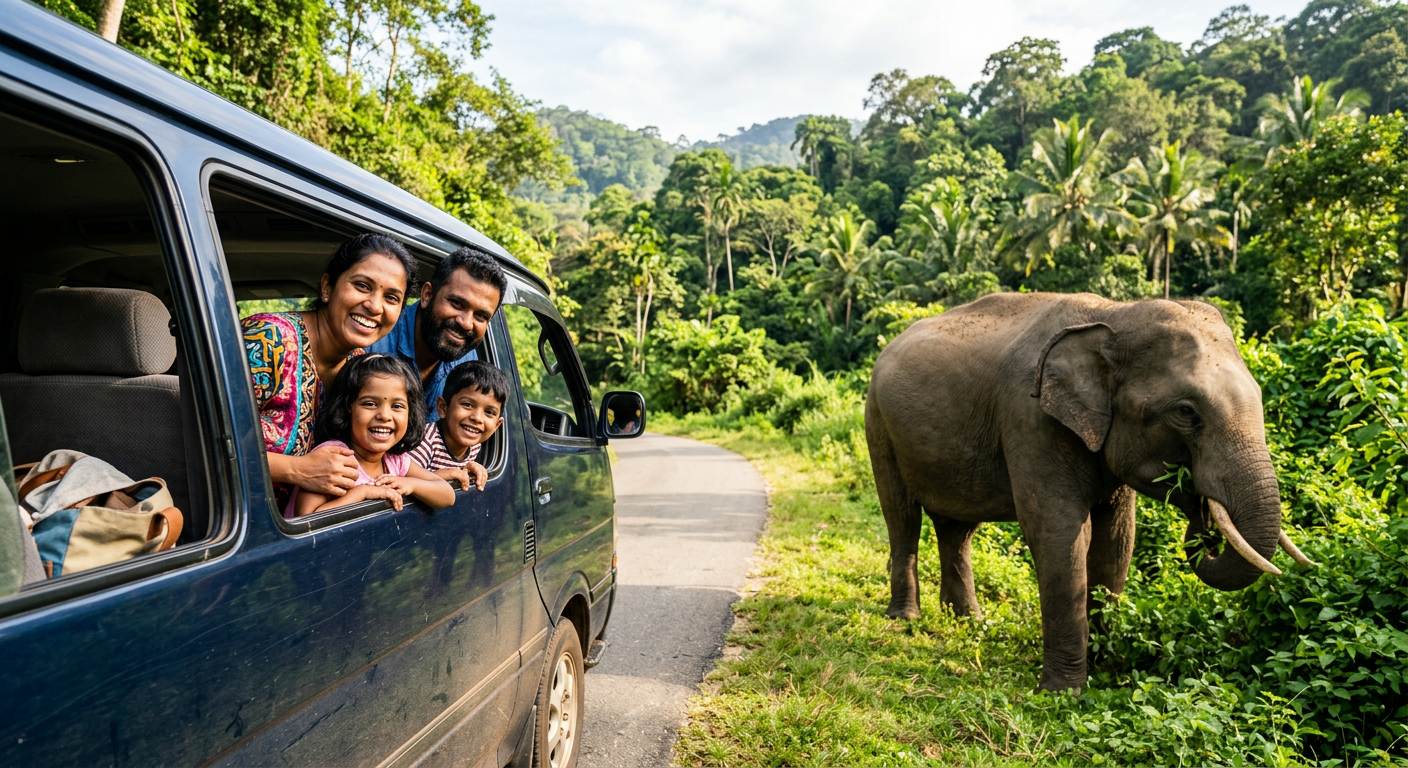
A Sri Lankan wildlife safari can be memorable, but no responsible operator should guarantee a sighting. Yala National Park is associated with leopard habitat, yet sightings depend on chance. Some areas can also become busy when animals are reported, and a long, bumpy jeep ride may be uncomfortable for small children.
Udawalawe is a popular family option because its more open landscape can make elephants and other wildlife easier to observe. Minneriya, Kaudulla and nearby parks may also offer elephant encounters when herds move through the wider ecosystem. The best park can change with rainfall, water levels, animal movement and temporary closures, so seek recent local advice rather than choosing solely from an old seasonal calendar.
A morning or afternoon safari is generally more manageable than a full-day outing. Before booking, ask about the expected duration, park entrance process, toilet access, shade and whether the jeep has secure forward-facing seats. Young children should remain seated and closely supervised. Bring water, sun protection and a light layer for an early start, but avoid loose items that may blow from the vehicle.
- Choose an ethical operator: Drivers should follow park rules, maintain distance and avoid blocking or chasing animals.
- Manage expectations: Make birds, deer, monkeys and tracks part of the experience rather than focusing on one headline species.
- Check current conditions: Parks or sections may close, and opening arrangements can change.
- Do not feed wildlife: Feeding alters animal behaviour and can put both visitors and animals at risk.
Find the Right Beach for the Season
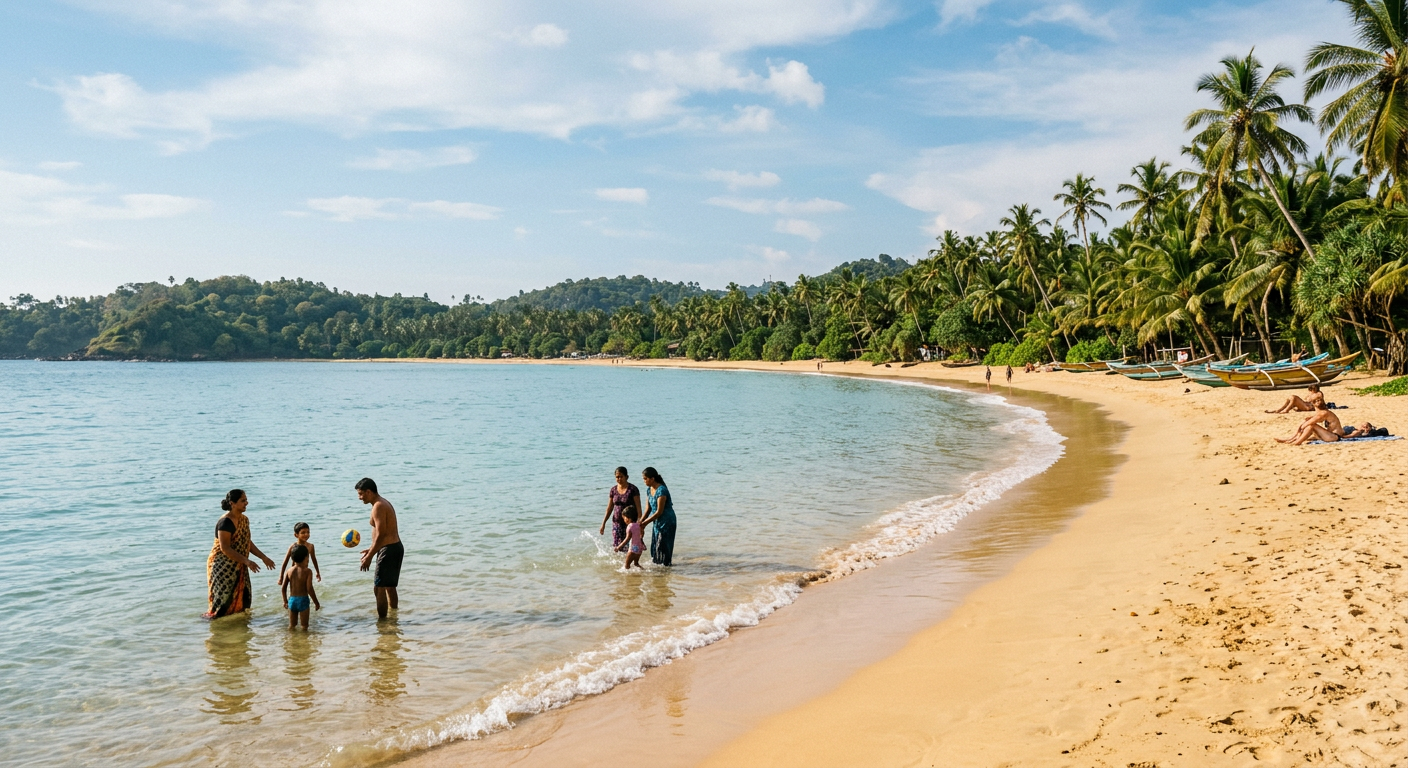
Sri Lanka has beautiful beaches, but a sheltered-looking bay is not automatically safe. Waves, currents and rip channels can change with wind, tides and seasonal weather. Lifeguard coverage is limited in many places, so ask accommodation staff about conditions that day, observe local warnings and supervise children closely. A pool is a valuable backup when the sea is rough.
On the south coast, Unawatuna has a relatively sheltered bay, while parts of Mirissa and Hiriketiya may be calmer than exposed stretches nearby. Conditions still vary, and Hiriketiya is also a surf beach where boards and crowded water can create hazards. Tangalle has dramatic scenery, but many sections are exposed and can have powerful surf. Families should choose their exact swimming spot carefully rather than relying on the town name alone.
The east coast is often favoured during roughly May to September, when places such as Nilaveli, Uppuveli and Passikudah may experience calmer conditions. Seasonal patterns are not guarantees, particularly during periods of unusual weather. Passikudah is known for a broad, shallow bay, but children still require direct supervision, including in apparently shallow water.
For a low-stress beach stay, look for shade, easy access to meals, a pool or protected play area and accommodation within walking distance of the sand. Avoid planning boat trips or snorkelling solely around a rigid itinerary; operators should be willing to cancel when weather or sea conditions are unsuitable.
Make Cultural Visits Active and Manageable
Sri Lanka’s ancient cities and temples can engage children when visits are short and interactive. Go early where possible, carry drinking water and focus on a few memorable features instead of attempting every monument. Simple stories about kings, reservoirs, cave paintings or ancient engineering can make the sites more meaningful.
Polonnaruwa can be explored by bicycle, tuk-tuk or car. Cycling suits confident older children, but heat, uneven surfaces and shared roads require care. Check bicycle condition, helmet availability and distances before setting out. Anuradhapura covers a much larger area, so a vehicle may be more practical for families. At active religious sites, dress respectfully, remove shoes and hats where required, and be mindful that stone or sand can become extremely hot.
Choose one main activity for the day, then leave room for a swim, quiet play or an unplanned stop. A shorter visit enjoyed by everyone is better than a complete checklist completed under pressure.
Sigiriya involves exposed stairways, considerable height and many steps. Active school-age children may manage it well, but adults should assess each child’s confidence and stamina. Start early, take breaks and follow current site instructions. Pidurangala should not be presented as an easier alternative for toddlers or nervous climbers: its upper section includes a steep rock scramble, uneven terrain and exposed areas. Families wanting a gentler experience can enjoy garden walks, archaeological museums or viewpoints from ground level instead.
Use Trains Selectively
The hill-country railway is scenic, but popular services can be crowded and delayed. Kandy to Ella is a long journey for younger children, so a shorter section, such as Nanu Oya to Ella, may be more comfortable. Reserved seats are worth considering when available, especially during weekends and holiday periods, although booking systems and schedules can change.
Keep children away from open doors and do not lean out for photographs. Allow extra time for boarding, keep essential supplies with you and avoid planning a tight onward connection. If a child is sensitive to long journeys, a private road transfer may be the more enjoyable choice despite the railway’s reputation.
Practical Sri Lanka Family Travel Tips
- Protect against heat: Schedule exposed activities for the cooler part of the day, use shade and offer regular fluids. Lightweight clothing and hats are useful.
- Reduce mosquito bites: Use an age-appropriate repellent according to its label, cover exposed skin when practical and choose rooms with screens, nets or air conditioning where possible.
- Prepare for minor illness: Bring regular prescription medicines and a basic family first-aid kit. Seek personalised advice from a qualified health professional before travel, particularly for infants or children with medical conditions.
- Choose food carefully: Rice, dhal, string hoppers, hoppers, fruit and simple egg dishes can suit children, but spice levels vary. Ask for food to be prepared mild rather than assuming it will be.
- Use safe drinking water: Choose sealed bottled water or properly treated water, and keep children hydrated in hot weather.
- Confirm family facilities: Cots, high chairs, connecting rooms and pool barriers are not universal. Ask specific questions before booking rather than relying on a family-friendly label.
- Check official requirements: Passport, entry and travel rules can change. Consult Sri Lanka’s official immigration information and your government’s current travel advice before departure.
- Leave unscheduled time: A free afternoon can absorb a delay, downpour or tired morning without disrupting the entire trip.
Embrace a Slower Family Holiday
Sri Lanka is often at its best when families stop trying to see everything. A curious conversation with a guesthouse host, an elephant observed from a respectful distance or an afternoon playing on a suitable beach may become more memorable than another hurried attraction.
Plan around your children’s usual rhythms, choose fewer bases and keep alternatives for hot or wet days. With realistic transport expectations, careful beach and wildlife choices, and time to rest, a family trip to Sri Lanka can feel adventurous without becoming exhausting.