Sri Lanka can be a rewarding family destination, combining wildlife, beaches, historic sites and welcoming hospitality within a relatively compact island. Children are often warmly included in everyday interactions, while older kids and teenagers can enjoy everything from fortresses and train journeys to surfing and snorkelling. The challenge is not finding things to do; it is building an itinerary that does not ask too much of the family.
Road journeys can be slower than the distance suggests, tropical heat affects energy levels, and sea conditions change with the seasons. A successful trip usually includes fewer bases, longer stays and room to change plans. Rather than attempting to circle the island in one rushed holiday, choose two or three regions that suit your travel month and your children’s ages.
Plan Around Realistic Drive Times
Map distances can be deceptive in Sri Lanka. Outside the expressways, routes may pass through busy towns, hill-country bends and sections with frequent local traffic. Roadworks, rain and holiday congestion can add further delays. Online estimates are useful as a starting point, but families should confirm current timings with their accommodation or transport provider.
As a practical rule, try to keep most transfers below three or four hours and avoid scheduling a major activity immediately after arrival. Even a moderate journey can feel long for a child once meal stops, toilet breaks and traffic are included. In the hill country, winding roads may also affect passengers who are prone to motion sickness.
A private car with a professional driver is convenient for many families because it allows flexible stops and door-to-door travel. Before booking, ask about the vehicle’s condition, working seat belts, luggage space and air conditioning. Child seats are not always supplied as standard, and the type or installation may not match what you use at home. Request an appropriate restraint well in advance, confirm how it will be fitted and consider bringing your own if compatibility and airline arrangements allow.
Trains can be memorable, particularly in the hill country, but popular services may be crowded and delays can occur. Reserved seats are preferable with children, although availability is limited and booking arrangements can change. Treat a scenic train ride as an experience rather than the fastest way to transfer with substantial luggage.
Build in Recovery Time
Two or three nights in each main base is a useful minimum for many family itineraries. A gentle first day also helps after a long flight. Keep one unscheduled half-day every few days for the pool, beach, naps or an early night. Families travelling with toddlers may prefer even fewer bases, while teenagers can usually manage a slightly quicker pace if they are involved in choosing activities.
A manageable first trip might combine the Cultural Triangle, a hill-country stop and the south coast. In the drier months on the east coast, a Cultural Triangle and Trincomalee or Passikudah combination can reduce unnecessary backtracking. There is no single perfect route because rainfall and sea conditions vary by coast and month.
Choose a Wildlife Safari for Your Children
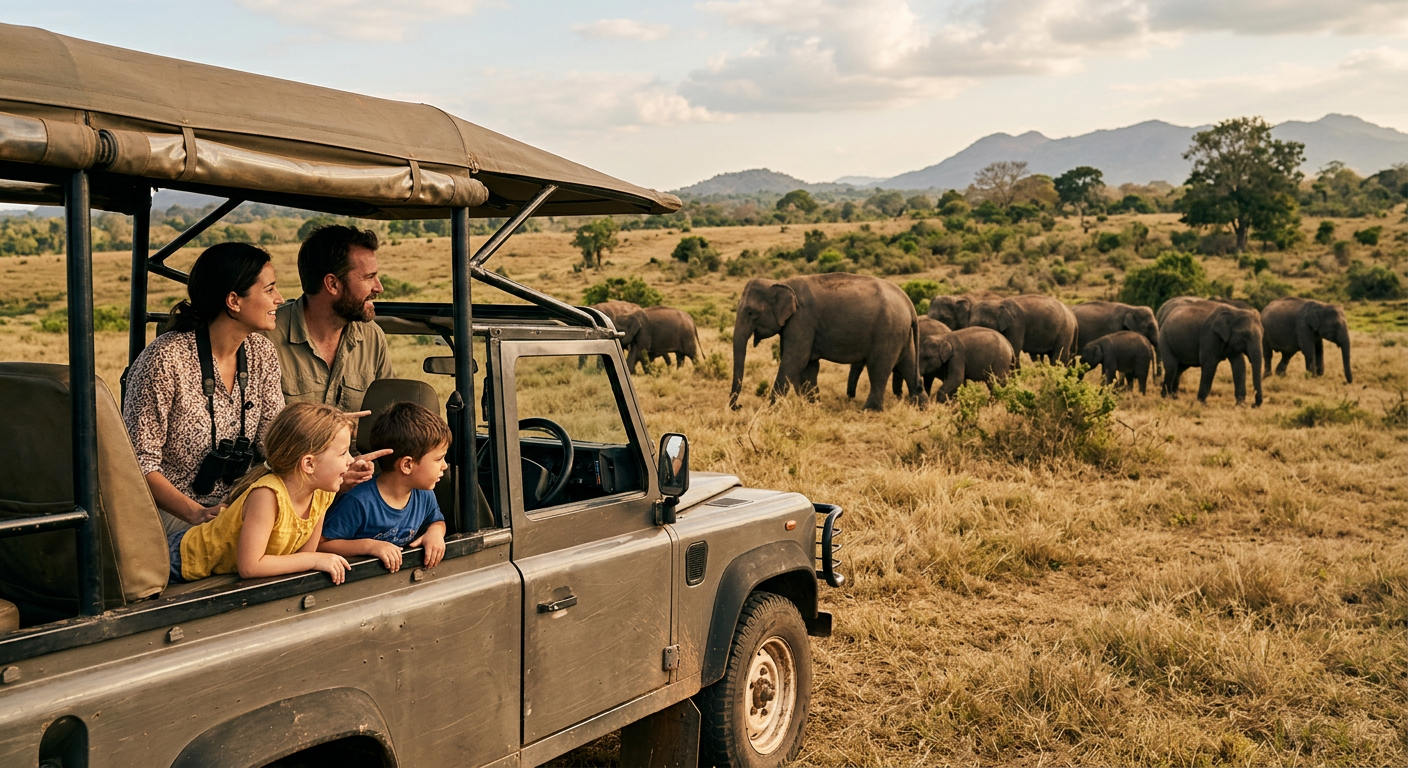
Wild elephants are a highlight for many families, but no park can guarantee a sighting. Animal movements respond to water, food, weather and human activity. Ask a responsible local operator which nearby park currently offers the most suitable experience rather than selecting solely from old seasonal reports.
Yala National Park is well known for leopard sightings, but leopards remain elusive. Some areas can become busy, and a search may involve several hours on rough tracks. This can suit wildlife-enthusiastic older children, but it may be tiring for toddlers. Udawalawe’s open landscapes often make elephants and other animals easier to observe, while Minneriya, Kaudulla and nearby protected areas can be rewarding when elephant herds move through the region.
The large elephant concentrations commonly associated with Minneriya are influenced by rainfall and reservoir conditions, so dates and locations vary from year to year. Avoid promises of a fixed “Gathering” season or a particular number of elephants. An ethical operator should prioritise animal welfare, maintain distance and avoid surrounding, chasing or blocking wildlife.
- Choose a shorter private safari if younger children may struggle with a long shared drive.
- Morning and late-afternoon departures are usually cooler, although start times and park access vary.
- Bring drinking water, hats, sunscreen, binoculars and a light layer for an early start.
- Expect dust and bumps. Check whether the jeep has secure seating and discuss accessibility needs beforehand.
- Keep voices low, remain inside the vehicle where required and never feed or approach animals.
- Explain that this is a wild habitat, not a zoo, and that tracks, birds and smaller animals are part of the experience.
If a jeep safari sounds too demanding, consider a reputable wildlife centre or a gentle nature walk with a qualified guide where permitted. Avoid attractions offering elephant rides, performances or close-contact bathing presented primarily for tourist photographs.
Make Cultural Stops Age-Appropriate
Ancient cities and temples are easier with children when visits begin early, include shade breaks and focus on one or two memorable features. Carry water and hats, and avoid packing several exposed archaeological sites into the same day.
Sigiriya Rock Fortress has steep stairways and exposed sections as well as a substantial climb. Older children may enjoy the challenge, but adults should assess each child’s stamina and comfort with heights. Start early, use handrails and turn back if heat, crowds or fatigue become a concern. The gardens and lower archaeological areas can still be worthwhile if the summit is not suitable.
Pidurangala should not be presented as an easy substitute for young children. Its upper section involves scrambling over rocks, and conditions can be slippery after rain. It is best considered by active families with suitable footwear who are comfortable supervising children on uneven terrain.
Dambulla’s cave temples also require an uphill walk and steps. Shoulders and knees should be covered at active religious sites, shoes must be removed where indicated, and visitors should behave respectfully around worshippers. Temple surfaces can become hot, so socks may be useful. Keep food packed away around monkeys, maintain distance and do not encourage them with snacks.
Match the Beach to the Season
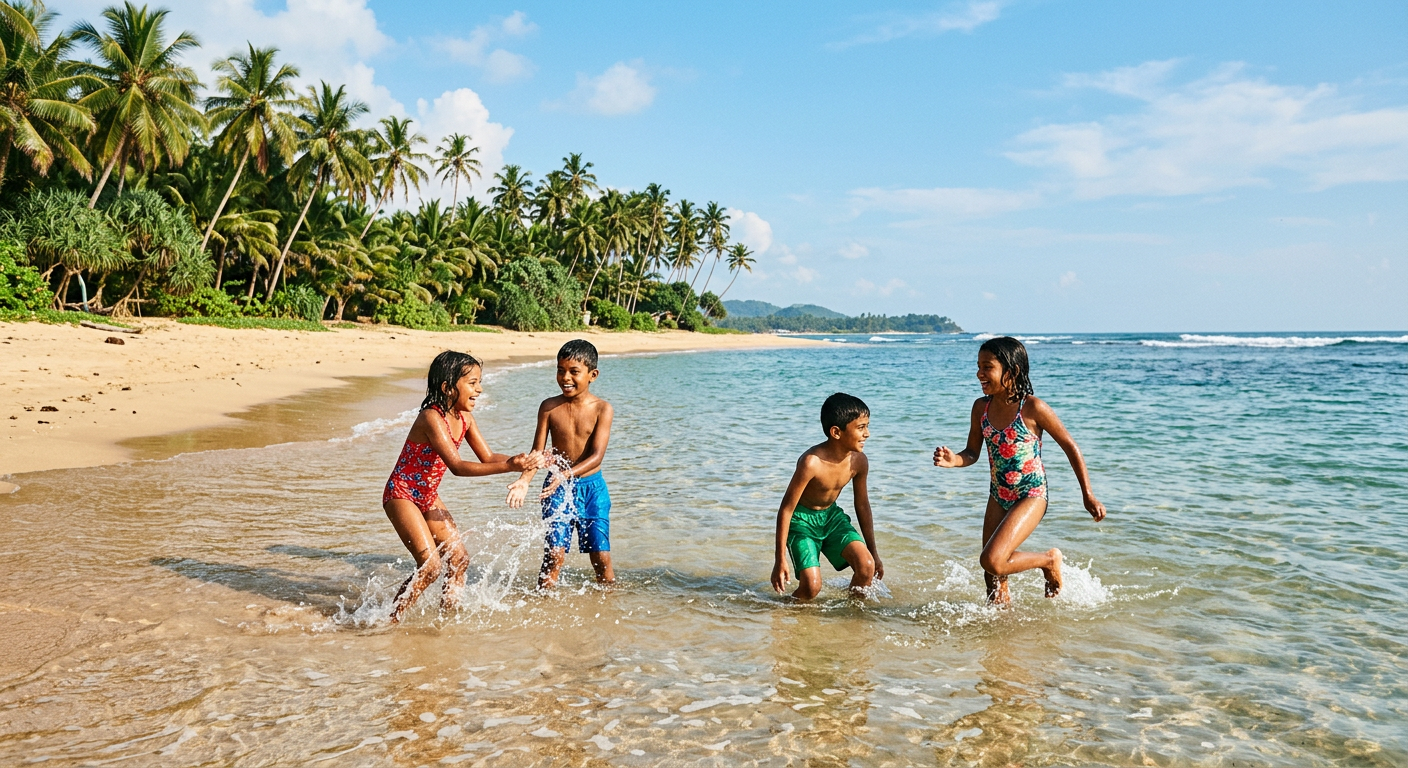
Sri Lanka’s coastline is not uniformly calm, and conditions can change quickly. Monsoon patterns broadly favour the south and west at some times of year and the east at others, but local rain, swell and currents do not follow a perfect calendar. Check recent conditions with accommodation staff or lifeguards, where present, every day.
On the south coast, Unawatuna has a sheltered shape and extensive visitor facilities, but that does not make it risk-free. Mirissa offers restaurants, accommodation and a broad beach, although waves and currents vary along the bay. Other family-friendly options may include protected hotel pools or smaller coves, depending on current conditions.
The east coast is often considered during roughly May to September. Passikudah is known for shallow water in parts of the bay, while Nilaveli and Uppuveli near Trincomalee offer access to a long coastline. Shallow water can still have sharp coral, sudden changes in depth, boat traffic or currents, so close adult supervision remains essential.
Pigeon Island trips may appeal to confident swimmers and older children, but the experience depends on sea conditions and responsible visitor management. Choose a licensed operator, ask for correctly sized life jackets and follow protected-area rules. Do not stand on coral, touch marine life or leave litter.
Whale-watching trips can involve an early departure, several hours offshore and rough seas. They may not suit very young children or anyone prone to seasickness. Before booking, ask about trip duration, passenger limits, life jackets, shade, toilets and the operator’s approach to wildlife. Boats should not chase, crowd or cut across the path of whales.
- Do not rely on labels such as “safe beach” or “calm bay.” Assess conditions each day.
- Use designated swimming areas and follow lifeguard or local safety advice where available.
- Supervise children within arm’s reach near the sea, including in shallow water.
- Use sun protection and plan beach time for earlier morning or later afternoon.
- Choose accommodation with a pool if dependable swimming time is important to the family.
Practical Family Travel Tips
Food and Water
Sri Lankan meals can work well for children when dishes are selected individually. Rice, hoppers, string hoppers, dhal, eggs, roti and fresh fruit provide accessible options, although recipes and spice levels vary. Ask for food to be prepared mild rather than assuming that every dish on a buffet is suitable. Families managing allergies should explain them clearly to each kitchen; cross-contact may be difficult to rule out, especially at small restaurants.
Carry familiar snacks for transfers and day trips. Use sealed drinking water or properly treated water, and keep children hydrated in hot weather. A reusable bottle can be refilled where accommodation provides a reliable filtered-water station.
Accommodation and Daily Logistics
Confirm family-room layouts instead of relying only on the room name. Ask whether a cot, extra bed, high chair, refrigerator or stair gate is available and whether balconies, unfenced pools or steep steps could present concerns. Laundry service is common and can reduce how much you pack.
Public toilets vary, so keep tissues, wet wipes, hand sanitiser and a change of clothes in the day bag. Dispose of wipes properly rather than flushing them. A lightweight rain layer, insect repellent appropriate for the child’s age and a basic first-aid kit are also useful.
Leave space in the itinerary for ordinary moments: watching trains, sharing fruit, spotting lizards in a garden or joining a casual game of cricket can be as memorable as a headline attraction.
Health and Entry Planning
Before departure, review current guidance from your government’s travel advisory and Sri Lanka’s official immigration and health authorities. Entry rules, recommended vaccinations and public-health guidance can change. Seek personalised advice from a qualified healthcare professional well before travel, particularly for infants, pregnant travellers or family members with medical conditions.
Bring enough prescription medicine for the trip in its original packaging, together with relevant documentation. Travel insurance should reflect the activities you plan, including safaris, swimming or hiking, and should provide appropriate medical cover. Know how to contact your insurer and identify suitable medical care near each main stop.
Keep the Itinerary Flexible
The best Sri Lanka family holidays are usually not the busiest. Allow extra time, alternate active days with quiet ones and be prepared to change a plan because of heat, rain, tiredness or wildlife movements. With realistic transfers, carefully chosen activities and regular downtime, families can enjoy the island without turning the trip into a race.