Sri Lankan food is one of the great pleasures of travelling around the island. Coconut, chilli, curry leaves, lime, rice, seafood and tropical produce appear in countless combinations, with flavours changing from one region and community to another. For a first-time visitor, however, unfamiliar menus, busy markets and generously spiced dishes can raise practical questions. How should you eat rice and curry by hand? When are hoppers served? How can you choose a street food stall sensibly?
This beginner’s guide introduces essential Sri Lankan dishes, dining etiquette, market manners and practical food-safety habits. There is no single way to experience the country’s cuisine, so stay curious, ask questions and follow the lead of local diners.
Start with Hoppers and String Hoppers
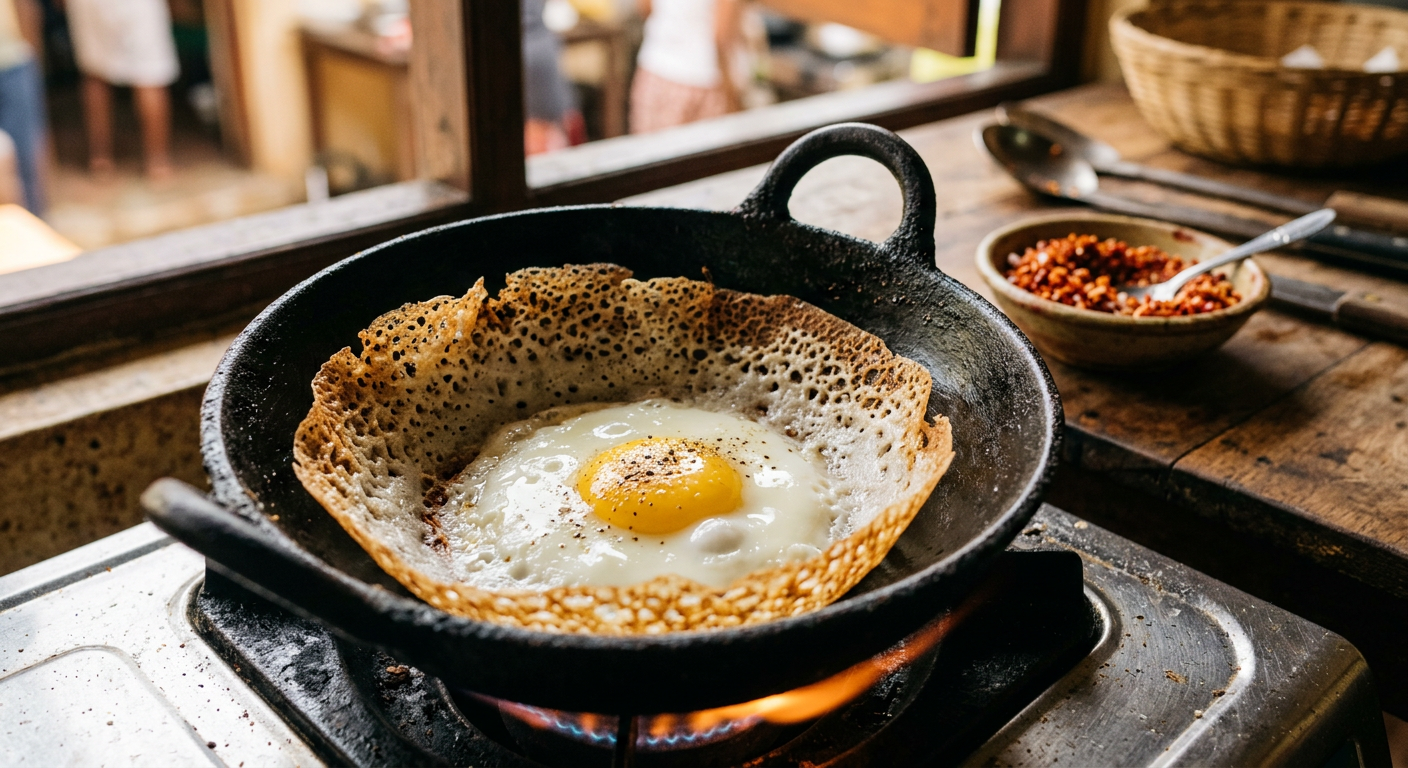
Hoppers, known as appa, are bowl-shaped pancakes usually made from a fermented rice-flour batter with coconut milk or coconut water. Cooked in a small rounded pan, they develop a thin, crisp edge and a soft centre. Recipes vary between cooks, and hoppers may be offered at breakfast, dinner or evening food stalls rather than throughout the day.
A plain hopper is often eaten with curry or sambol. For an egg hopper, an egg is cooked in the centre while the hopper is still in the pan. Common accompaniments include lunu miris, a punchy mixture based on chilli and onion, and seeni sambol, a sweet, spicy onion relish. Some versions contain Maldive fish, so vegetarians and people with fish allergies should ask before eating.
Tear off a section of the crisp rim, use it to gather some of the centre and add a little sambol or curry. Cutlery is also perfectly acceptable if you prefer it. Begin cautiously with sambol: its heat can vary considerably even when two servings look identical.
Do not confuse bowl-shaped hoppers with string hoppers, or indi appa. These delicate nests of steamed rice-flour noodles are commonly served with dhal, coconut sambol and curry. They are another accessible breakfast or dinner choice for newcomers.
How to Eat Rice and Curry
Rice and curry is a foundation of everyday Sri Lankan cooking, but the name understates the variety on the plate. A meal may combine white or red rice with dhal, vegetable preparations, leafy mallung, sambol and a fish, meat or egg curry. Papadams or another crisp element may be added. The selection depends on the cook, region, season and price; there is no required number of curries.
Many Sri Lankans eat rice and curry with the fingertips of the right hand. To try it, wash and dry your hands first. Mix a small amount of rice with one or two curries, shape it loosely with your fingertips, then use your thumb to guide the bite into your mouth. Working with a small section of the plate keeps the remaining flavours distinct and makes the technique easier.
The right hand is conventionally used for eating and for passing food, especially in traditional settings. Avoid placing fingers into shared dishes; use the serving spoons provided. Expectations vary among households and restaurants, and no considerate host will object if a visitor asks for a spoon. Watch what others do and choose the method that feels comfortable.
Sri Lankan curries are not all intensely hot. Dhal and coconut-based dishes can be mild, while sambols and certain meat or seafood curries may carry much more chilli. Ask which items are milder, but remember that perceptions of spice differ. Mixing in more rice or dhal can soften a powerful mouthful.
Visiting Food Markets in Sri Lanka
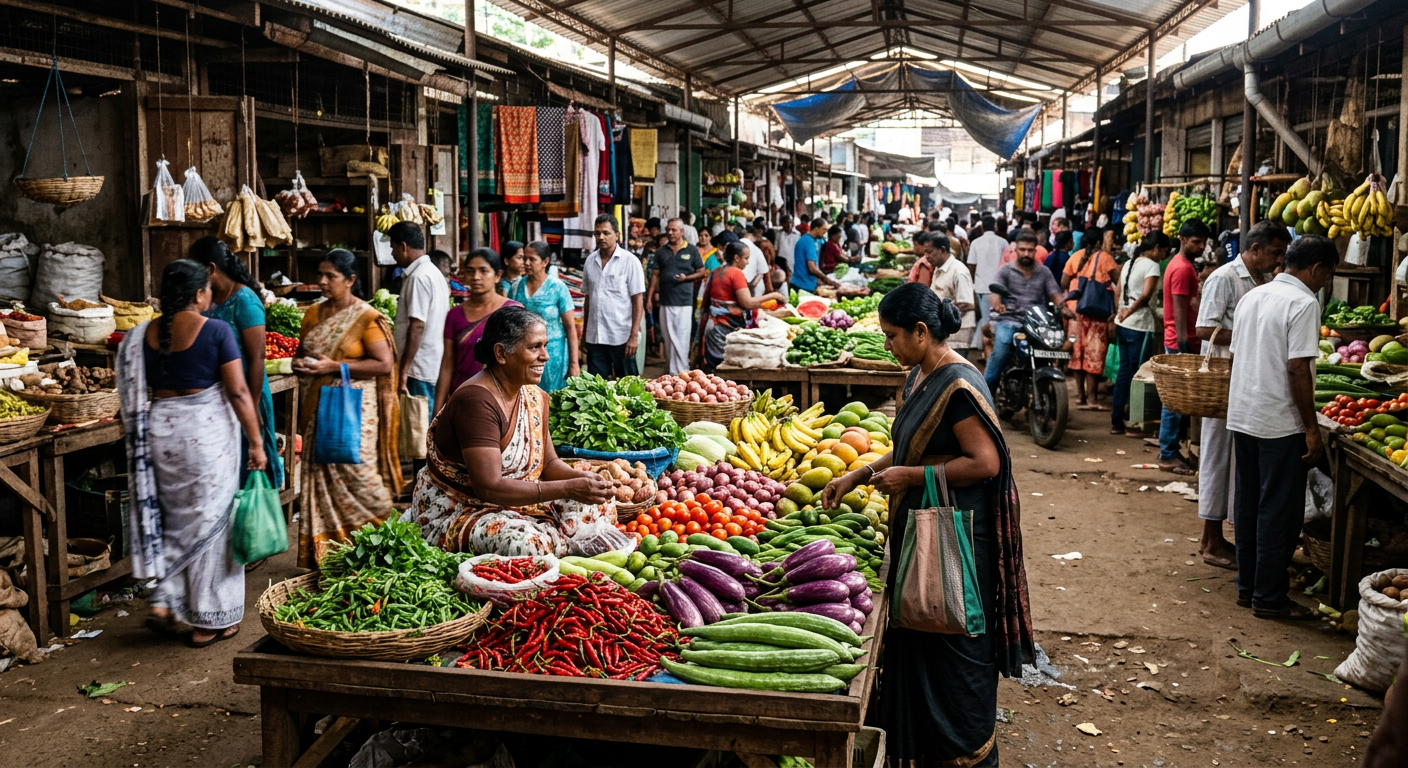
Markets offer a vivid introduction to local ingredients. Depending on the location and season, stalls may display plantains, jackfruit, breadfruit, gourds, leafy greens, coconuts, limes and fruit such as rambutan or mangosteen. Fish markets are generally liveliest early in the day, while produce markets may continue well into the afternoon.
Colombo’s Pettah district contains several busy trading streets and market areas rather than one simple tourist market. It is crowded, hot and absorbing, so wear secure footwear, carry water and keep valuables close. Elsewhere, notable stops include municipal markets and weekly fairs known as pola. Opening days and peak hours vary, so confirm locally before making a special journey.
Ask permission before taking close photographs of vendors or customers. A friendly greeting and genuine interest usually create a better interaction than treating a working market as a photo set. If you are unsure about an ingredient, ask its local name and how it is cooked; not every vendor will speak fluent English, but gestures and translation tools can help.
Buying Food and Spices
Do not assume that every market price should be negotiated. Fixed prices are common for everyday produce, prepared food and clearly labelled goods. Bargaining may occur for souvenirs or larger purchases, but opening at half the quoted price can feel disrespectful. Ask the price first, compare similar stalls when practical and negotiate gently only when the setting suggests it is appropriate.
For spices to take home, choose a vendor with good turnover and packaging that is dry, sealed and labelled. Sri Lankan cinnamon is a popular purchase, but quality and price vary. Check the customs and biosecurity rules of your destination before buying fresh fruit, plants, seeds or unpackaged food, as entry restrictions differ by country.
Choosing Sri Lankan Street Food Sensibly
Sri Lankan street food ranges from evening plates of kottu roti to fried snacks, stuffed rotis and isso vadai, lentil fritters topped with prawns that are especially associated with coastal vendors and Colombo’s Galle Face area. Availability changes by town and time of day; the metallic rhythm of cooks chopping kottu is often an evening sound.
No checklist can guarantee that a meal will be risk-free, but a few observations can help you make a more informed choice:
- Look for steady turnover: A stall serving many local customers is likely to prepare batches frequently. Popularity is useful context, although it is not proof of hygiene.
- Choose food served piping hot: Prefer dishes cooked thoroughly in front of you or reheated until steaming. Heat can reduce many microbial risks, but it cannot undo unsafe storage or eliminate every toxin.
- Notice food handling: Look for covered ingredients, clean-looking utensils and separation between raw and cooked items. Be cautious if cooked food has been sitting uncovered, especially in warm conditions.
- Consider water and ice: Use sealed bottled water from a recognised source or properly treated water. At cafés and stalls, ask whether ice is made from treated or commercially supplied water if you are uncertain.
- Check fruit preparation: Fruit you peel yourself is a practical choice. Freshly cut fruit and king coconut, or thambili, can be refreshing, but cleanliness still depends on the knife, hands, storage and serving container.
- Start with manageable portions: Rich coconut dishes, fried snacks and unfamiliar levels of chilli can be uncomfortable even when food is safely prepared. Try a small serving before ordering more.
Carry hand sanitiser for occasions when soap and water are unavailable, but wash with soap when possible. If a stall smells unpleasant, has visible pests or simply makes you uneasy, move on. Sri Lanka has abundant alternatives, and declining politely is better than taking an unnecessary chance.
Dietary Needs and Food Allergies
Vegetarian food is widely available, particularly at restaurants serving rice and curry, South Indian dishes or Buddhist vegetarian meals. However, a vegetable dish may contain Maldive fish, dried fish, shrimp paste or stock. The word vegetarian may also be interpreted differently, so ask specifically about fish, meat, egg and dairy according to your needs.
Coconut, seafood, peanuts, cashews, sesame, wheat and dairy can appear in sauces, sambols, sweets and snacks. If you have a serious allergy, carry a clearly translated allergy card and explain that even a small amount is unsafe. Cross-contact can occur in compact kitchens and at buffet counters, so choose establishments able to answer confidently rather than relying on appearance alone.
Regional Dishes Worth Seeking Out
Food in the north and east often reflects strong Sri Lankan Tamil and Muslim culinary traditions. In Jaffna and surrounding areas, look for crab curry, mutton preparations, odiyal-based dishes and kool, a thick seafood stew whose ingredients vary by cook. Tamarind, palmyrah products and aromatic spices help create distinctive regional flavours.
Along the coast, menus frequently feature fish, prawns, crab and squid. Ambul thiyal is a dry, sour fish preparation associated especially with southern Sri Lanka and flavoured with goraka. Ask for the day’s catch and confirm prices before ordering seafood sold by weight.
In the central highlands, tea estates shape both scenery and visitor experiences. Estate bungalows and hotels may serve afternoon tea, but this should not be mistaken for the whole region’s everyday cuisine. Local restaurants remain excellent places to try rice and curry, rotis and warming vegetable dishes.
Finish with a Sri Lankan Sweet
Watalappan is a rich steamed custard associated with Sri Lanka’s Muslim community and commonly made with coconut milk, eggs, jaggery and spices. Recipes differ, and nuts may be used as a garnish. Another classic is buffalo curd with treacle, often called kiri pani. The syrup may be made from the sap of the kithul palm, although quality varies between producers.
During Sinhala and Tamil New Year, usually celebrated in April, sweet and savoury foods known collectively as kavum or rasa kavili appear in homes and shops. Familiar examples include oil cakes, crisp moulded kokis and rice-flour sweets such as aluwa. Enjoy them with plain tea, especially if you prefer a less sugary pairing.
Enjoy Sri Lankan Food with Curiosity
The best introduction to Sri Lankan cuisine is not a list completed in one day but a series of small discoveries. Try hoppers at a busy evening shop, compare rice and curry in different regions, visit a working market respectfully and ask cooks what they recommend. With sensible hygiene choices, clear communication and an open mind, eating can become one of the most memorable parts of your journey through Sri Lanka.