Sri Lanka rewards curious eaters. Across the island, rice, coconut, chilli, lime, seafood, vegetables and fragrant spices appear in combinations shaped by region, religion, season and family tradition. A meal may range from a crisp hopper at a roadside shop to a generous rice and curry spread at a guesthouse. For a first-time visitor, unfamiliar names, lively markets and different dining customs can feel daunting. This practical guide explains what to try, how to order and how to make sensible food choices without losing the pleasure of discovery.
Start with Hoppers, or Appa
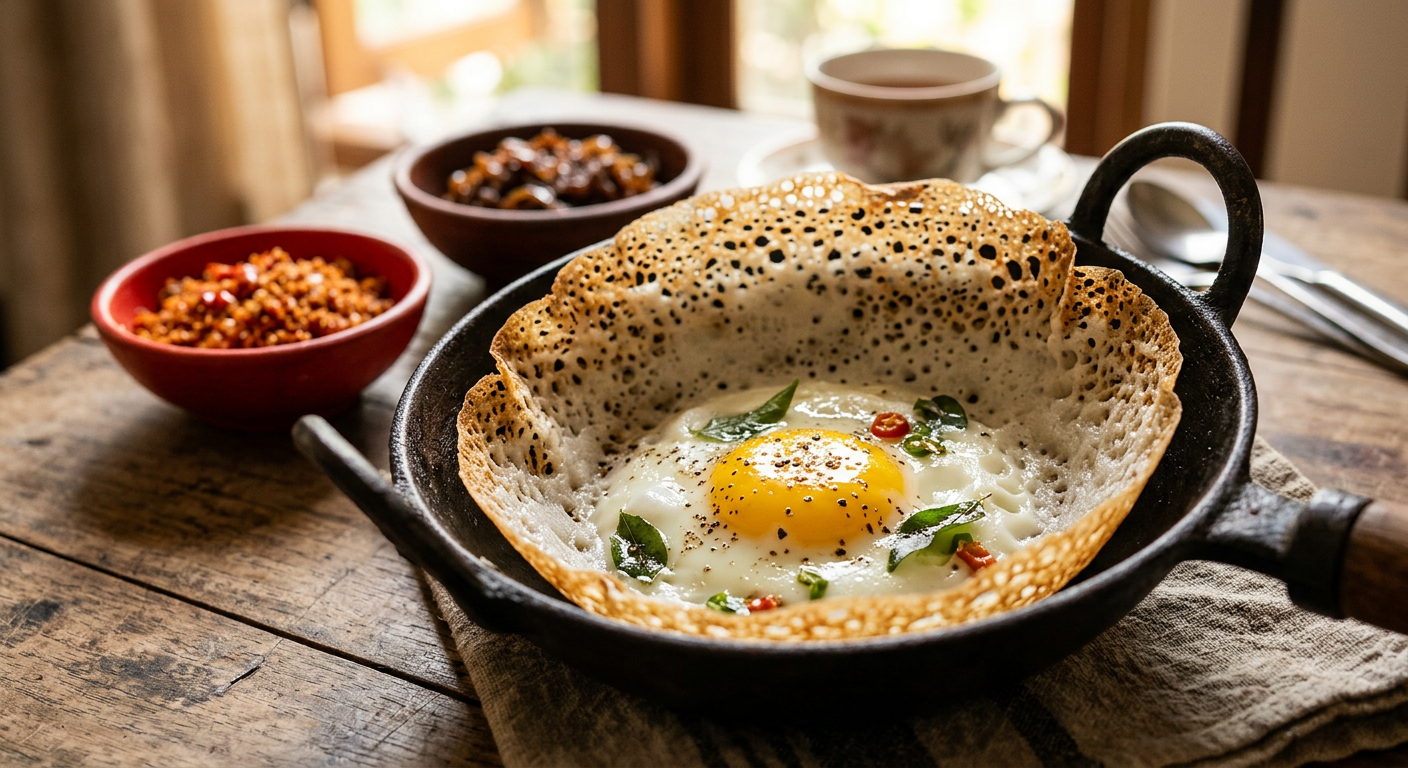
Hoppers, known as appa in Sinhala and appam in Tamil, are bowl-shaped pancakes with lacy, crisp edges and a soft centre. The batter is usually based on rice flour and coconut milk and is fermented before being swirled around a small curved pan. Recipes and fermentation methods vary between cooks. Hoppers are especially associated with breakfast and evening meals, although serving times depend on the restaurant.
A plain hopper is ideal for scooping up curry or sambol. For an egg hopper, an egg is cooked in the soft centre, sometimes with black pepper scattered over it. Sweeter or coconut-rich versions may also be available, but names and styles vary. Do not confuse bowl-shaped hoppers with string hoppers, or indi appa: those are steamed nests of pressed rice-flour noodles, commonly served with curry, coconut sambol or coconut-milk gravy.
Tear a hopper into manageable pieces and use them to gather a little of each accompaniment. A classic partner is lunu miris, a hot mixture of chilli, onion, lime and salt that often contains Maldive fish. Seeni sambol offers a sweeter onion flavour but may also contain Maldive fish. If you avoid fish, ask rather than assuming a sambol is vegetarian. Coconut sambol, dhal and mild curry can help balance the heat.
How to Enjoy Rice and Curry
Rice and curry is not a single curry poured over rice. It is usually a selection of dishes with contrasting flavours and textures: dhal, vegetables, leafy mallung, sambol, fried elements and perhaps fish, chicken, egg or another main curry. The selection changes with the cook and the day. Red, white and heirloom rice varieties all appear, while coastal, hill-country, northern and eastern cooking traditions bring their own ingredients and seasoning.
Many Sri Lankans eat rice and curry with the fingertips of the right hand, particularly at home and in casual settings. Visitors are welcome to try, but using a spoon is entirely acceptable. Wash and dry your hands first. Take a small amount of rice, mix in just enough curry and sambol for one bite, gather it lightly with your fingertips, and use your thumb to guide it into your mouth. Food is generally handled with the fingertips rather than the whole palm.
Using the right hand for eating is a customary courtesy, especially when sharing food. There is no need to make rigid assumptions about what other people do with their left hand; simply observe your hosts and use serving spoons for communal dishes when provided. At a family home, wait until you are shown where to sit and begin. Accept modest portions first because second helpings are often offered. If you are full, a warm thank-you and a polite refusal are enough.
Understanding Spice and Ordering Clearly
Sri Lankan food can be hot, but not every dish is fiery. Coconut milk, dhal and gently cooked vegetables often sit beside sharper sambols and chilli-rich curries. Asking for food to be less spicy may reduce the added chilli, although a curry prepared earlier cannot always be changed. Order sambol separately and taste a small amount first. A useful approach is to combine hot dishes with rice, dhal or coconut-based accompaniments rather than expecting water to remove the heat.
Explain dietary requirements clearly and confirm individual ingredients. Coconut is widespread, while egg, dairy, wheat, peanuts, cashews, seafood and fish may appear in dishes or condiments. Maldive fish is a common hidden ingredient in some sambols and vegetable preparations. Kottu is normally made with wheat-based roti, and shared grills, pans and utensils are common in small kitchens. Travellers with serious allergies should not rely on labels such as vegetarian or on a dish merely looking free of an allergen; discuss ingredients and cross-contact directly with the establishment.
Exploring Markets and Weekly Pola
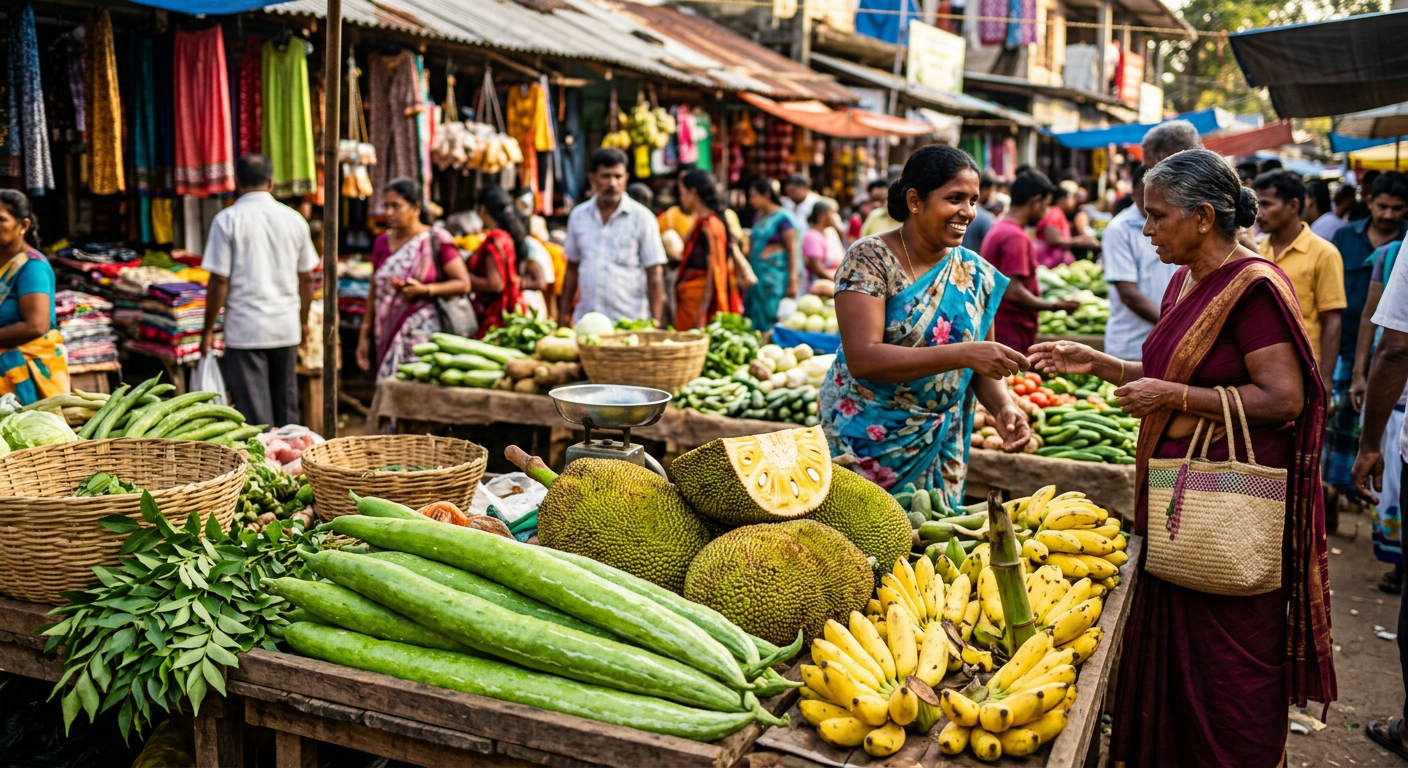
Markets offer an excellent introduction to the ingredients behind Sri Lankan cooking. Permanent town markets and produce streets differ from a pola, which commonly refers to a periodic or weekly fair. Depending on your route, you might encounter busy urban trading areas, municipal markets or village pola where farmers and vendors sell fruit, vegetables, dried fish, spices and household goods. Morning visits are often cooler and may offer a wider produce selection, although schedules vary.
Look for jackfruit sold at different stages of ripeness, cooking bananas, gourds, leafy greens, coconuts and fruit such as papaya, pineapple, mango, rambutan or mangosteen when in season. Sri Lankan cinnamon, pepper, cardamom and cloves make useful purchases, but compare prices and buy from a vendor who can explain the product. For packaged spices, check that the seal is intact and review the label and date before buying.
Carry small-denomination cash, keep valuables secure in crowded lanes and avoid blocking narrow walkways while browsing. Greet vendors, ask the price before agreeing to a purchase and bargain gently only where it appears customary. Not every small produce purchase calls for negotiation. Always ask before photographing a person or stall. Fruit intended to be eaten raw should be washed with water you consider safe; fruit you can peel yourself is a convenient market snack.
Choosing Street Food with Care
Street food is one of the pleasures of travelling in Sri Lanka, especially in the late afternoon and evening. Listen for the metallic rhythm of kottu roti, watch hoppers being cooked in curved pans, or try hot vadai, filled roti and other short eats. Availability changes by town and time of day. A busy stall can indicate good turnover, but popularity alone does not guarantee hygiene, so use several visible clues.
- Choose freshly cooked food: Prefer dishes prepared in front of you and served thoroughly hot. Avoid food that is merely warmed after sitting at room temperature.
- Check handling and storage: Look for covered ingredients, clean utensils and separation between raw meat or seafood and ready-to-eat food.
- Be selective with raw items: Fruit peeled to order is easier to assess than fruit that has been cut and displayed for a long period. Apply similar caution to raw garnishes and salads.
- Consider drinking water: Use factory-sealed bottled water or water that has been appropriately treated. Check the seal yourself. Ice may be made with treated water at many establishments, but ask if you are uncertain.
- Trust your senses: Walk away if food smells unusual, surfaces appear poorly maintained or you are uncomfortable with how ingredients are handled.
Queue without crowding the cooking area, decide what you want before ordering when a stall is busy and confirm the price if it is not displayed. Small stalls may accept cash only. Return reusable plates or glasses where directed and place rubbish in a bin rather than leaving it beside the stall. These simple habits make the experience easier for vendors and other customers.
Popular Sweets and Desserts
For dessert, try watalappan, a steamed coconut-milk and jaggery custard commonly flavoured with cardamom or nutmeg and sometimes topped with cashews. Recipes differ, and the dish contains egg; toppings may introduce nuts. Another favourite is buffalo curd with treacle, often called curd and kithul pani. The thick, tart curd is served with sweet syrup traditionally associated with the kithul, or fishtail, palm.
Fresh tropical fruit provides a lighter finish, with the best choices depending on the season and region. You may also encounter coconut pancakes, jaggery-based sweets and festive specialities. Desserts can be very sweet, so sharing a portion is a practical way to sample more than one. If a dairy, egg or nut allergy is relevant, confirm ingredients even when the main components appear to be coconut and jaggery.
Make Every Meal Part of the Journey
The best Sri Lankan food experiences often begin with a simple question: what is cooking today? Family-run restaurants, market vendors and guesthouse hosts can introduce dishes that never appear on a fixed menu. Be curious, ask before photographing people, and avoid describing local food only by how hot it is. Its character also comes from sourness, sweetness, smoke, coconut, spice and texture.
Wash your hands, begin with small portions and taste condiments before adding more. Whether you use your fingers or a spoon matters less than eating respectfully and with interest. With sensible hygiene choices and clear communication about dietary needs, hoppers, markets, rice and curry, street snacks and sweets can become some of the most memorable parts of a Sri Lankan journey.