Sri Lankan food brings together rice, coconut, seafood, vegetables, fruit and aromatic spices in an extraordinary range of everyday dishes. A single meal might balance a mild coconut curry with sour pickle, earthy lentils, crisp papadam and a sambol carrying serious heat. For first-time visitors, however, unfamiliar names, busy markets and questions about etiquette can make ordering feel daunting.
This beginner's guide explains what to expect from rice and curry, hoppers, short eats and street food, as well as how to eat respectfully and make sensible food choices. Recipes and customs vary among regions, communities and households, so treat every meal as an opportunity to ask questions rather than as a test with rigid rules.
Understanding Sri Lankan Rice and Curry
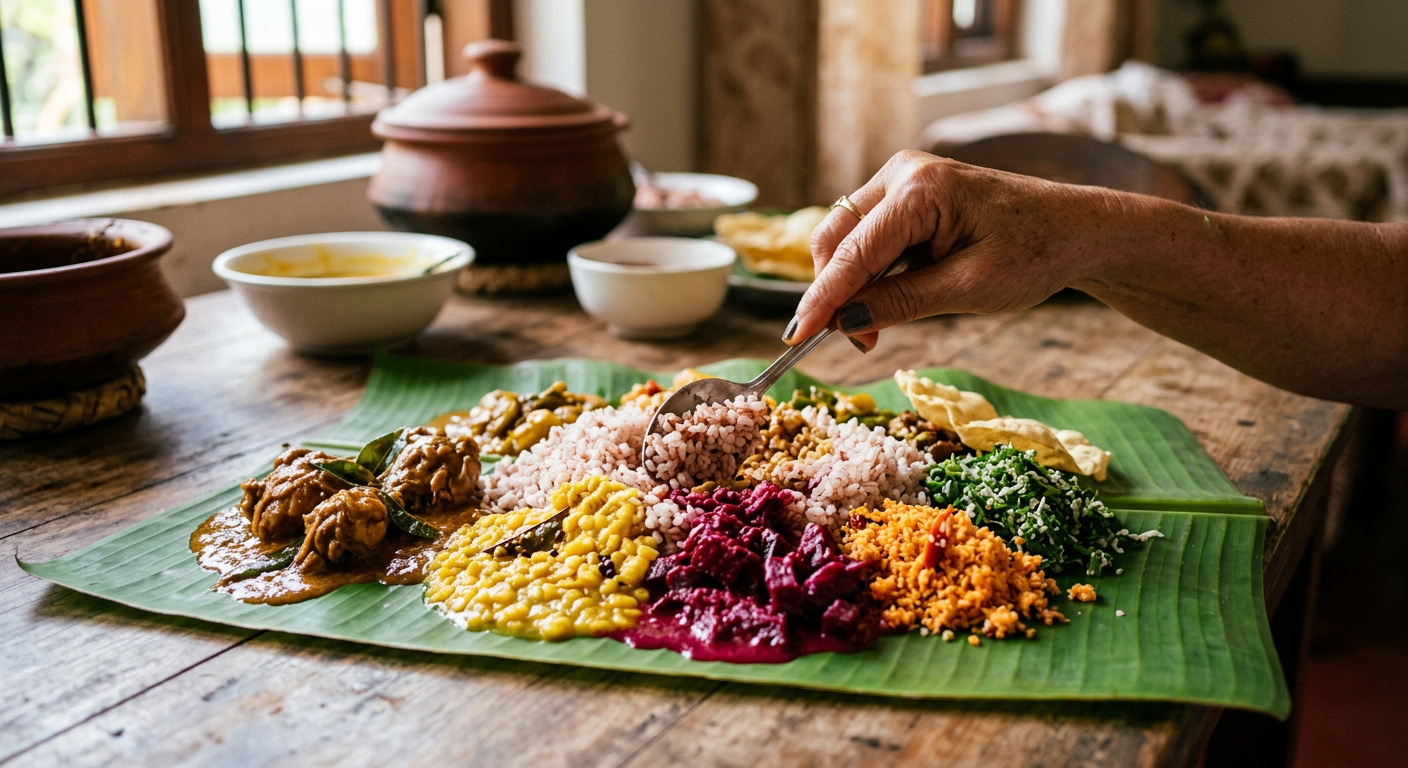
Rice and curry is the centrepiece of everyday Sri Lankan dining, but its simple name hides considerable variety. A serving usually consists of rice accompanied by several dishes rather than one bowl of curry. These may include dhal, cooked vegetables, a coconut-based preparation, sambol, pickle, papadam and a fish, chicken or meat curry. Vegetarian combinations are widely available, although ingredients and cooking methods should be confirmed if you have dietary restrictions.
The pleasure comes from combining small amounts of contrasting dishes. Try each curry separately before mixing portions with the rice. Pol sambol, made with grated coconut, chilli and other seasonings, can be hot, so begin with a little. Heat levels differ considerably, and the English word spicy may refer either to chilli heat or to generous seasoning. Ask whether a dish is hot if that matters to you.
Eating with Your Hand
Many Sri Lankans eat rice and curry with the fingers of the right hand. To try it, wash and dry your hands, use your fingertips to mix a small portion of rice with curry, shape it loosely, and guide it into your mouth with your thumb. Food is generally kept away from the palm. In settings where meals are shared, use serving spoons rather than the hand you are eating with to take more food.
Eating by hand is optional, not a requirement for an authentic experience. Spoons and forks are commonly available, and it is perfectly polite to request them. The right-hand convention remains customary in many homes and traditional settings, so follow your host's example if you choose to eat by hand.
Home and Restaurant Manners
If invited to a home, arrive at the agreed time, accept instructions about footwear and wait for your host to indicate where to sit. Washing facilities may be offered before and after the meal. Complimenting a dish and accepting a modest second helping are warm gestures, but you do not need to overeat. There is no universal rule requiring guests to leave food behind; taking only what you expect to finish is usually the more considerate approach.
At casual restaurants, rice and curry may be served as a set meal, from a buffet or with dishes chosen individually. Ask what is included and whether prices are per person or per dish. Some restaurants add service charges or taxes, while small eateries may not, so check the menu or bill rather than assuming.
Hoppers, String Hoppers and Other Staples
Hoppers, known as appa, are bowl-shaped pancakes made from a fermented rice-flour batter, often containing coconut milk. Cooked in a small rounded pan, they develop a lacy, crisp rim and a soft centre. Plain hoppers are eaten with accompaniments such as lunu miris, seeni sambol or curry. An egg hopper has an egg cooked in its centre. Hopper availability is often greatest in the evening, although some places serve them at breakfast.
String hoppers, or idiyappam, are a separate dish rather than a sweet type of hopper. Fine strands of rice-flour dough are pressed into discs and steamed. They are commonly served at breakfast or dinner with dhal, pol sambol and kiri hodi, a mild, savoury coconut-milk gravy. Sweet accompaniments exist in some homes and regions, but string hoppers should not be assumed to be dessert.
Other useful staples to recognise include roti, pittu and kiribath. Pol roti is a coconut flatbread that works well with sambol or curry. Pittu combines rice flour with coconut and is steamed in a cylinder. Kiribath is rice cooked with coconut milk, set in a slab and cut into diamond-shaped pieces; it is associated with celebrations and auspicious occasions but can also appear at breakfast.
Street Food and Short Eats to Try
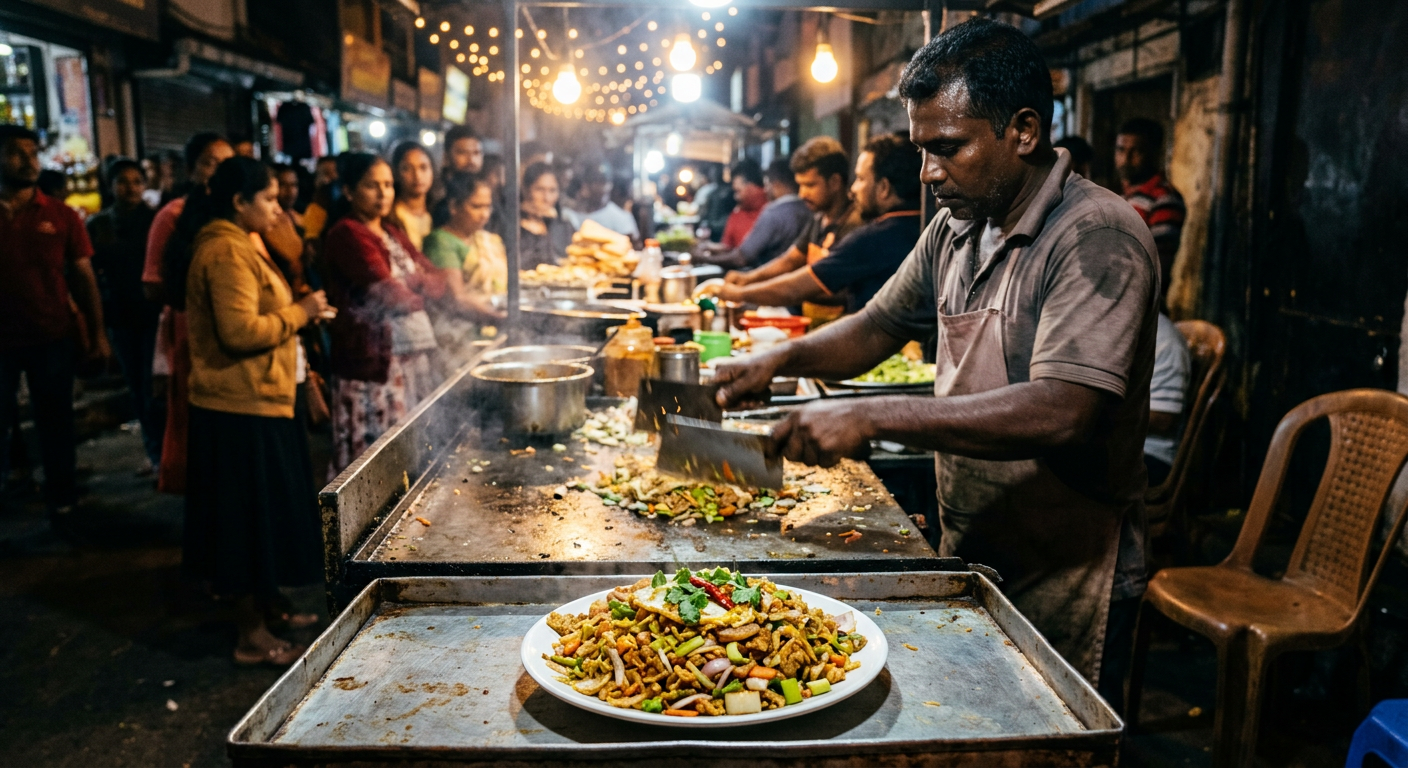
Kottu roti is one of Sri Lanka's most recognisable evening foods. A cook chops pieces of flatbread on a hot griddle with vegetables, egg and, depending on the order, chicken, seafood, cheese or other additions. The rhythmic sound of metal blades often announces a kottu shop before you see it. Portions can be large, and chilli sauces may add more heat than the kottu itself.
Short eats is the local term for quick savoury snacks sold in bakeries, cafés, trains and roadside shops. Common examples include vegetable roti parcels, fish buns, patties, cutlets and rolls. Fillings are not always obvious from the exterior, so ask before buying if you avoid fish, meat, egg or dairy. A snack labelled vegetable may still have been prepared alongside animal products.
Vadai, also written as wade, are fried savoury snacks usually made from lentils, although recipes differ. Isso vadai is topped with prawns and is especially associated with seaside snack stalls. Other foods worth seeking out include roast paan with curry, manioc with coconut sambol and freshly prepared dosa in areas with strong Tamil culinary traditions.
Choosing Food with Sensible Caution
No stall or restaurant can be judged safe by one sign alone, and a crowd is not a guarantee. Look for steady turnover, a reasonably clean preparation area, protected ingredients and food that is cooked thoroughly and served hot. Fried or grilled items should come fresh from the pan rather than sit lukewarm for long periods. If food smells unusual, appears poorly stored or is handled in a way that concerns you, choose another vendor.
- Use safe drinking water: Choose sealed bottled water from a reliable seller or properly treated water. Check that a bottle's seal is intact.
- Consider the ice source: Many established businesses use commercially produced ice, but standards vary. Ask if you are uncertain, particularly at informal stalls.
- Choose fruit carefully: Fruit you can peel yourself is a practical option. Pre-cut fruit should look fresh, be protected from handling and, where appropriate, be kept cool.
- Check temperature and turnover: Prefer hot food served hot and chilled food kept properly cold. Busy service can help turnover, but still observe handling practices.
- Communicate allergies clearly: Ask about ingredients every time. Coconut, seafood, dried fish, peanuts, cashews, egg, dairy and gluten-containing products may appear in sauces, sambols or garnishes.
Travellers with serious allergies should carry their prescribed medication and a clearly translated allergy card. Cross-contact can occur in small kitchens, and staff may not interpret terms such as vegan, gluten-free or nut-free in the same way you do. When the consequences could be severe, choose businesses able to explain ingredients and preparation confidently.
How to Explore Sri Lankan Markets
A produce market or weekly pola is an excellent place to see ingredients before meeting them on a plate. Depending on the season and region, stalls may carry bananas, papaya, pineapple, wood apple, rambutan, mangosteen, jackfruit, breadfruit, leafy greens, gourds, spices and dried fish. Coastal markets may also have fresh seafood, while hill-country markets display vegetables suited to cooler conditions.
Go early for a broader selection and cooler conditions. Wear closed or secure footwear because floors can be wet or uneven, keep valuables close in crowded aisles, and ask before photographing people or stalls. Market traffic can be hectic, so watch for handcarts, motorcycles and delivery vehicles.
Prices for produce may be displayed, quoted by weight or treated as fixed. Bargaining is not universal and is less appropriate for inexpensive everyday goods than for some souvenir purchases. Ask the price before agreeing, confirm the unit and negotiate only when the setting clearly allows it. Friendly greetings and patient questions usually create a better interaction than aggressive haggling.
Regional and Community Food Traditions
Sri Lankan cuisine is not a single uniform tradition. In the north and east, Tamil foodways feature dishes such as crab or seafood curries, kool seafood broth, dosai, idiyappam and preparations seasoned with distinctive roasted spice blends. Availability varies, and recipes differ between Jaffna, the eastern coast and individual communities.
Along the southern and western coasts, seafood is prominent, with ambul thiyal being a well-known sour, peppery fish preparation associated particularly with the south. The central highlands offer market vegetables, dairy products and access to tea estates, although tea-growing history should not be confused with one fixed hill-country cuisine.
Sri Lanka's Muslim, Malay and Burgher communities have also shaped the national table. Watalappan is a steamed coconut custard sweetened with jaggery and scented with spices, strongly associated with Sri Lankan Muslim celebrations. Lamprais, linked to the Dutch Burgher community, traditionally brings specially cooked rice, meat preparations, sambol and other components together in a banana-leaf parcel. Versions sold today vary widely, so seek a specialist producer if you want to understand the dish beyond its name.
Desserts, Sweets and Tea
Curd and treacle is a classic finish: thick curd, traditionally made from buffalo milk, is served with syrup commonly associated with the kithul palm. Confirm the syrup if authenticity or dietary detail matters, as products and serving practices vary. The combination is rich, tangy and sweet rather than elaborate.
Festive sweets include kavum, kokis, aluwa and mung kavum. They are especially visible around Sinhala and Tamil New Year, though sweet shops may sell them throughout the year. Portions are often dense and sweet, making them easy to share. Fresh tropical fruit is a lighter alternative when in season.
Tea can range from plain tea to sweet milk tea flavoured with ginger or spices. If you prefer less sugar, ask when ordering because drinks may arrive already sweetened. Tea-estate visits can add context, but quality depends on the producer and preparation rather than on a generic label such as Ceylon tea alone.
A Simple First-Timer's Food Plan
- Begin with a rice and curry lunch so you can sample several flavours in one sitting.
- Try freshly cooked egg hoppers or plain hoppers with sambol for dinner.
- Visit a market with time to ask about seasonal fruit, vegetables and spices.
- Order kottu from a busy evening shop and specify your preferred protein and chilli level.
- Seek one regional or community speciality rather than eating only the most famous national dishes.
- Finish with curd and treacle, watalappan or seasonal fruit and a cup of tea.
The best approach to eating in Sri Lanka is curious, observant and flexible. Ask what a dish contains, start cautiously with chilli, choose vendors using sound food-handling practices and respect the customs of the people serving you. You will discover not one definitive Sri Lankan menu, but a changing collection of regional, religious, family and seasonal food traditions.