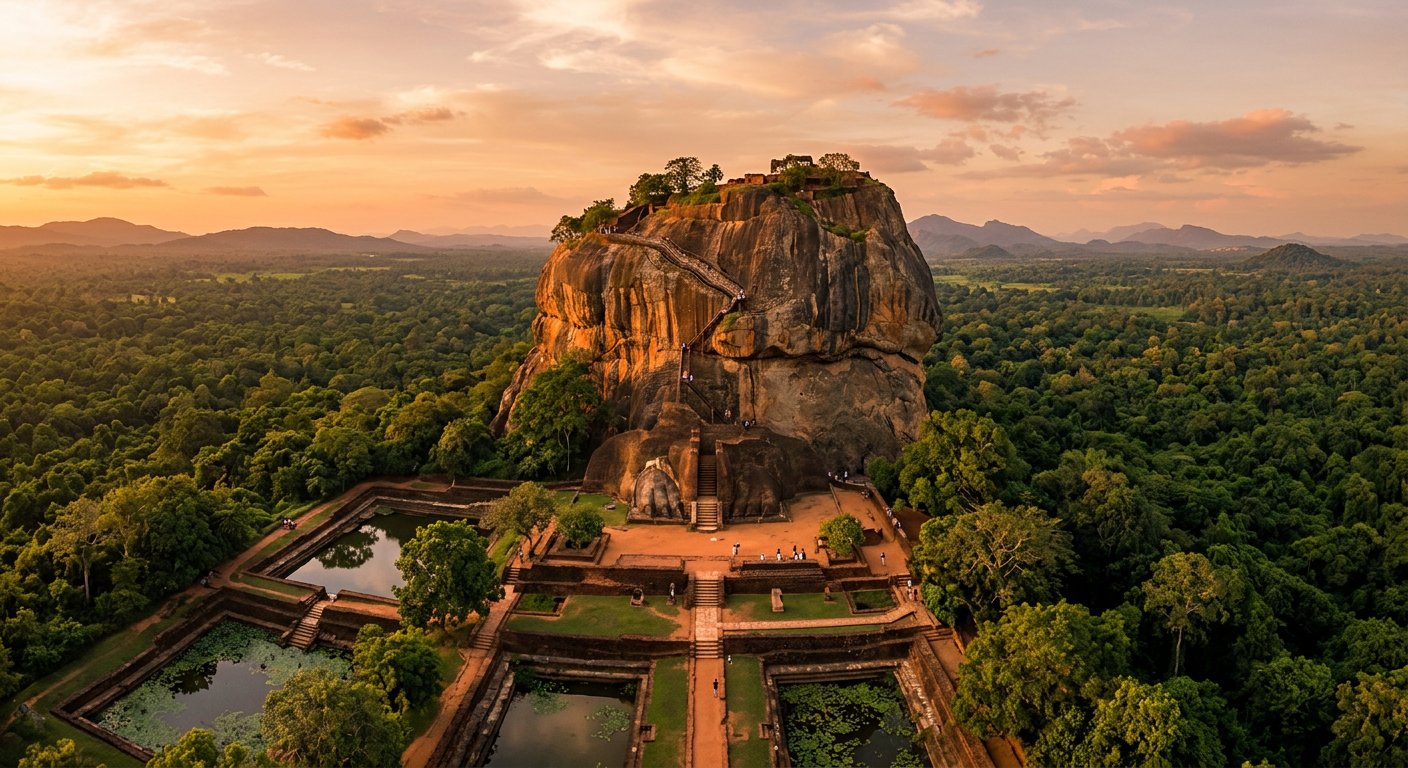
Cultural Triangle · highlight
Sigiriya Rock Fortress
An ancient palace and fortress complex carved into a massive column of rock, Sigiriya is Sri Lanka's most iconic archaeological site and a masterpiece of ancient urban planning. Best time: January to April (dry season) for clear skies, though it is accessible year-round. Start early morning to beat the heat..
About Sigiriya Rock Fortress
The Lion Rock of Sri Lanka
Rising nearly 200 meters above the surrounding central plains, Sigiriya (Lion Rock) is a breathtaking geological formation and a testament to ancient Sri Lankan engineering. Built by King Kasyapa in the 5th century AD, this UNESCO World Heritage site served as both a royal palace and an impregnable fortress. Today, it stands as one of the most dramatic and historically significant destinations in South Asia.
Exploring the Complex
A visit to Sigiriya is a journey through meticulously planned ancient spaces. The ascent to the summit is the main attraction, but the surrounding grounds are equally fascinating.
The Water Gardens: Symmetrical and sophisticated, these gardens at the base of the rock feature ancient bathing pools, fountains (some of which still work during the rainy season), and pavilions. They showcase an advanced understanding of hydraulic engineering.
The Boulder Gardens: As you begin the ascent, the landscape shifts to a series of winding pathways through massive boulders, which once formed the base of the fortress's defenses and housed Buddhist monks before and after Kasyapa's reign.
The Frescoes: Halfway up the rock face, sheltered in a depression, are the famous Sigiriya Frescoes. These vibrant, ancient paintings depict graceful female figures, often interpreted as celestial nymphs (apsaras) or members of the king's court.
The Mirror Wall: Just beyond the frescoes is a highly polished rock wall that was once so reflective the king could see himself in it. Over centuries, visitors etched graffiti onto it, providing valuable insights into the development of the Sinhala language and ancient tourism.
The Lion Gate: Before the final, steep ascent to the summit, visitors pass through the Lion Gate. Today, only two massive, carved lion paws remain, hinting at the colossal brick lion head that once guarded the entrance.
The Summit: The challenging climb is rewarded with panoramic views of the jungle canopy and the remains of the royal palace. The foundations of buildings, a large water cistern carved into the rock, and the king's throne offer a glimpse into the grandeur of Kasyapa's reign.
Practical Information for Visitors
Climbing Sigiriya requires a moderate level of fitness. The ascent involves approximately 1,200 steps, some of which are steep and narrow, particularly the final metal staircase leading to the summit. It is highly recommended to start the climb early in the morning (around 7:00 AM) or late in the afternoon to avoid the intense midday heat and the largest crowds.
The site is open daily, and visitors should allocate at least 3 to 4 hours to fully explore the gardens, the museum, and complete the climb. The on-site museum, located near the ticket counter, is well worth a visit before starting the ascent, as it provides excellent context regarding the site's history and the engineering feats involved in its construction.
Highlights
- Climbing the 1,200 steps to the summit
- Viewing the ancient Sigiriya Frescoes
- Walking through the symmetrical Water Gardens
- Passing between the giant carved Lion Paws
- Enjoying panoramic views from the palace ruins
When to visit Sigiriya Rock Fortress
January to April (dry season) for clear skies, though it is accessible year-round. Start early morning to beat the heat.
How to get there
Located in the Matale District, Sigiriya is easily accessible by car or bus from Dambulla (approx. 30 minutes). It is about a 3-4 hour drive from Colombo.
Travel tips
- Start your climb as early as possible (gates open at 7 AM) to avoid the heat and crowds.
- Wear comfortable, sturdy walking shoes with good grip.
- Carry plenty of water, as there are no facilities once you begin the ascent.
- Dress modestly, covering shoulders and knees, as it is a site of historical and cultural significance.
- Be cautious of the resident monkeys; do not feed them or carry food openly.
- Photography is strictly prohibited at the Frescoes to preserve the ancient pigments.
Nearby places
- Dambulla
- Habarana
Map
Location of Sigiriya Rock Fortress in Cultural Triangle, Sri Lanka (7.9570, 80.7603).
Tours that include Sigiriya Rock Fortress
Quick answers about Sigiriya Rock Fortress
What is Sigiriya Rock Fortress known for?
An ancient palace and fortress complex carved into a massive column of rock, Sigiriya is Sri Lanka's most iconic archaeological site and a masterpiece of ancient urban planning. Travellers usually come for Climbing the 1,200 steps to the summit in Sri Lanka’s Cultural Triangle.
When is the best time to visit Sigiriya Rock Fortress?
Best time guidance for Sigiriya Rock Fortress: January to April (dry season) for clear skies, though it is accessible year-round. Start early morning to beat the heat.. Shoulder weeks are often quieter if weather stays workable.
How do I get to Sigiriya Rock Fortress?
Located in the Matale District, Sigiriya is easily accessible by car or bus from Dambulla (approx. 30 minutes). It is about a 3-4 hour drive from Colombo.
How many days do I need in Sigiriya Rock Fortress?
Most travellers spend 1–3 nights in or near Sigiriya Rock Fortress, depending on whether they want a quick highlight stop or a slower base for walks and day trips.
What should I know before visiting Sigiriya Rock Fortress?
Start your climb as early as possible (gates open at 7 AM) to avoid the heat and crowds. Pair the visit with Dambulla, Habarana when building a realistic Sri Lanka route.