North Central Province · culture
Polonnaruwa
Polonnaruwa is a UNESCO-listed ancient capital filled with royal ruins, sacred monuments and remarkable rock-cut Buddha images. Its spread-out archaeological park is best explored early in the day by bicycle, tuk-tuk or car. Best time: February to September is generally drier, but early morning is the most comfortable time to explore in any season..
About Polonnaruwa
About
Polonnaruwa was one of Sri Lanka's great royal capitals between the 11th and 13th centuries. Its surviving palaces, monasteries, stupas, Hindu shrines and reservoirs show both the religious importance of the city and the skill of its medieval builders.
The ancient city covers several kilometres, so it is not practical to see everything on foot in a short visit. Many travelers use a bicycle, tuk-tuk or private vehicle and then walk around each group of ruins. The Archaeological Museum is a useful first stop because its displays and models explain how the main buildings may once have looked.
Highlights
Gal Vihara: Four serene Buddha images carved into a long granite rock face, including seated, standing and reclining figures.
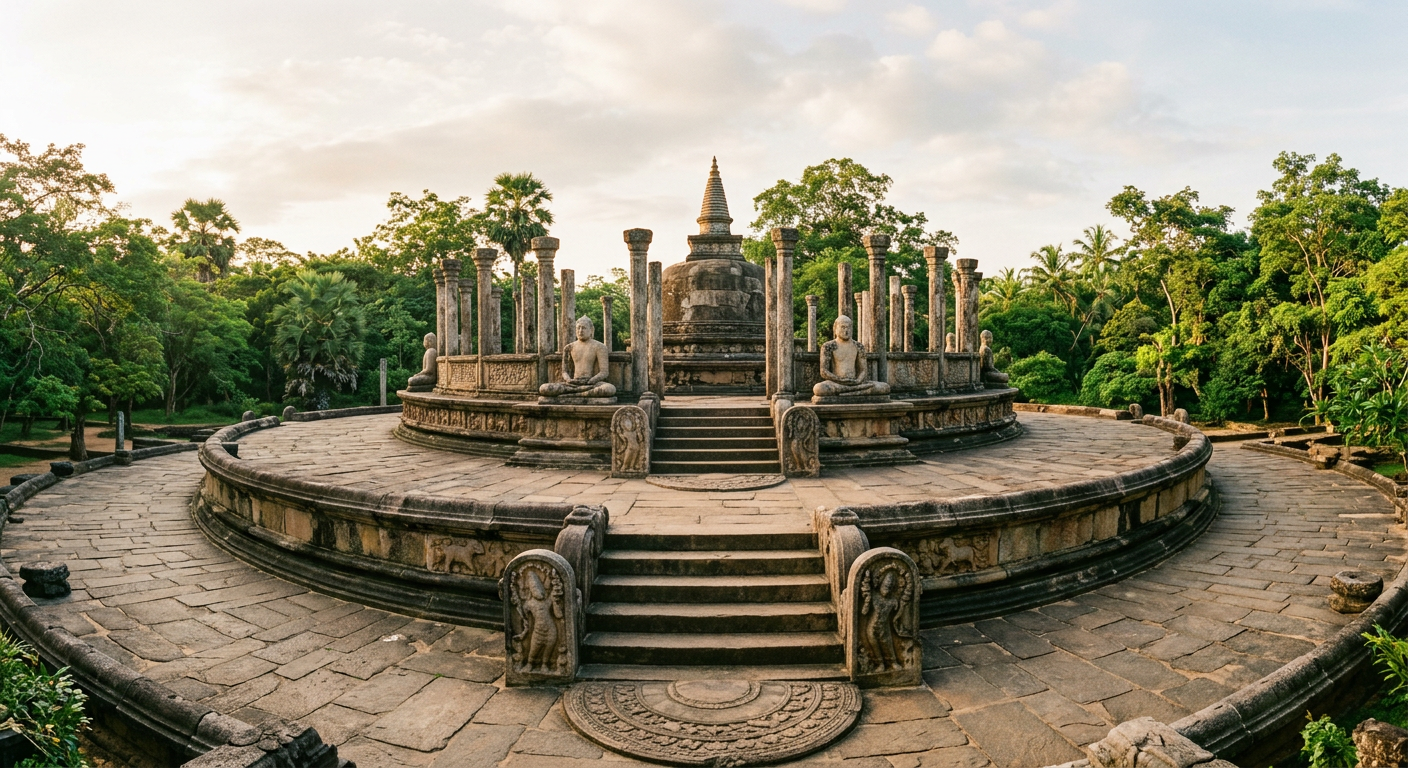
Sacred Quadrangle: A compact group of important monuments that includes the circular Vatadage, Hatadage and Nissanka Latha Mandapaya.
Royal Palace Group: The remains of the palace associated with King Parakramabahu I, together with the Council Chamber and Royal Bath.
Rankoth Vehera and Lankatilaka: Two of the ancient city's most impressive religious monuments, found within the larger monastic zone.
Shiva Devale No. 2: A stone Hindu shrine that reflects the Chola period and the city's layered history.
Parakrama Samudra: A vast historic reservoir associated with King Parakramabahu I and still central to the landscape around Polonnaruwa.
When to visit
Polonnaruwa can be visited throughout the year, but February to September generally brings less rain than the northeast monsoon period. The ruins are exposed and afternoons can be very hot, especially during the middle of the year. Start near opening time when possible, or visit the more open monuments later in the afternoon. Rain is more common from October to January, although weather can vary.
How to get there
Polonnaruwa is in Sri Lanka's North Central Province, within the Cultural Triangle. By road, it is usually around 1.5 hours from Sigiriya or Dambulla and about 5 to 6 hours from Colombo, depending on traffic and stops. Buses serve Polonnaruwa and the nearby commercial town of Kaduruwela.
Polonnaruwa has its own railway station in the Kaduruwela area on the Colombo to Batticaloa line. Some services connect with Colombo Fort, but timetables and seat availability should be checked before travel. The station and main bus areas are several kilometres from parts of the ancient city, so a tuk-tuk or taxi is useful for the final journey.
Travel tips
Visit the museum or official ticket office first and keep your admission ticket ready, as it may be checked at different monument groups.
Allow at least half a day for the main ruins. A slower visit can take most of the day.
Cycle only if you are comfortable riding in strong heat. A tuk-tuk or car is easier for families and travelers with limited mobility.
Cover your shoulders and knees at sacred places. Remove shoes and hats where signs or attendants request it.
Carry socks because stone and sand can become very hot after footwear is removed.
Do not climb on ruins, touch carvings or pose with your back toward a Buddha image.
Bring drinking water, sunscreen, a hat and rain protection. Shade is limited in several parts of the site.
Do not feed monkeys, and keep food, glasses and loose belongings secure.
Highlights
- Gal Vihara rock-cut Buddha images
- The Vatadage and Sacred Quadrangle
- Royal Palace and Council Chamber
- Rankoth Vehera
- Lankatilaka image house
- Parakrama Samudra reservoir
When to visit Polonnaruwa
February to September is generally drier, but early morning is the most comfortable time to explore in any season.
How to get there
Travel by road from Sigiriya or Dambulla in about 1.5 hours, or from Colombo in roughly 5 to 6 hours. Polonnaruwa railway station in Kaduruwela is on the Colombo–Batticaloa line, with tuk-tuks and taxis available for the final trip to the ancient city.
Travel tips
- Start early to avoid the strongest heat.
- Allow at least half a day for the principal monuments.
- Use a bicycle, tuk-tuk or car because the ruins are spread over several kilometres.
- Cover shoulders and knees and remove footwear where required.
- Carry water, sun protection and socks for hot stone surfaces.
- Keep your ticket with you for checks at separate monument groups.
- Do not climb ruins or pose with your back toward Buddha images.
- Secure food and loose belongings around monkeys.
Nearby places
Map
Location of Polonnaruwa in North Central Province, Sri Lanka (7.9403, 81.0188).
Tours that include Polonnaruwa
Quick answers about Polonnaruwa
What is Polonnaruwa known for?
Polonnaruwa is a UNESCO-listed ancient capital filled with royal ruins, sacred monuments and remarkable rock-cut Buddha images. Its spread-out archaeological park is best explored early in the day by bicycle, tuk-tuk or car. Travellers usually come for Gal Vihara rock-cut Buddha images in Sri Lanka’s North Central Province.
When is the best time to visit Polonnaruwa?
Best time guidance for Polonnaruwa: February to September is generally drier, but early morning is the most comfortable time to explore in any season.. Shoulder weeks are often quieter if weather stays workable.
How do I get to Polonnaruwa?
Travel by road from Sigiriya or Dambulla in about 1.5 hours, or from Colombo in roughly 5 to 6 hours. Polonnaruwa railway station in Kaduruwela is on the Colombo–Batticaloa line, with tuk-tuks and taxis available for the final trip to the ancient city.
How many days do I need in Polonnaruwa?
Most travellers spend 1–3 nights in or near Polonnaruwa, depending on whether they want a quick highlight stop or a slower base for walks and day trips.
What should I know before visiting Polonnaruwa?
Start early to avoid the strongest heat. Pair the visit with Minneriya National Park, Medirigiriya Vatadage, Kaudulla National Park when building a realistic Sri Lanka route.